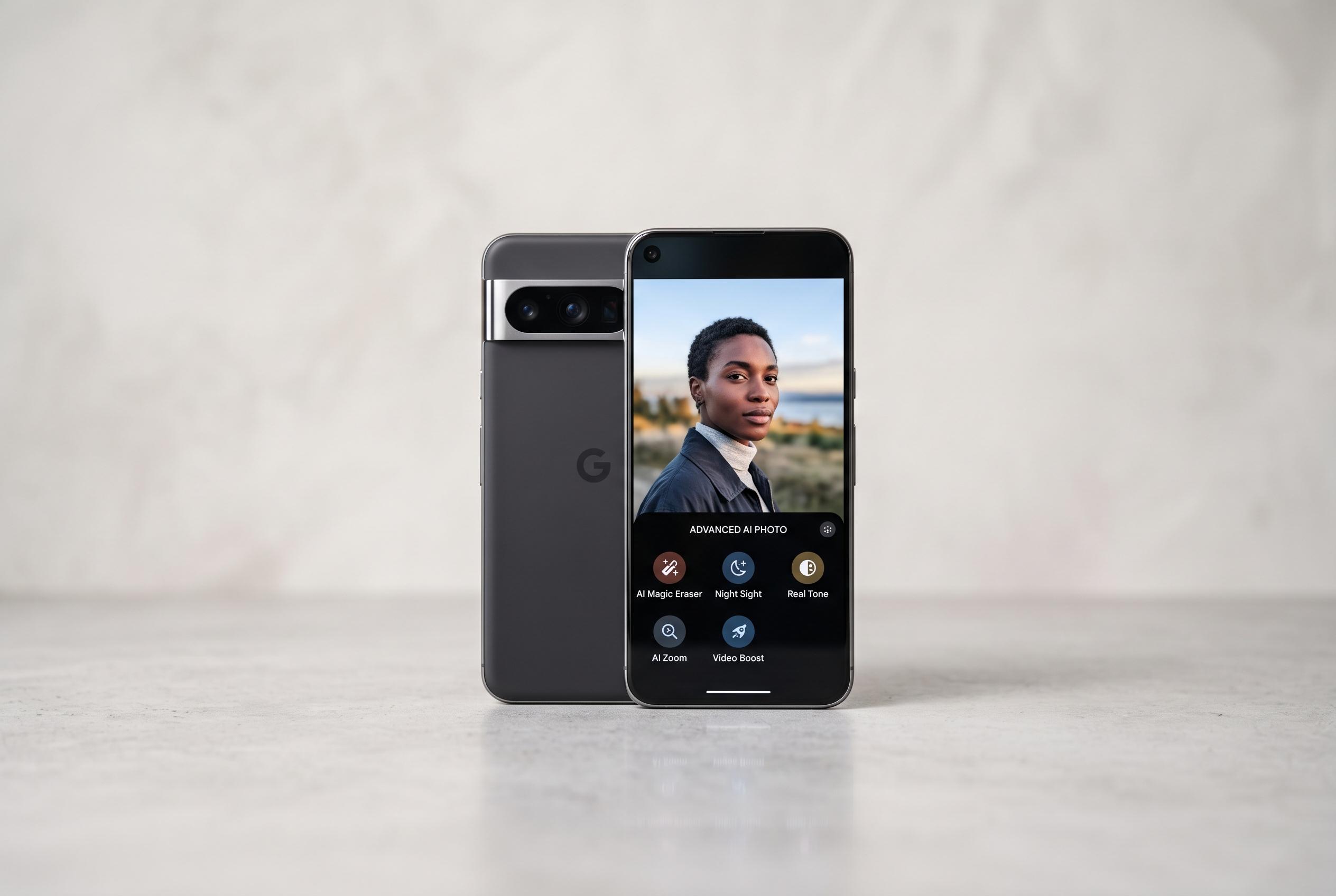

Google enters the high-end Android market with its Pixel 11, rivaling Samsung’s Galaxy S26 through a focus on computational photography, AI features, and battery life, marking a new phase in flagship competition.
Google’s newly launched Pixel 11 enters the premium Android market with a familiar pitch: strong photography, deep AI integration and a high-end price that places it directly against Samsung’s Galaxy S26. According to the comparison material, both base models cost $899 and both start with 256GB of storage and 12GB of RAM, although the Pixel 11 is still on pre-order while the Galaxy S26 has already been available for months.
The two phones are closely matched on paper in several areas. Both use a 6.3-inch display with a 120Hz refresh rate, and both offer 256GB or 512GB storage options. The Pixel 11 uses an OLED panel, while Samsung opts for AMOLED, and the Pixel is slightly taller. The more practical divergence is in battery capacity and weight: the Pixel 11 carries a 4,985mAh battery, while the Galaxy S26 has a 4,300mAh cell and is the lighter handset. Android Central reports that the Pixel also supports 30W wired charging and 25W Qi2 wireless charging, compared with 25W wired and 15W wireless for Samsung’s phone.
Performance is where Samsung appears to have the edge. Google’s Tensor G6 powers the Pixel 11, while the Galaxy S26 runs on Qualcomm’s Snapdragon 8 Elite Gen 5. Early assessments cited in the comparison say Samsung leads in CPU-heavy tasks, gaming and battery endurance, even though Google has made gains with its latest chip. Both phones are positioned as AI-focused flagships, but the processing headroom still matters for sustained performance and more demanding workloads.
Camera hardware is another close contest, though the two firms favour different priorities. The Pixel 11 uses a 48-megapixel main camera, a 13-megapixel ultrawide and a 10.8-megapixel telephoto lens, with a 10.5-megapixel front camera. The Galaxy S26 answers with a 50-megapixel main sensor, a 12-megapixel ultrawide, a 10-megapixel telephoto and a 12-megapixel selfie camera. What Google appears to be selling is computational photography: What Hi-Fi says the Pixel 11 line introduces Camera Looks and Magic Capture, alongside Android 17 and Gemini features, while Digital Camera World says the main sensor has 56% greater light sensitivity. Samsung counters with its own AI editing tools and, crucially, 8K video recording, which the Pixel 11 does not match.
Taken together, the comparison suggests two different kinds of flagship. The Pixel 11 leans into software, battery size and photography features, while the Galaxy S26 offers stronger raw performance and more mature video recording. With pricing aligned and specifications broadly similar, the deciding factors are likely to be camera preferences, charging habits and whether buyers value Google’s AI-first approach or Samsung’s hardware lead.
Disclaimer: This content is intended for informational purposes only. Readers are advised to exercise their own judgement, conduct due diligence, or consult a qualified expert before acting on any information provided.