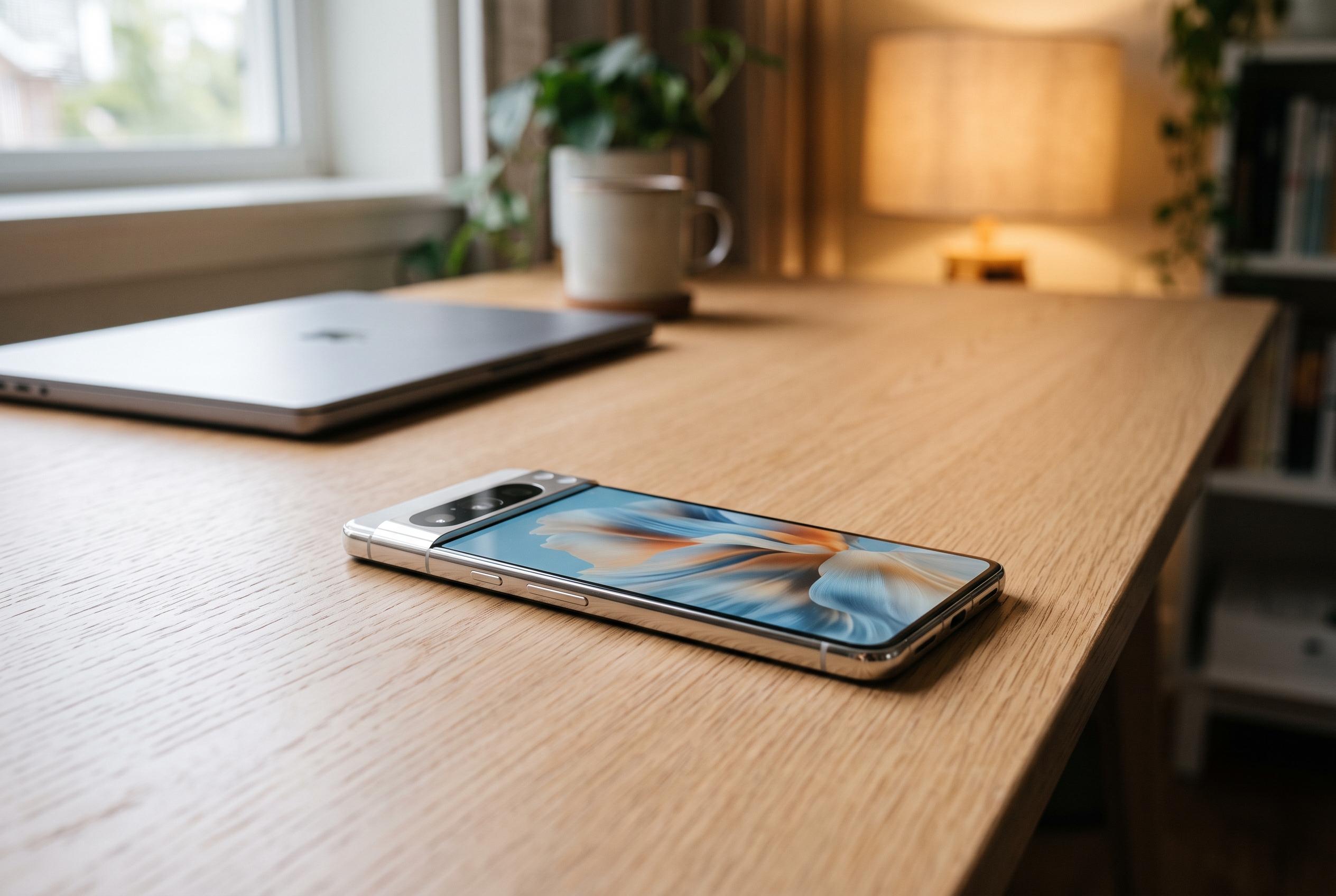

The Google Pixel 11 maintains its compact design while introducing incremental improvements in display, performance, camera, and wireless charging, appealing chiefly to existing Pixel users seeking a more polished experience.
Google’s Pixel 11 is a study in refinement rather than reinvention. It keeps the compact 6.3-inch form factor that made the Pixel 10 so easy to live with, but trims weight, narrows the camera bar and raises the base storage to 256GB. According to the review by The Geek, the result is a handset that feels more polished in the hand, even if it does not look dramatically different from last year’s model.
The display remains one of its strongest assets. Tom’s Guide reported that the Pixel 11 uses a bright 6.3-inch OLED panel with a peak brightness rating above 2,400 nits, while The Geek’s testing described it as vivid, sharp and well suited to outdoor use. There is little novelty here, but that is part of the point: Google appears to have decided that the base Pixel already had a good enough screen and should not be altered for the sake of it.
Performance is improved, though not transformed. Google’s Tensor G6 brings faster app launches, better web browsing and stronger on-device AI processing, and The Geek said the phone feels quick and responsive in everyday use. Tom’s Guide and Android Central both noted, however, that the chip still trails the fastest rivals in raw speed and graphics work, which means the Pixel remains a poor choice for demanding gaming. The absence of a vapour chamber on the base model further limits sustained heavy loads.
The software case is stronger than the hardware one. Android 17 and Google’s seven-year update promise make the Pixel 11 a long-term proposition, while Gemini features such as Rambler voice-to-text, task automation and proactive suggestions are designed to reduce routine friction. Android Central also pointed to features such as Daily Brief and social-media controls, while The Geek highlighted Google’s broader push towards context-aware assistance. The limitation is that some of the more ambitious Gemini tools are still restricted by country and language, which weakens the idea of a fully universal AI flagship.
The camera system remains closely aligned with the Pixel formula, but the main sensor is larger and low-light shooting is meaningfully faster. The Geek said the updated 48-megapixel main camera improves detail and shadow clean-up in dim conditions, while the 5x telephoto continues to give the standard model real reach rather than token zoom. Android Central added that image processing now carries warmer tones, and Tom’s Guide described new tools such as Magic Capture and an in-camera teleprompter as useful, if not essential, additions. In practice, the Pixel 11 still appears to be at its best when it is asked to take photographs with little effort from the user.
Battery and charging are more nuanced. The phone’s cell is only slightly larger than before, so endurance remains solid rather than exceptional, and Tom’s Guide said battery life was actually a touch shorter in its testing. The clearer gain is wireless charging, with support for 25W Qi2 and Pixelsnap, a step up from the previous generation that makes desk and bedside charging more practical. That makes the Pixel 11 a better all-round package than the Pixel 10, but not a compelling upgrade for recent owners. For Pixel 9 or older users, it is easier to justify; for Pixel 10 buyers, the improvements are real but too modest to make annual replacement feel sensible.
Disclaimer: This content is intended for informational purposes only. Readers are advised to exercise their own judgement, conduct due diligence, or consult a qualified expert before acting on any information provided.