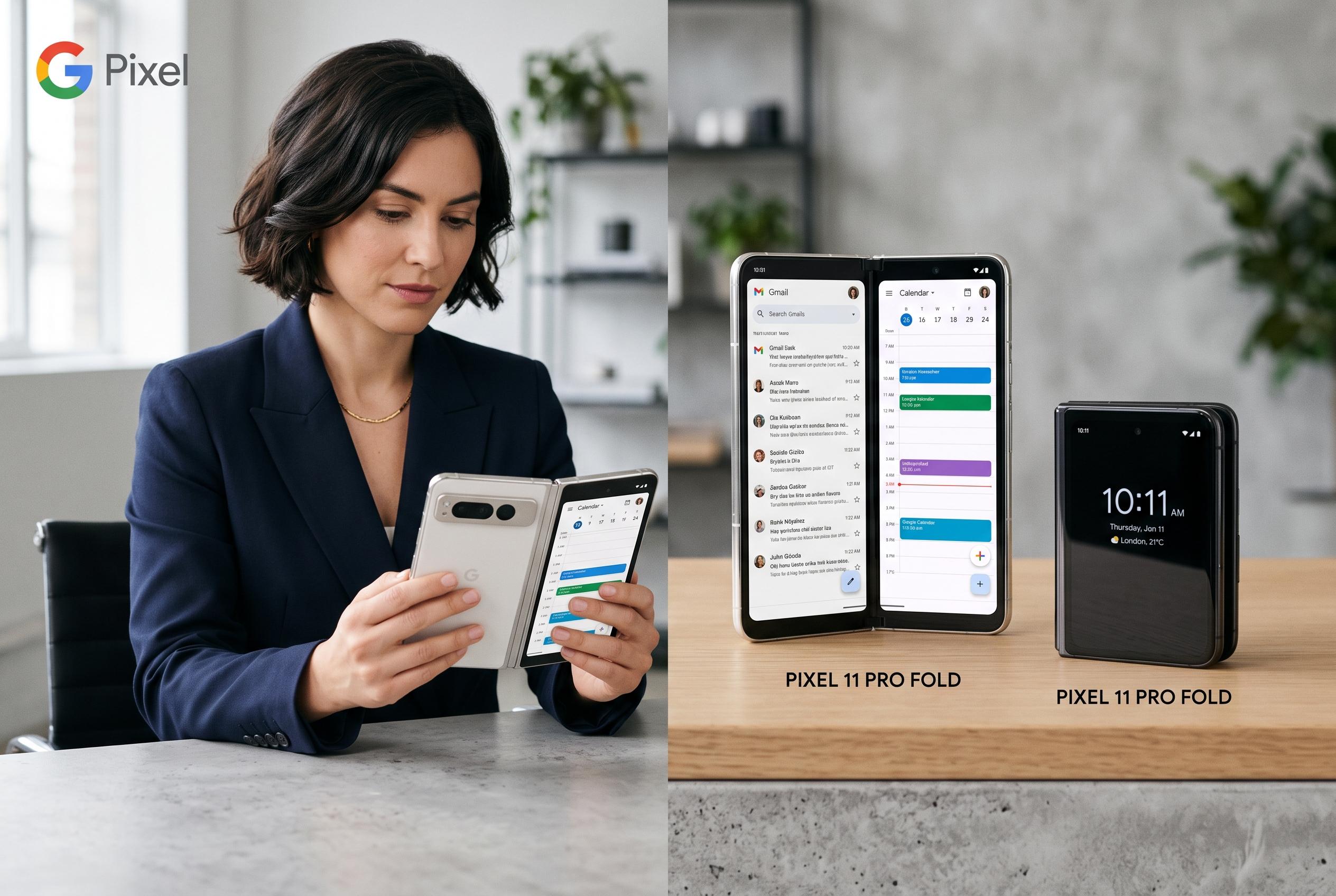

Google launches the Pixel 11 Pro Fold, a more refined foldable device, but it prompts questions over pricing and compromises in camera performance compared to rivals like Samsung’s Galaxy Z Fold 8 Ultra.
Google’s Pixel 11 Pro Fold arrives as a better foldable than its predecessor, but it still asks buyers to accept a long list of trade-offs at a premium price. Android Central reported that the phone went on sale at $1,899, with a 6.5-inch cover display, an 8-inch inner display, IP68 protection, Android 17 and seven years of updates. Google has added brighter screens, a lighter chassis, a faster Tensor G6 chip and a stronger emphasis on Gemini-powered software, including photo and productivity features. Yet the overall proposition remains difficult to square with the asking price.
The sharpest criticism is still around imaging. DPReview notes that the Fold’s camera hardware is closer to the regular Pixel 11 than the Pixel 11 Pro, despite the “Pro” label and the near-$2,000 cost. That matters because the competing Galaxy Z Fold 8 Ultra, while pricier by about $200, pairs its foldable body with a camera system much closer to a conventional flagship. Android Central said Samsung’s model uses a 200MP main camera and a more performance-led configuration, even if it remains a compromise in some areas. In short, Google is selling a phone that does not fully behave like its name suggests.
There is a more complicated argument in Samsung’s favour, though. TechRadar reported that the standard Galaxy Z Fold 8 can actually be the better long-term camera phone in practice, despite weaker hardware on paper, because its shape is easier to carry and quicker to use. That highlights the problem for both brands: foldables are no longer judged only by specifications, but by how well they fit into daily life. Tom’s Guide added that the Pixel 11 Pro Fold does gain points for durability, brightness and software polish, yet it is also heavier and bulkier than Samsung’s rival.
For Google, that leaves a familiar dilemma. The company has narrowed the gap in display quality, protection and AI features, and in some respects it now offers one of the more complete big-screen foldables on the market. But according to the combined comparisons from DPReview, Android Central and Tom’s Guide, it still does not escape the central criticism of the category: buyers are being asked to pay flagship money for a device that remains a series of carefully managed compromises.
Disclaimer: This content is intended for informational purposes only. Readers are advised to exercise their own judgement, conduct due diligence, or consult a qualified expert before acting on any information provided.