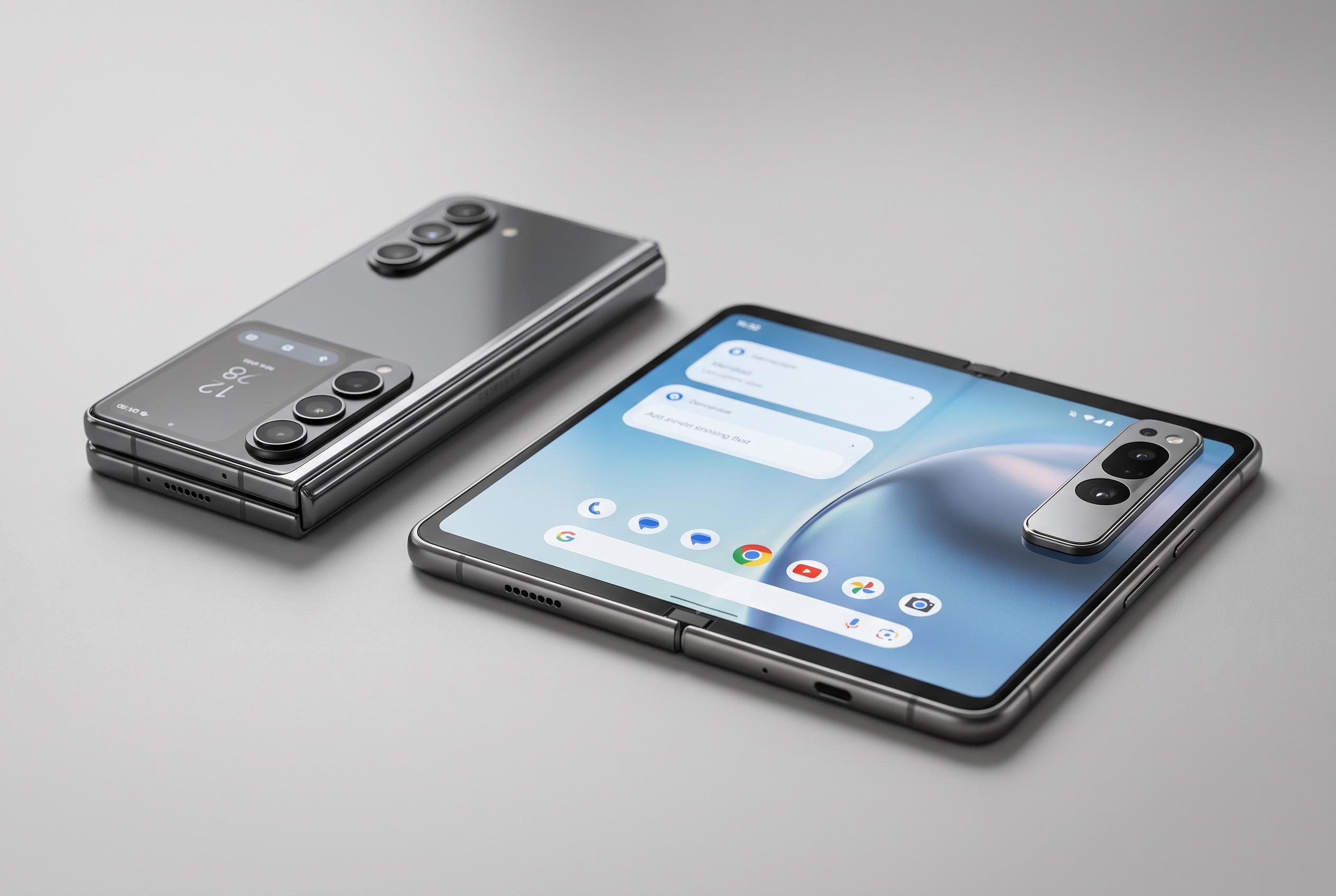

Google’s latest foldable, the Pixel 11 Pro Fold, enters a fiercely competitive market with increased memory, stronger dust protection, and a focus on AI features, challenging Samsung’s dominance with a refined design and robust hardware.
Google’s latest foldable arrives with a sharper pitch: more memory for the money, stronger dust protection and a more ambitious AI story. But Samsung’s rival still has the cleaner fold, the slimmer body and the more media-friendly screen shape, leaving the premium foldable market as tightly contested as ever.
According to Android Central, the Pixel 11 Pro Fold was unveiled on 12 August 2026 and starts at $1,899, matching Samsung’s foldable on price while undercutting it on memory value. Google pairs 256GB of storage with 16GB of RAM at base level, while Samsung offers less RAM in equivalent configurations. The result is a phone that looks better on paper for buyers who want heavy multitasking and longer-term headroom.
Design remains the clearest split. TechRadar says Google has made its foldable lighter, thinner and more refined, with slimmer bezels, a revised hinge and a reduced camera bump. Samsung, by contrast, keeps the more compact, passport-style shape that better suits video playback when open. That format also appears to have paid off in use: the Galaxy’s inner screen crease is described as far less visible than Google’s.
Durability may push some buyers towards Pixel. Android Central reports an IP68 rating for the Pixel 11 Pro Fold, giving it dust protection as well as water resistance, while Samsung’s latest foldable is rated IP48 and remains only partly dust-resistant. That distinction matters for a device designed to be carried, opened and closed constantly. Google also adds magnetic alignment built in, avoiding the need for a special case with compatible accessories.
The camera trade-off is equally clear. PCMag says Google’s foldable includes a dedicated telephoto sensor with 5x optical zoom, while Samsung relies on digital zoom on its main camera system. Google also has stronger selfie hardware on paper, though Samsung counters with a more advanced under-display camera approach. In video, the Samsung handset supports 8K capture, while Google tops out at 4K at 60fps.
Software is where Google has the strongest case. Both phones run Android 17 and promise seven years of updates, but Google’s own Tensor G6 chip is built to feed Gemini features more deeply into the device. Android Central and TechRadar both note a broader set of AI tools across the Pixel line, including enhanced live translation, photo editing and context-aware assistance. Samsung still brings impressive hardware, but Google has the better claim to making AI feel native rather than added on.
For now, the choice comes down to priorities. Samsung offers the tidier design, the more immersive display shape and faster charging. Google counters with better memory at the same price, stronger protection, more flexible cameras and a clearer software identity. In a category where compromise is unavoidable, the Pixel 11 Pro Fold looks like the smarter buy on value; the Galaxy Z Fold 8 looks like the more polished foldable in hand.
Disclaimer: This content is intended for informational purposes only. Readers are advised to exercise their own judgement, conduct due diligence, or consult a qualified expert before acting on any information provided.