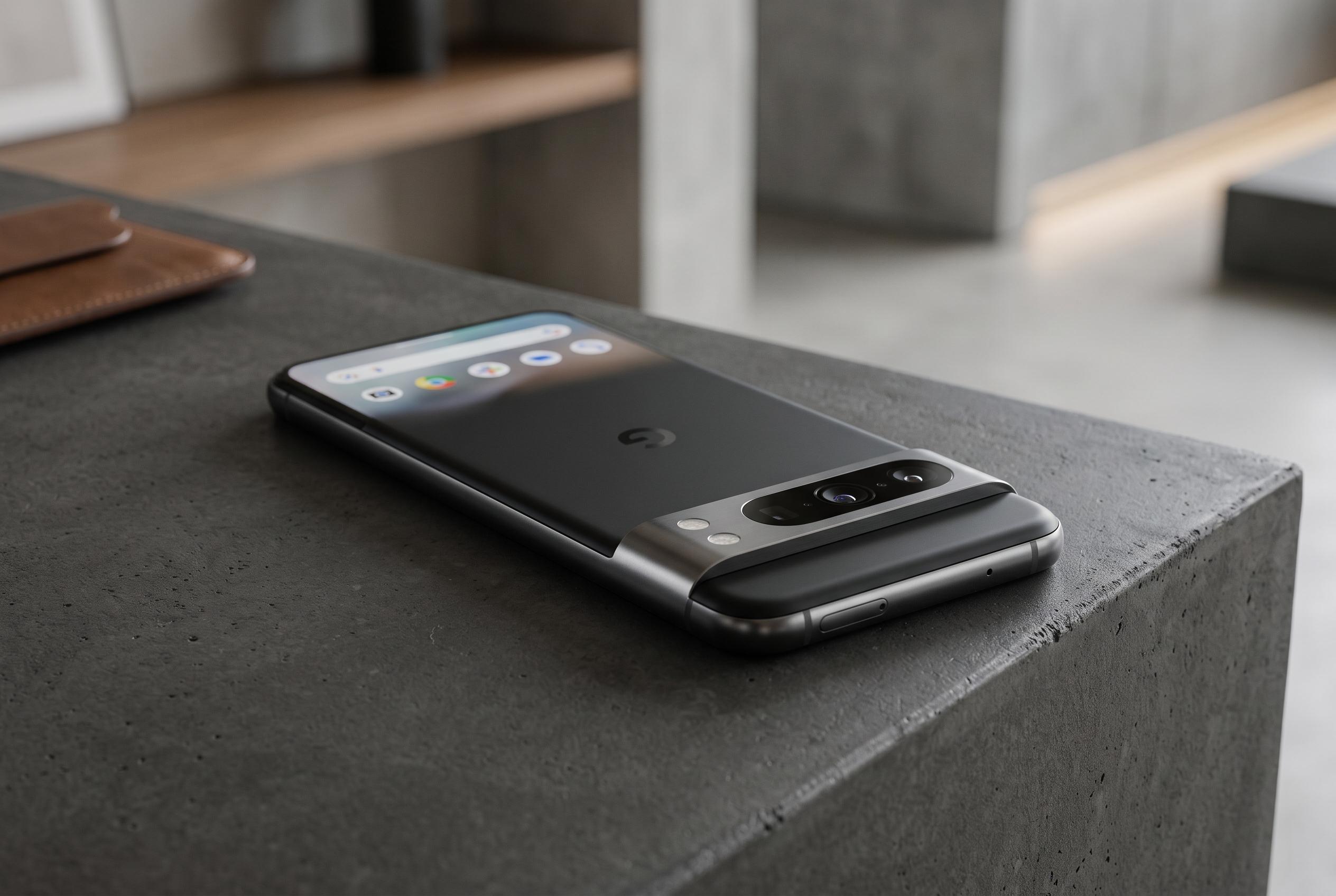

Google’s latest Pixel 11 Pro enters a crowded high-end smartphone market, positioning itself through advanced photography features, AI tools, and a competitive price point aligned with the iPhone 17 Pro, challenging rivals like Samsung and OnePlus.
Google’s Pixel 11 Pro enters a crowded premium market with a starting price of $1,099, placing it almost exactly alongside Apple’s iPhone 17 Pro and well above several rival flagships from Samsung and OnePlus. That pricing makes the Pixel’s appeal depend less on headline cost and more on whether its camera software, artificial intelligence tools and long-term update promise justify the outlay.
The Pixel’s strongest case remains photography. Google is leaning on improved night shooting and features such as Instant Night Sight and Magic Capture, backed by the company’s software support record. PhoneArena says the handset uses a 6.3-inch OLED panel, Tensor G6 silicon, 12GB of RAM and a triple-camera system built around a 50-megapixel main sensor, a 48-megapixel ultrawide lens and a 48-megapixel 5x telephoto lens. That combination points to a device aimed at users who value computational photography over raw hardware excess.
Samsung’s Galaxy S26 is a more affordable alternative for buyers who want a compact flagship. Android Central and Samsung’s US product page place the series’ entry model at 6.3 inches, with the phone weighing far less than the Pixel, and a starting price of $899.99. The line also brings Samsung’s software extras, including One UI 8.5, Good Lock and DeX, while the company is promising long update support. The trade-off is that base-model charging remains relatively slow, even as Samsung has refreshed the design and camera layout.
OnePlus is taking a different route by pushing battery life and charging speed. The OnePlus 15 starts at $899.99 and is built around Snapdragon 8 Elite Gen 5, a 7,300mAh battery, 80W wired charging and 50W wireless charging. Its 6.78-inch LTPO screen can refresh at up to 165Hz in supported games, which makes it one of the more performance-led choices in the price band.
Apple’s iPhone 17 Pro is the Pixel 11 Pro’s most direct rival on price, with both starting at $1,099 and both using a 6.3-inch display and 256GB base storage. Apple’s A19 Pro chip and triple 48-megapixel rear camera system keep it firmly in the premium tier, while its video features remain a major differentiator, including 4K Dolby Vision recording at up to 120fps, ProRes RAW and Apple Log 2. For buyers considering foldables instead, Samsung’s Galaxy Z Flip 8 and Motorola’s Razr+ 2026 offer clamshell designs, larger outer displays and higher starting prices, but both accept compromises in battery size and camera flexibility.
Disclaimer: This content is intended for informational purposes only. Readers are advised to exercise their own judgement, conduct due diligence, or consult a qualified expert before acting on any information provided.