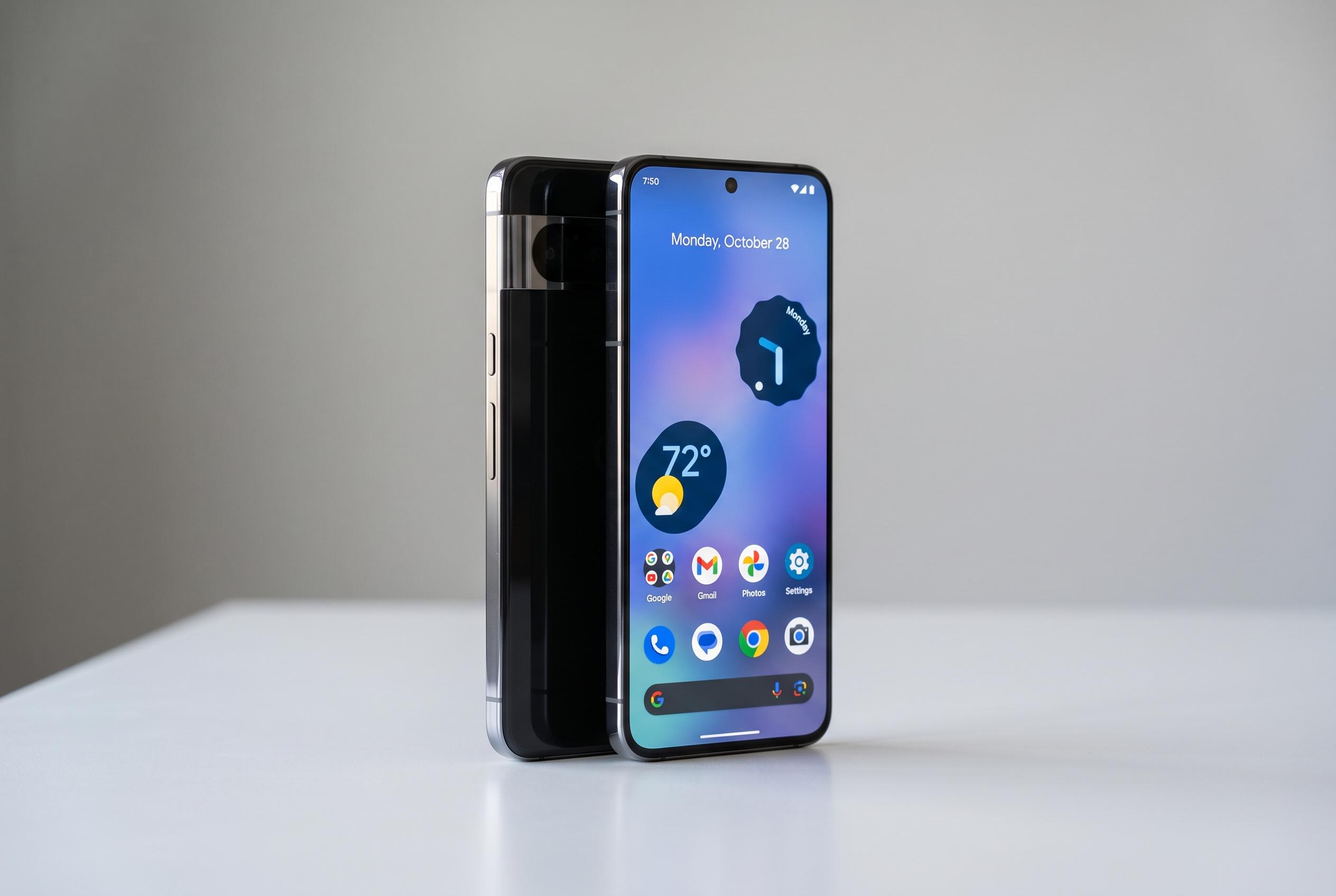

Google’s latest Pixel 11 Pro XL challenges the iPhone 17 Pro Max in the premium smartphone market, boasting a larger, brighter screen, advanced AI capabilities, and a powerful triple-camera system, all with a focus on refinement and AI-driven features.
Google’s new Pixel 11 Pro XL is built to take on Apple’s iPhone 17 Pro Max at the top end of the smartphone market, and the comparison is unusually close. The Pixel’s larger 6.8-inch OLED screen is slightly smaller than the iPhone’s 6.9-inch panel, but it is rated far brighter on paper, at up to 3,600 nits versus Apple’s 3,000 nits. Google has also slimmed the camera bump and added a HiLight LED, a small notification light that can signal calls and Gemini activity in a way that recalls older Android handsets and BlackBerry devices. TechRadar and Android Central both noted that the new Pro line focuses on refinement rather than a radical redesign, while Google continues to lean on recycled materials and a more integrated hardware look.
Under the bonnet, the Pixel’s Tensor G6 is the key change. Google says it is faster and more efficient, with a stronger on-device AI processor, and early reviews from Tom’s Guide and TechRadar say the phone feels more fluid in day-to-day use. Android Central reports that the chip is paired with Android 17 and Gemini Intelligence, extending into features such as live translation, advanced voice-to-text and smarter search. That software advantage is where the Pixel is meant to stand out, especially against Apple’s still-more-restricted Siri experience. Google is also using the new hardware to push AI-led tools such as Rambler, which cleans up spoken dictation, and Magic Capture, which can keep shooting while the phone chooses the best frames automatically.
Cameras remain the most obvious battleground. The Pixel 11 Pro XL uses a triple-camera system with a 50-megapixel main sensor, a 48-megapixel ultrawide and a 50-megapixel telephoto lens with 5x zoom, while the iPhone 17 Pro Max uses three 48-megapixel rear sensors and a 4x telephoto. Google is also promising up to 120x zoom through software processing, a feature that several reviewers describe as a headline-grabbing but hard-to-judge specification until more testing is done. Both phones now offer more control over tone and style, with Google’s Camera Looks and Apple’s Photographic Styles each giving users a way to shape the final image before it is processed.
Battery life, charging and price may decide the contest for many buyers. The Pixel 11 Pro XL has a 5,115mAh battery, slightly larger than the iPhone 17 Pro Max’s 5,088mAh cell, and Google rates wired charging at 45 watts, ahead of Apple’s 40 watts. Both support 25-watt wireless charging with magnetic accessory support. Google has also moved the Pro XL’s starting configuration to 256GB, with 512GB and 1TB options available, which puts it on more equal pricing footing with Apple’s top model. That makes trade-in offers and carrier discounts more important than before. Reviewers at Tom’s Guide say the Pixel 11 Pro is the sweet spot in the line-up, but the Pro XL is clearly aimed at buyers who want the biggest screen, the largest battery and the full set of Google’s newest AI features.
Disclaimer: This content is intended for informational purposes only. Readers are advised to exercise their own judgement, conduct due diligence, or consult a qualified expert before acting on any information provided.