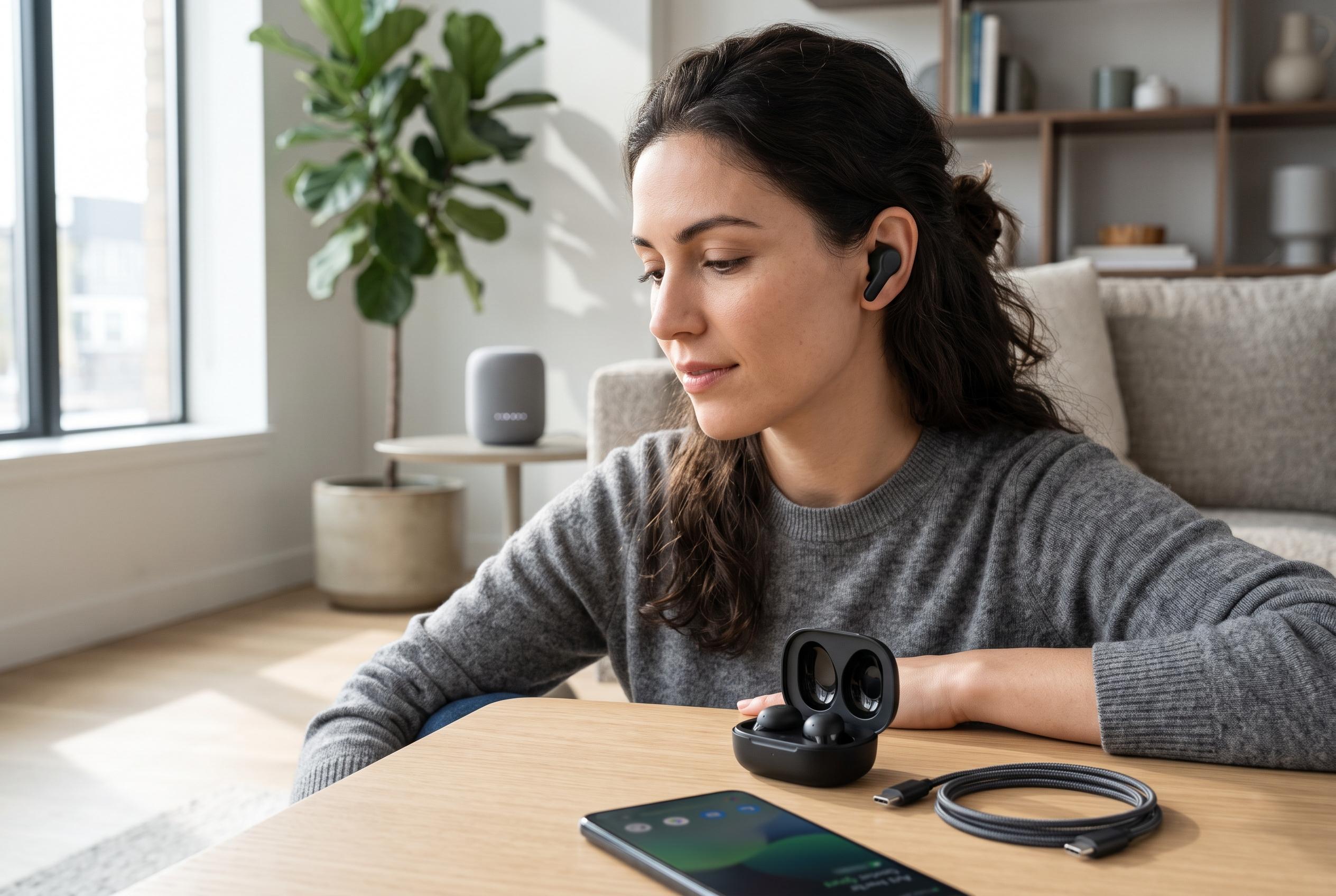

While both flagship earbuds offer premium features, Google’s latest Pixel Buds Pro 2 provide greater software improvements, comfort, and battery life, especially for Android users, challenging the dominance of Apple’s AirPods Pro 3 in the evolving wireless earbuds market.
The choice between Google’s Pixel Buds Pro 2 and Apple’s AirPods Pro 3 is not as close as the specifications suggest. On paper, both promise strong active noise cancellation, long battery life, smart assistant support and a premium fit. In practice, the better option depends less on headline features than on which phone you use and how you want the earbuds to behave day to day. Google’s latest software updates have also strengthened the Pixel case, with Dynamic Active Noise Cancellation that adapts to changes in fit and Live Translate now supporting more than 70 languages in near real time. Android Central reported that these software features began rolling out in September, while the hardware remains the smaller, lighter design built around Google’s Tensor A1 chip.
Comfort is one of the clearest dividing lines. The Pixel Buds Pro 2 were designed to be compact and secure, and Google’s twist-to-adjust stabiliser gives them an advantage for people who move between office work, commuting and exercise. Android Central said the buds are 27% smaller and 24% lighter than the original Pixel Buds Pro, which helps explain why they are easier to wear for long periods. Apple counters with a broader range of ear tips on the AirPods Pro 3, including XXS, plus an Ear Tip Fit Test that helps users find the best seal. For many listeners, that seal matters more than any codec or chip name, because it directly affects both sound and noise isolation.
Sound remains a question of preference rather than a clear technical victory. Google’s approach is more customisable, with support for EQ adjustments and a tuning profile aimed at fuller bass and clearer mids. Apple’s tuning is more automatic, relying on Adaptive EQ and its wider ecosystem of audio processing to deliver a polished result with minimal user input. In a practical sense, that makes the AirPods Pro 3 easier for casual listeners, while the Pixel Buds Pro 2 suit people who want more control over how their music sounds.
Live translation is one of the most important feature differences. According to Android Central, Apple’s translation features on AirPods Pro 3 depend on an iPhone 15 Pro or newer, which narrows the audience to recent Apple devices. Google’s alternative works with Android phones running Android 6 or later through the Google Translate app, making it available across a much wider range of devices, including non-Pixel handsets. Both systems rely on an internet connection for the full experience, although limited offline translation is available. That gives Apple a smoother experience inside its own ecosystem, but Google the broader reach.
For battery life, Google still has the edge. The Pixel Buds Pro 2 are rated for up to eight hours with ANC on and up to 30 hours with the charging case, while the AirPods Pro 3 reach the same eight-hour mark on the buds themselves but only 24 hours in total with the case. Apple does offer more flexible charging compatibility, including MagSafe and Apple Watch chargers, but Google’s longer overall endurance is the more useful advantage for travellers and heavy daily users. Price follows a similar pattern: the Pixel Buds Pro 2 cost $229, while the AirPods Pro 3 are $249. For Android users, Google’s earbuds offer the stronger mix of value, battery life and assistant features; for iPhone owners, Apple’s tighter integration is likely to justify the extra cost.
Disclaimer: This content is intended for informational purposes only. Readers are advised to exercise their own judgement, conduct due diligence, or consult a qualified expert before acting on any information provided.