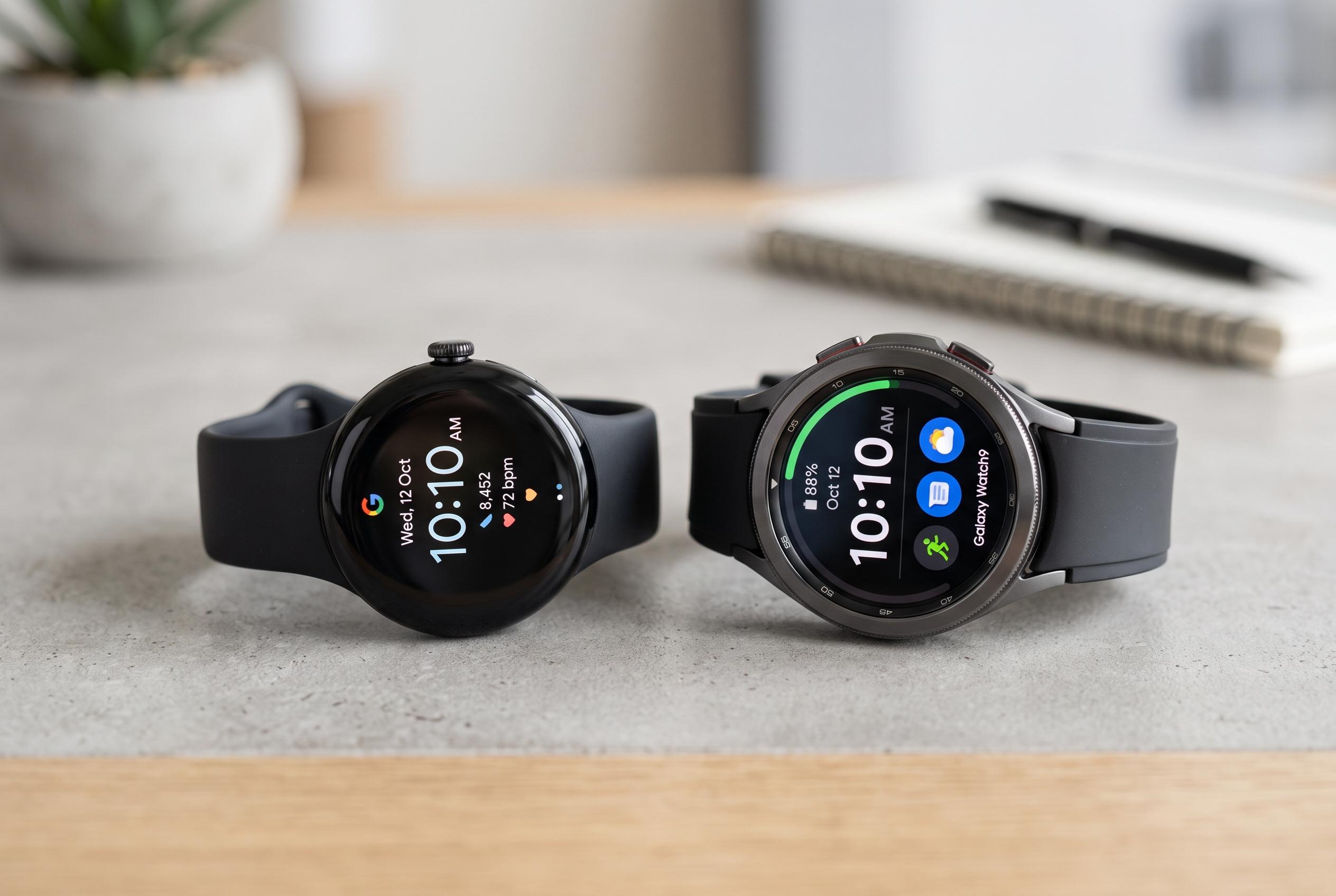

The Google Pixel Watch 5 and Samsung Galaxy Watch9 represent the forefront of Android smartwatch innovation, each emphasising different strengths , from health tracking to system performance , reflecting distinct philosophies that cater to varied user priorities.
The Google Pixel Watch 5 and Samsung Galaxy Watch9 sit at the sharp end of Android wearables, but they are aimed at different priorities. According to the comparison material, Google is leaning harder into passive health tracking and Gemini integration, while Samsung is emphasising fitness depth, system performance and tighter ties to the Galaxy ecosystem. The result is two watches that look similar on a specification sheet but feel distinct in use.
Design is one of the clearest divides. Tom’s Guide noted that earlier Pixel Watch and Galaxy Watch generations already reflected two different philosophies: Google’s rounded, jewellery-like shape versus Samsung’s more traditional smartwatch form. Android Central said the Galaxy Watch9 keeps a familiar layout but remains notably slim, while the Pixel Watch 5 continues the curved, domed approach that has defined Google’s line. The Samsung watch also uses sapphire crystal, which improves scratch resistance, while Google has stayed with a more minimalist aesthetic.
Performance is another area where Samsung appears to have the edge. Android Central reported that the Galaxy Watch9 is powered by Qualcomm’s Snapdragon Wear Elite chip, and Samsung’s extended software-support policy gives the watch a longer runway for major Wear OS updates than Google has traditionally offered for its Pixel watches. That matters for buyers who keep a smartwatch for several years, because software support now influences long-term value almost as much as battery life or display quality.
Health features are where the Pixel Watch 5 tries to stand apart. The lead material describes Google’s focus on trend analysis rather than one-off readings, including blood-pressure tendencies and insulin-resistance estimates built from longer-term sensor data. That approach is ambitious, but it is also more interpretative. Samsung takes a more direct route, with blood-pressure measurements, ECG support, body-composition analysis and sleep-related health tools that fit neatly into Samsung Health and Samsung Health Monitor.
Sleep tracking is similarly split between interpretation and measurement. Google’s watch adds breathing-quality analysis, bedtime automation and smart wake alarms, aiming to turn sleep data into something the user can act on each morning. Samsung’s watch instead builds a broader picture through vital-sign trends, sleep coaching and sleep-apnoea risk detection. In practice, Google is trying to make the watch feel more proactive, while Samsung is trying to make the data easier to compare against a personal baseline.
For exercise, Samsung looks more structured, especially for runners. Android Central highlighted Running Coach on the Galaxy Watch9, a feature that creates a tailored programme based on the user’s level. Google’s Pixel Watch 5, meanwhile, is presented as more flexible for strength and high-intensity training, with custom sessions and live changes during a workout. Both support dual-frequency GPS, so neither is compromised when used outdoors.
Battery life may prove decisive for some buyers. The comparison material says the larger Pixel Watch 5 offers the strongest official endurance figures, while the smaller Galaxy Watch9 and Pixel Watch 5 models sit closer together and may both require daily charging in heavier use. That is important because always-on displays, health monitoring and sleep tracking all reduce real-world stamina. In other words, size matters, but usage matters more.
Connectivity and safety are another Google advantage. The Pixel Watch 5 includes features such as Safety Check, Emergency Sharing, fall and crash detection, loss-of-pulse detection and, in supported regions, satellite SOS. Samsung offers emergency tools as well, but Google’s package is broader on paper and more visibly focused on situations where the wearer is away from help or out of mobile coverage.
Taken together, the choice is clear only if the buyer already knows what kind of smartwatch they want. The Galaxy Watch9 is the more rounded option for Samsung phone owners, with a mature health platform, strong performance and a long support policy. The Pixel Watch 5 is more interesting for users who value Google’s services, passive health trend analysis and emergency features. According to the reporting available, both are credible Android flagships; the better buy depends less on raw specifications than on which ecosystem the user already trusts.
Disclaimer: This content is intended for informational purposes only. Readers are advised to exercise their own judgement, conduct due diligence, or consult a qualified expert before acting on any information provided.