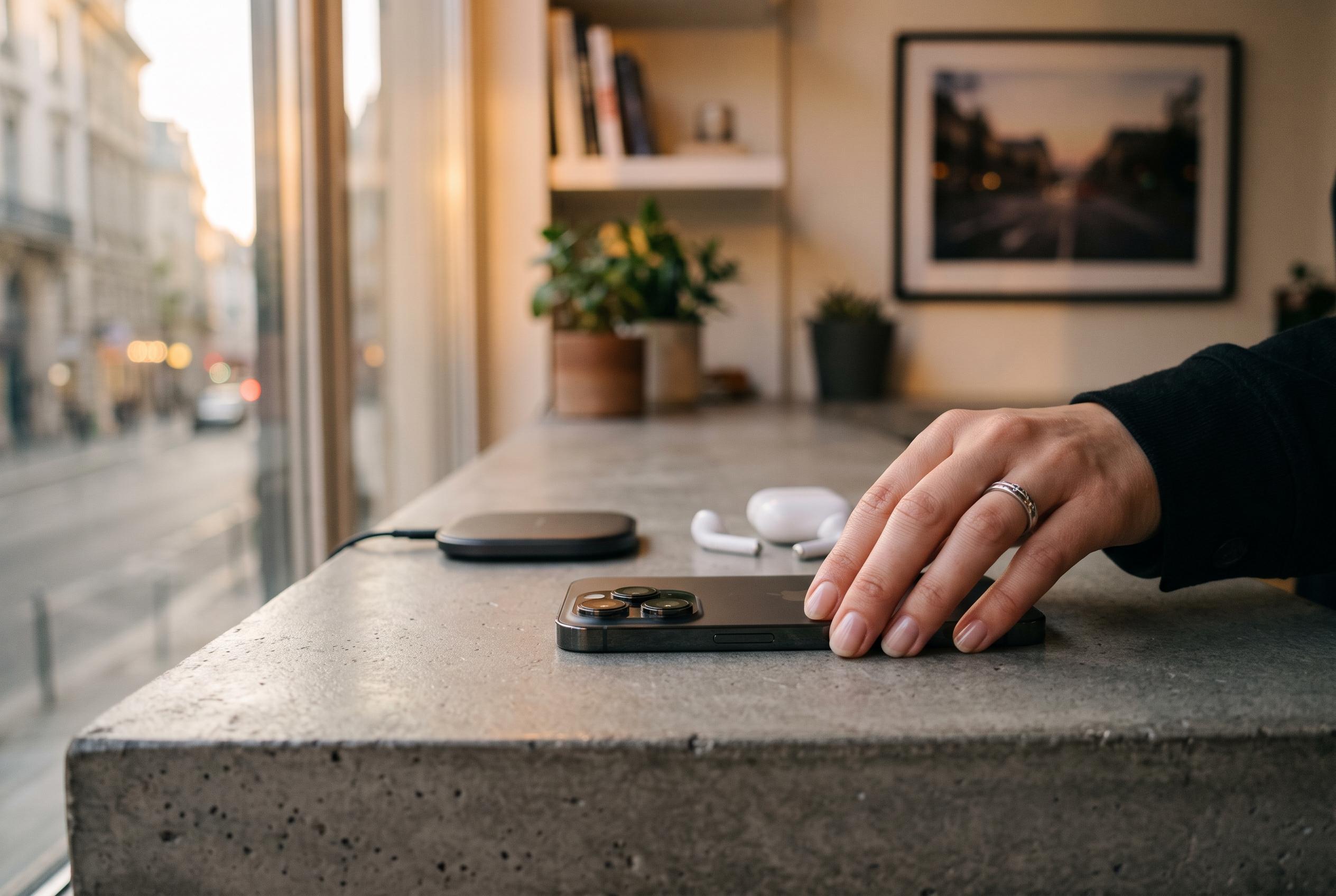

Google’s latest Pixel 11 Pro XL defies expectations by costing more than the iPhone 17 Pro Max, blending advanced zoom and smarter AI features, while challenging its own market positioning.
The unusual part of this year’s premium phone contest is not that Apple and Google are close on features. It is that Google is asking buyers to spend more. On AT&T’s current retail comparison page, the Pixel 11 Pro XL starts at $1,349.99 and the iPhone 17 Pro Max at $1,199.99. AT&T also lists the iPhone in 256GB, 512GB, 1TB and 2TB versions, while the Pixel tops out at 512GB, which makes Google’s pricing harder to defend on simple storage value alone. (att.com)
Timing should have favoured Google. NanoReview says the Pixel 11 Pro XL was released on 12 August 2026, roughly 11 months after Apple’s handset, yet still scores lower overall at 85 versus 93. The same comparison puts the Pixel slightly ahead on display and almost level on camera, but gives Apple a clear lead in performance, gaming, battery and connectivity. That matters more than usual when the Android option is not the cheaper one. (nanoreview.net)
The benchmark gap explains much of that imbalance. NanoReview reports 2,590,567 in AnTuTu for the iPhone against 1,933,536 for the Pixel, with Geekbench 6 single-core scores of 3,940 and 2,888 respectively. GPU compute is more one-sided still, at 46,450 for Apple’s phone against 6,216 for Google’s. Yet Computerworld found the Pixel’s real-world behaviour better than those numbers suggest, saying it felt fast in multitasking and web use; Google claims 25% faster browsing, 15% faster app launches and up to 3.5X faster on-device AI processing from the Tensor G6’s TPU. (nanoreview.net)
The Pixel makes its strongest technical counter-case in photography. PhoneArena’s side-by-side samples say Google’s upgraded telephoto uses a sensor with nearly 70% more area than the iPhone’s equivalent and can stretch to 120X zoom, while Apple’s ceiling is 40X. That does not mean Google’s longest zoom is a consistently useful setting: PhoneArena says, “The quality at 120X zoom is definitely not great, but it is an option.” Even so, the larger telephoto sensor, 5x optical reach and 42MP front camera give Google more room to impress in still images than a bare spec list might imply. (phonearena.com)
Apple remains harder to unseat for video and creator-focused work. Gizmochina highlights 4K capture at up to 120fps, ProRes RAW and Apple Log 2 on the iPhone 17 Pro Max, alongside LiDAR support, while the Pixel is framed around 8K recording, AI-driven still photography and a more flexible selfie camera. The same comparison judged Google’s battery and charging package more versatile on paper, partly because it includes 45W wired charging, 25W Qi2.2 magnetic charging and bypass charging. For buyers who film more than they photograph, Apple’s proposition is simpler and more coherent. (gizmochina.com)
What makes Google’s higher pricing more contentious is how restrained the wider Pixel 11 refresh appears within Google’s own line-up. TechRadar’s hands-on review of the Pixel 11 Pro says the new model is difficult to distinguish from the Pixel 10 Pro unless viewed closely, apart from an all-glass camera bar. The thermometer sensor has been replaced by a notification light called HiLight, but the reviewer concluded that “there’s really no point to it right now”. That is not the description of a dramatic new premium design. (techradar.com)
Google’s better argument lies in useful, less glamorous software. Computerworld singled out Rambler, a Gemini-powered dictation tool that can turn rambling speech into cleaner text, as the kind of AI feature that reduces friction rather than merely advertising artificial intelligence. The publication also noted contextual assistance across more than 40 apps and on-device translation and dubbing for video and audio. That helps explain why the Pixel can feel more purposeful in a working day even when its 3DMark Wild Life score of 13,761 sits far below the Galaxy S26 Ultra’s 31,036. (computerworld.com)
The result is a sharper split than the price tags first suggest. Carrier catalogues already place both devices in the same shopping corridor, with AT&T comparing them not only with each other but with Samsung’s Galaxy S26 range, foldables and cheaper iPhone variants. Across comparison sites, the broad verdict still leans towards the iPhone as the safer all-round purchase, especially now that Apple is not the more expensive option. The Pixel remains the more distinctive choice for buyers who care most about zoom reach, still photography and Google’s particular style of on-device AI. (att.com)
Disclaimer: This content is intended for informational purposes only. Readers are advised to exercise their own judgement, conduct due diligence, or consult a qualified expert before acting on any information provided.