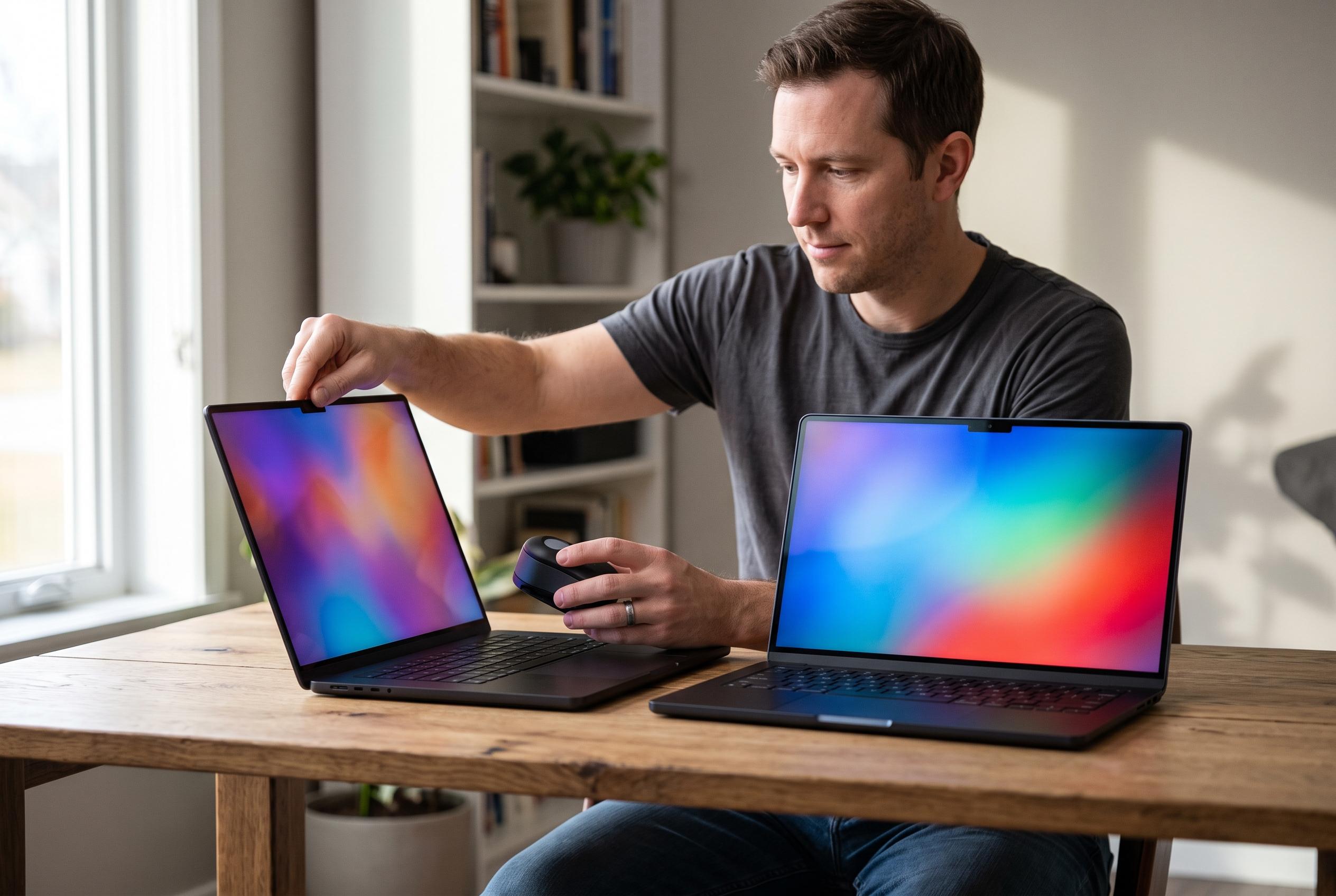

Notebookcheck says the Asus Googlebook 14 and HP Googlebook 14c lack useful wide-gamut controls, while their OLED panels also show shortcomings in HDR support and contrast.
Notebookcheck says two new Googlebook models, the Asus Googlebook 14 and the HP Googlebook 14c, are falling short of their display claims despite using OLED panels. In testing, the publication found that both machines are effectively limited to the sRGB colour space, with no usable option in system settings to switch to P3. That matters because wide-gamut support is one of the main reasons buyers expect OLED laptops to perform well for colour-sensitive work such as photo editing. Notebookcheck’s findings also echo its review of the HP model, which noted 83% P3 coverage and no way to select an sRGB profile.
The practical result, according to the German site, is that neither device currently behaves like a polished high-end creative machine. Notebookcheck compared the situation with many OLED Windows laptops, which usually ship with separate colour profiles for everyday use and editing workflows. By contrast, the Googlebook units appear stuck in a narrower configuration, reducing accuracy for users who expect the display to match the premium positioning and pricing. The review argues that this makes the pair a poor choice for serious image work, at least in their present state.
The two models also diverge in other ways. Notebookcheck says the HP Googlebook 14c does not support HDR video playback at all, while the Asus Googlebook 14 does support HDR output but shows unusual black-level behaviour. In the Asus test, black luminance was measured at 0.42, which the publication says is far higher than expected from an OLED screen and closer to IPS-like behaviour. That pushed contrast down to roughly 1,200:1, undermining one of OLED’s main advantages.
The broader concern, according to Notebookcheck, is that these flaws sit uncomfortably with a product line aimed at the upper end of the market. Windows Central’s hands-on impression of the Asus Googlebook 14 praised its lightweight magnesium-aluminium construction and vivid 16:10 OLED panel, but also questioned the software transition and app support around Googlebook OS. Tom’s Guide made a similar point in its review of the Acer Googlebook 14, describing the platform as promising but still early in development and dependent on Android-phone integration. Taken together, the reports suggest that Googlebook hardware may be ahead of its software and display tuning, even before buyers reach the more advanced features they would normally expect from premium OLED laptops.
Disclaimer: This content is intended for informational purposes only. Readers are advised to exercise their own judgement, conduct due diligence, or consult a qualified expert before acting on any information provided.