
Google enters the Bluetooth tracker market with Pixel Tag, leveraging its Find Hub network to reach over a billion Android devices, offering a new alternative to Apple’s AirTag and Samsung’s Galaxy SmartTag2.
Google has entered the Bluetooth tracker market with Pixel Tag, a device positioned directly against Apple’s AirTag and Samsung’s Galaxy SmartTag2. According to Google’s launch details, the tag is priced at $29 for a single unit or $99 for a four-pack, and it will go on sale on 11 November. The new tracker is built around Google’s Find Hub network, which the company says reaches more than a billion active Android devices.
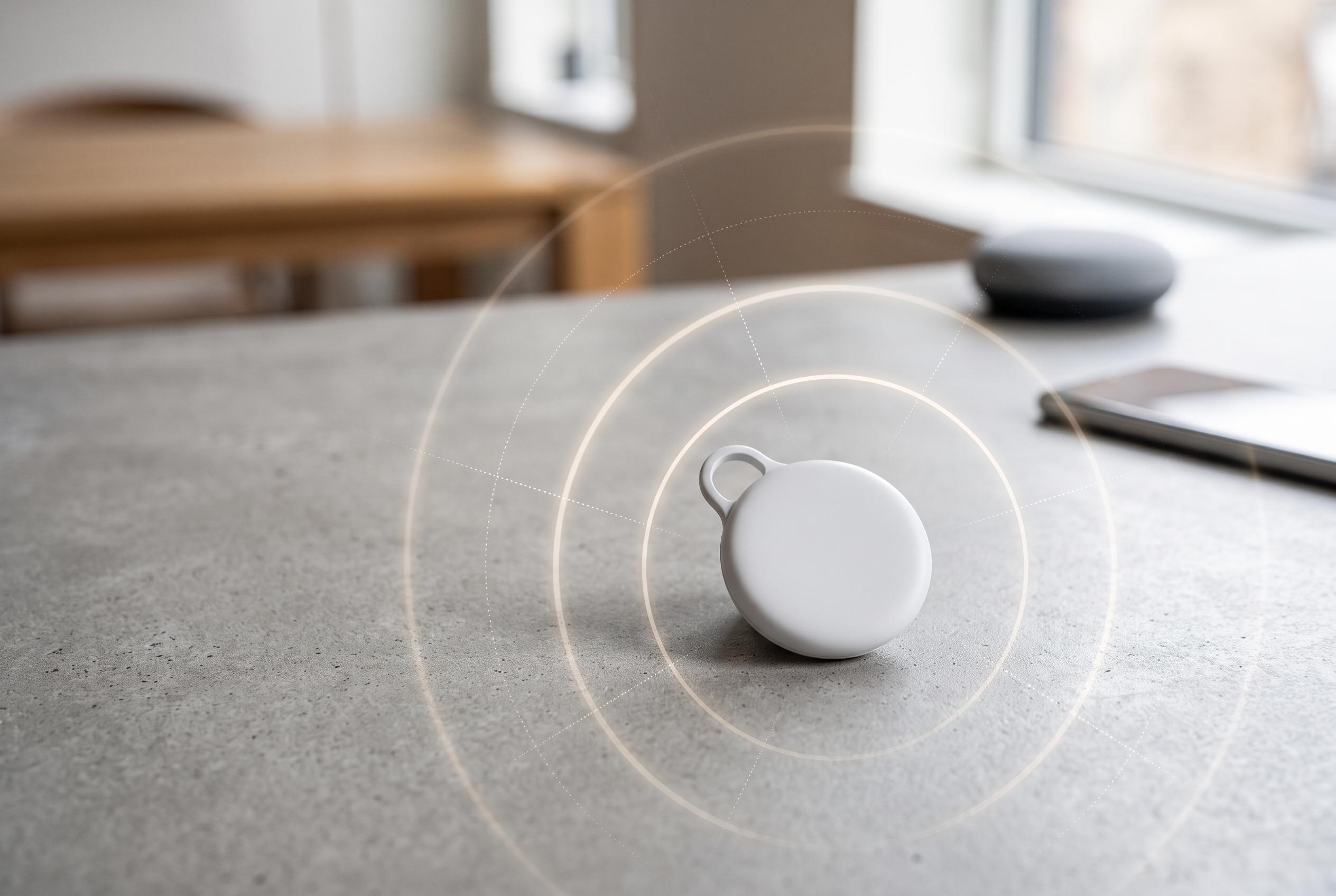
The three products are close on price, but they differ sharply in design. AirTag is a small circular disc, Galaxy SmartTag2 uses a pill-shaped body with an integrated loop, and Pixel Tag adopts a pebble-like form that is lighter than both rivals. Google’s tracker weighs 11.8g, measures roughly 28 x 46mm, and, like AirTag, does not include a built-in keyring hole, so users will need a separate case or holder. All three use replaceable CR2032 batteries and carry IP67 protection against dust and water.
For short-range finding, each tracker combines direct phone connection with a precision locating system. Apple’s AirTag uses Ultra Wideband for exact direction and distance on supported iPhones, while Samsung’s SmartTag2 also supports UWB but reserves its most accurate Compass View mode for selected Galaxy flagship phones. Google says Pixel Tag uses UWB as well as Bluetooth Channel Sounding, a newer Bluetooth-based distance measurement method, although TechRadar notes that some of the more advanced functions will depend on Android 16 and Bluetooth 6.0 support.
The larger difference is in network reach. Apple’s Find My network is built around more than a billion Apple devices, while Samsung’s SmartThings Find is restricted to Galaxy phones and tablets. Google’s Find Hub is broader than Samsung’s system because it works across the wider Android ecosystem, including devices running Android 9 or later for setup, according to Google’s published specifications. That gives Pixel Tag a wider potential audience than SmartTag2, though it still remains tied to Android rather than iPhone.
There are also feature gaps to consider. TechRadar says Find Hub still lacks some of the conveniences users expect from Apple’s ecosystem, including left-behind alerts, location history, easier tracking controls and a Bluetooth-only mode for offline situations. Android Central also reports that Pixel Tag can ring a phone from the tag itself, but only when paired with Android 16 and Bluetooth 6.0. Against that backdrop, the choice remains straightforward: AirTag for iPhone users, SmartTag2 for Galaxy owners, and Pixel Tag for most other Android users. For buyers willing to look beyond the big three, brands such as Chipolo, Pebblebee and Tile offer alternative trade-offs, including cross-network support in some cases.
Disclaimer: This content is intended for informational purposes only. Readers are advised to exercise their own judgement, conduct due diligence, or consult a qualified expert before acting on any information provided.