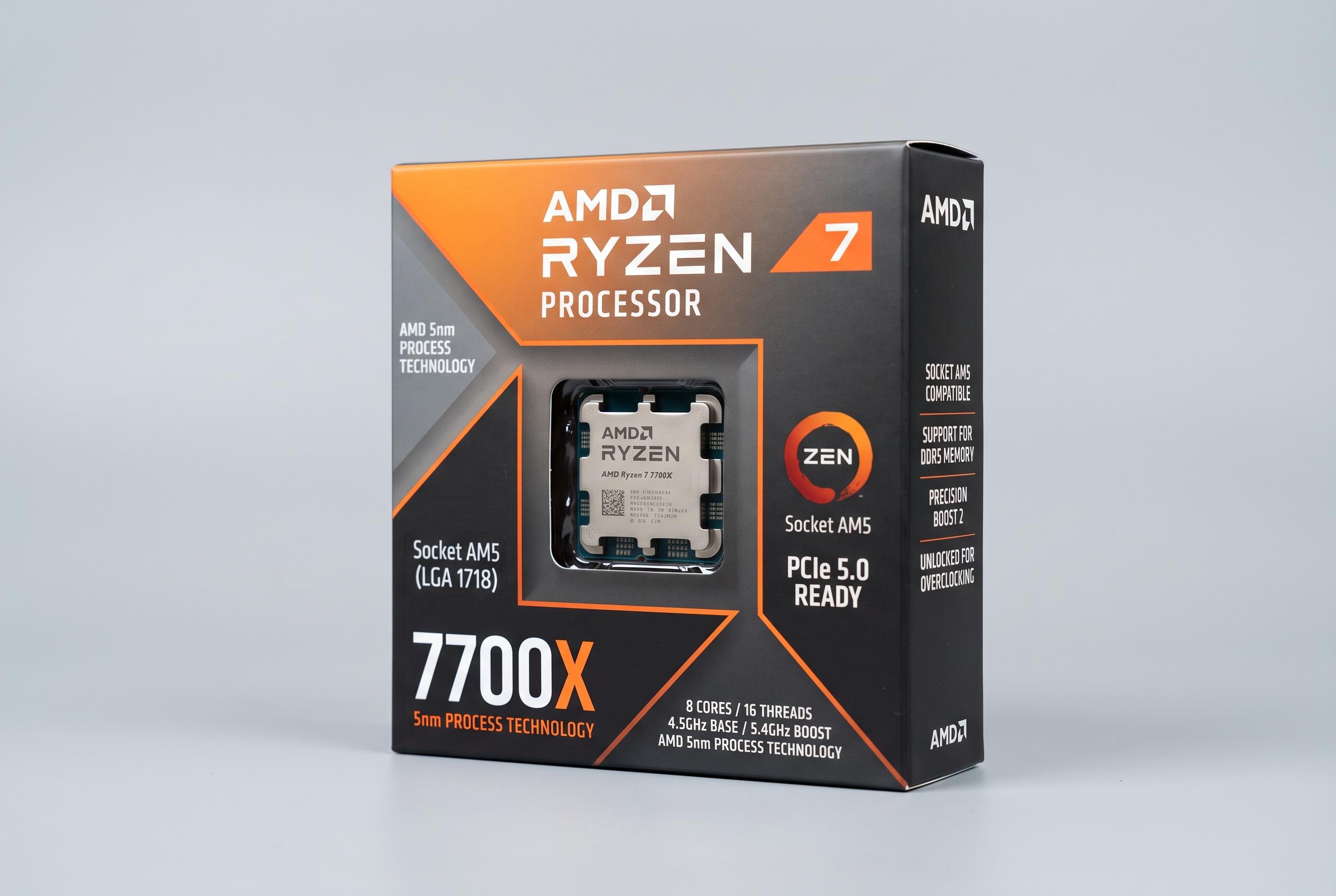

Once overshadowed by high-end models, the Ryzen 7 7700X now stands out as a cost-effective choice for gamers seeking a reliable, future-proof CPU on the AMD AM5 platform, buoyed by significant price reductions and solid performance credentials.
The Ryzen 7 7700X has become an easy CPU to overlook, yet it remains one of the more sensible choices in AMD’s AM5 line-up for people building a gaming PC on a budget. XDA Developers argues that its lack of attention is part of the appeal: it no longer carries the launch hype of 2022, but that also means its pricing has fallen to a far more attractive level. The processor was originally positioned as a premium mid-range chip, and that made it hard to recommend at full price. At current street levels, the equation is very different.
That shift matters because the 7700X still brings eight cores, 16 threads, a 4.5GHz base clock and boost speeds up to 5.4GHz, along with DDR5 and PCIe 5.0 support on the AM5 platform. Windows Central noted at launch that this combination gave it strong overall performance, but also required a new motherboard, which remains a key consideration for anyone upgrading from AM4. TechRadar likewise highlighted its broad appeal, describing it as a strong all-round processor for most users, even if the move to AM5 means buying into a newer, and more expensive, platform.
Its present value case is strengthened by the wider market. XDA says the chip can now be found well below its original $399 launch price, making it far easier to justify than it was in 2022. That is particularly true for new system builders, since AM4 has little upgrade headroom left, while AMD has said AM5 support will continue through 2029. In practical terms, the 7700X offers a cheaper entry point into a platform with a long runway, rather than a dead-end purchase.
Performance comparisons also help its case. XDA points out that CPU reviews are usually conducted at 1080p with very fast graphics cards precisely so the processor becomes the limiting factor. In real-world use, however, most gamers play at 1440p or 4K, where the graphics card carries more of the load and the differences between CPUs narrow. That means the 7700X can be a perfectly adequate partner for a strong but not extreme GPU, with the graphics card becoming the more important constraint.
The main alternative remains AMD’s X3D family, which still leads for top-end gaming frame rates. Tom’s Hardware has reported that the newer Ryzen 7 7700X3D and 7800X3D deliver better gaming results, with the 7800X3D also offering a higher boost clock and slightly stronger overall performance. But the same reporting shows that the 7700X3D is also aimed at buyers willing to pay more for efficiency and cache-driven gains, not at people chasing the best value. Tom’s Hardware’s review of the 7700X3D also raised questions about pricing, saying a lower tag would make it more competitive.
That leaves the plain Ryzen 7 7700X in an unusual but useful position. It is not the fastest AM5 gaming CPU, and it no longer feels cutting-edge, but it does not need to be. For buyers who want a capable eight-core chip, modern platform features and a realistic upgrade path without paying X3D premiums, it now looks far better than it did at launch.
Disclaimer: This content is intended for informational purposes only. Readers are advised to exercise their own judgement, conduct due diligence, or consult a qualified expert before acting on any information provided.