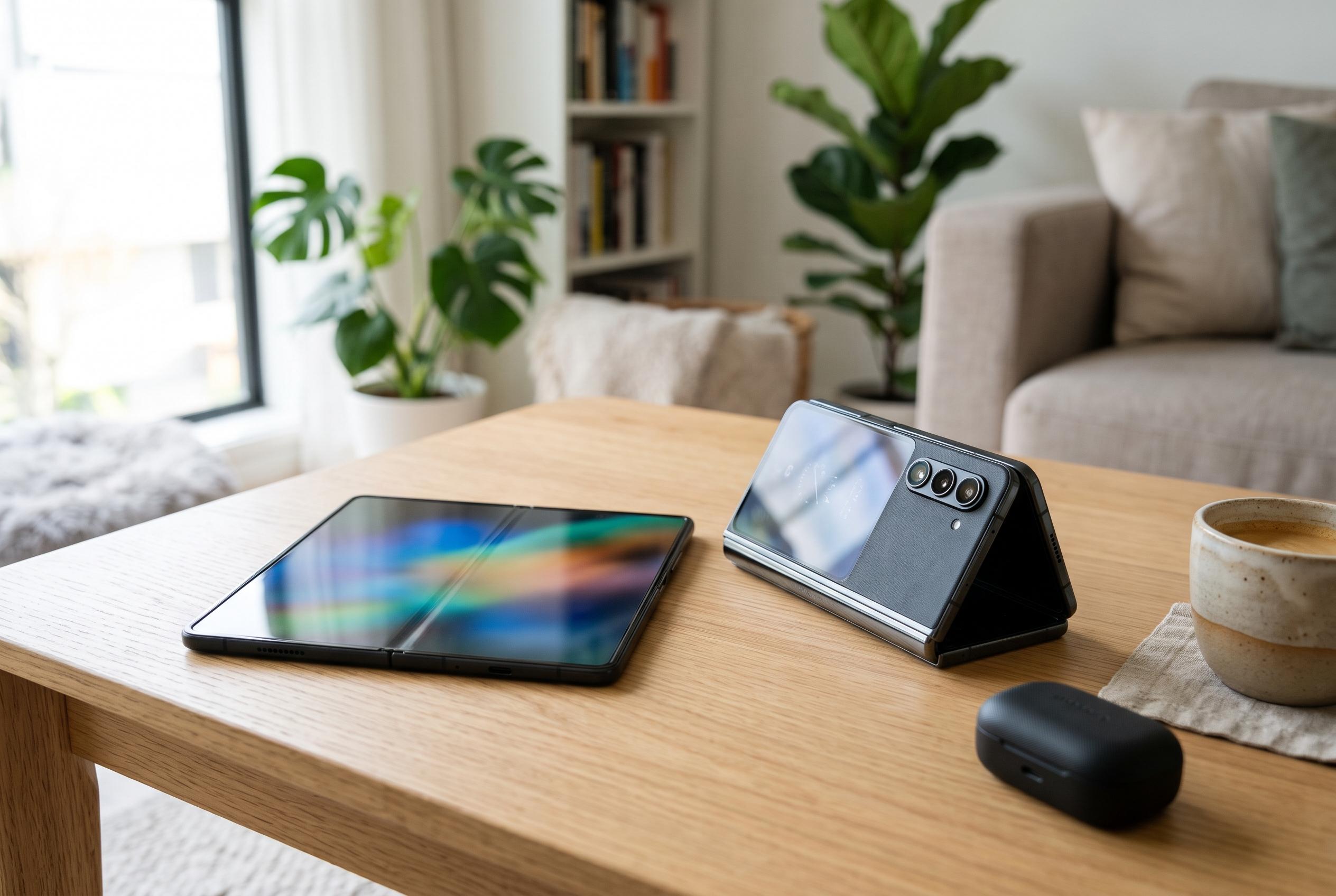

Apple’s iPhone Duo prioritises a wide, tablet-like unfolded display, while Google’s Pixel 11 Pro Fold is easier to use when closed , leaving buyers to choose between competing compromises.
Apple’s iPhone Duo and Google’s Pixel 11 Pro Fold arrive at the same goal from different angles: both try to make a foldable phone usable every day, but they favour different habits. According to Engadget’s comparison, the iPhone Duo takes the wider, passport-like route, with a 5.4-inch outer display that opens into a 7.6-inch internal panel. The Pixel 11 Pro Fold, by contrast, uses a more conventional front screen at 6.5 inches, paired with a larger 8-inch inner display. That difference shapes how each device feels in practice, especially for reading, video and multitasking.
The Duo’s broader layout makes the open device feel closer to a small tablet, which suits content consumption and split-screen use. Its external display is less generous, though, and may feel cramped for quick interactions. The Pixel’s squareer format is the opposite: it is easier to live with when closed, but some video formats and vertical content can look awkward once unfolded. Engadget says the Pixel’s screens are also brighter, reaching a peak of 3,600 nits, while the Duo tops out at 3,000 nits. Apple counters with a nano-texture layer on the folding panel, intended to cut glare and soften the crease.
Both phones are well beyond the flimsy first generation of foldables, but neither is especially light. The iPhone Duo weighs 254 grammes and measures 11.3mm when shut, while the Pixel 11 Pro Fold comes in at 239 grammes and 10.1mm thick. Tom’s Guide says the Duo feels premium in the hand and performs strongly, but its size and mass are hard to ignore over long sessions. The same review also points to a battery life result of 13 hours and 20 minutes, which is a useful figure for a device with such a large inner display.
Materials and durability remain a key dividing line. Apple uses a titanium frame and Ceramic Shield glass on the back, while Google has chosen a fibreglass composite rear panel and ceramic glass on the outer screen, according to Engadget. Both phones carry IP68 ratings for water and dust resistance, which is still relatively uncommon in the foldable category. That gives each model a level of protection that helps narrow the gap with mainstream flagship handsets, even if foldables remain mechanically more complex.
The broader verdict from reviewers is that both devices make real progress, but each still carries trade-offs. Tom’s Guide says the Duo’s software and hinge design are flexible, yet criticism remains over the lack of Face ID, the absence of a telephoto camera and uneven app optimisation. The same outlet says the Pixel 11 Pro Fold offers strong software features, a 5x telephoto lens and solid durability, but its Tensor G6 chip trails rivals in benchmark testing and charging speeds remain modest. In other words, the choice is less about a clear winner than about which compromises matter least.
Disclaimer: This content is intended for informational purposes only. Readers are advised to exercise their own judgement, conduct due diligence, or consult a qualified expert before acting on any information provided.