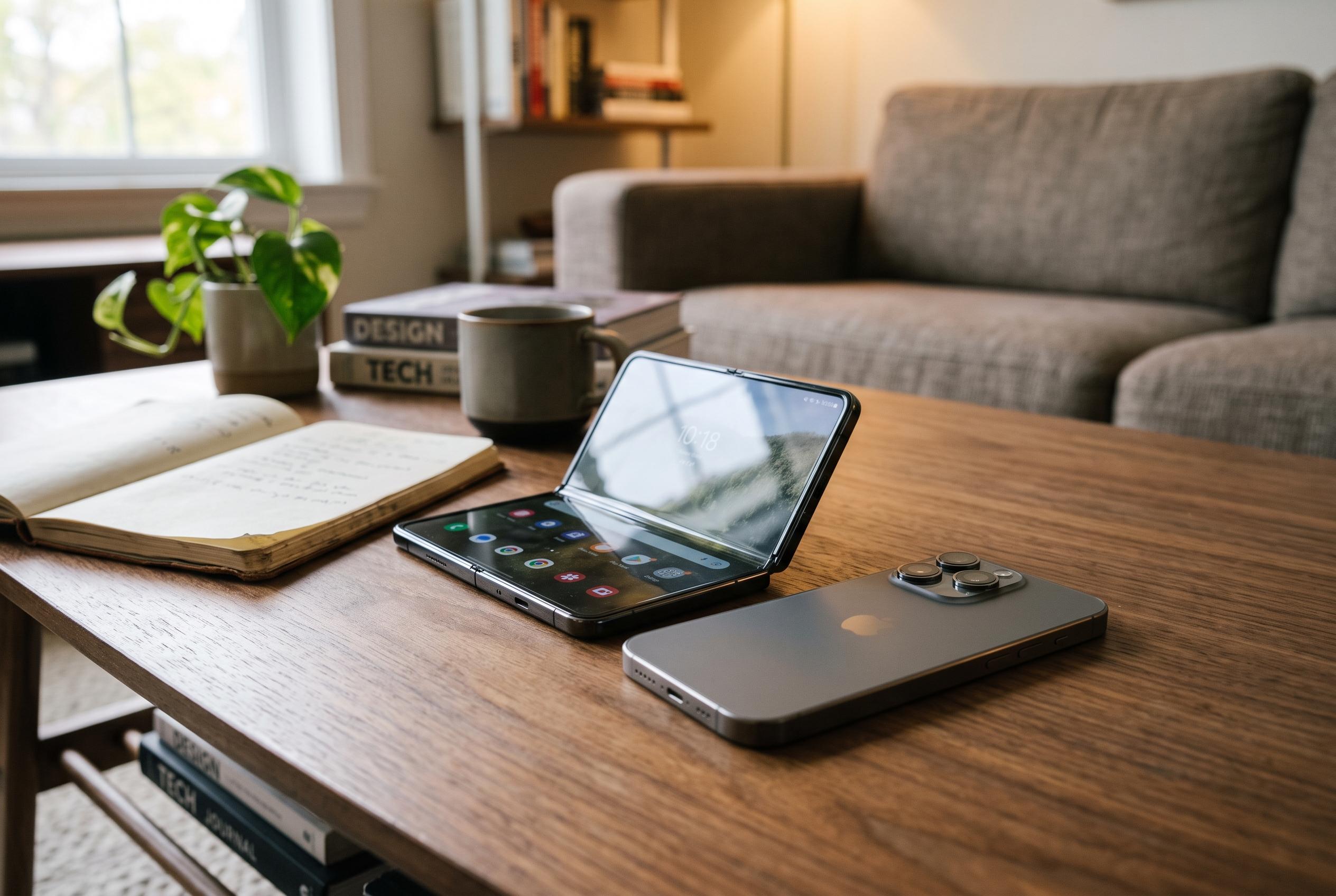

Apple’s foldable iPhone offers a larger, more versatile display and a radically different design, but the iPhone 18 Pro Max keeps the stronger camera system, longer heavy-use battery life and lower price.
Apple’s iPhone Duo marks the company’s most radical hardware shift in years, but the iPhone 18 Pro Max remains the safer, more familiar flagship. According to El Nacional’s comparison, the choice comes down to whether buyers want a conventional premium iPhone with Apple’s most complete camera system, or a foldable device built around a very different approach to portability, multitasking and display size.
The contrast begins with the chassis. The iPhone 18 Pro Max follows Apple’s established large-screen formula, with an aluminium body, a glass section at the rear and a prominent camera block. The iPhone Duo, by comparison, is built around a titanium frame and a foldable structure that changes both its footprint and its behaviour in daily use. Folded, it is shorter but wider and thicker than a standard handset; unfolded, it becomes significantly thinner, but also transforms into a much larger device that demands a different handling style.
Displays are where the two models diverge most clearly. The iPhone 18 Pro Max uses a 6.9-inch OLED Super Retina XDR panel, a familiar high-end screen optimised for video, gaming and general use. The iPhone Duo pairs a 5.4-inch external OLED screen with a 7.6-inch internal OLED panel, both supporting ProMotion at up to 120Hz. That gives it a more versatile layout for checking notifications on the outside and switching to a tablet-like surface for browsing, multitasking and media when open. The inner screen also introduces a nanotextured finish, which the report says is being used on an iPhone for the first time.
The camera systems also point to different priorities. The iPhone 18 Pro Max has three 48-megapixel rear cameras, including a main sensor with variable aperture, an ultra-wide camera and a telephoto lens. That variable aperture is especially important for users who care about exposure control and low-light photography, as it allows the physical opening to change depending on the scene. The iPhone Duo, meanwhile, offers two 48-megapixel rear cameras and omits a dedicated telephoto unit. It compensates with a 12-megapixel external camera with Centre Stage and an under-display front camera inside, but the overall setup is less ambitious for zoom photography.
On performance, the two devices are unusually close. Both are said to use Apple’s A20 Pro chip and 12GB of RAM, which should give each model enough headroom for demanding apps, high-end games and the company’s on-device AI features in iOS 27. The main difference is likely to be in sustained use rather than headline speed, since the foldable design has to support two screens and a more complex internal layout.
Battery life is another area where the gap is less straightforward than the raw figures suggest. The iPhone 18 Pro Max is listed with a 5,567mAh battery and up to 43 hours of video playback. The iPhone Duo has a smaller 4,883mAh battery, but Apple’s claimed endurance varies by display: up to 44 hours with the outer screen and up to 31 hours when the inner panel is used. In practical terms, that means the foldable may last longer in lighter use, but the Pro Max is still likely to prove better for heavy, all-day use, especially if the Duo is opened frequently.
Price is likely to decide the matter for many buyers. The iPhone 18 Pro Max starts at €1,619, while the iPhone Duo begins at €2,339, a difference of €720. That makes the Pro Max the more conventional and more affordable premium option, particularly for users who want Face ID, the strongest camera package and the longest battery life. The Duo, by contrast, is aimed at buyers who value novelty, larger-screen flexibility and the appeal of carrying something closer to an iPhone and an iPad in one device.
Disclaimer: This content is intended for informational purposes only. Readers are advised to exercise their own judgement, conduct due diligence, or consult a qualified expert before acting on any information provided.