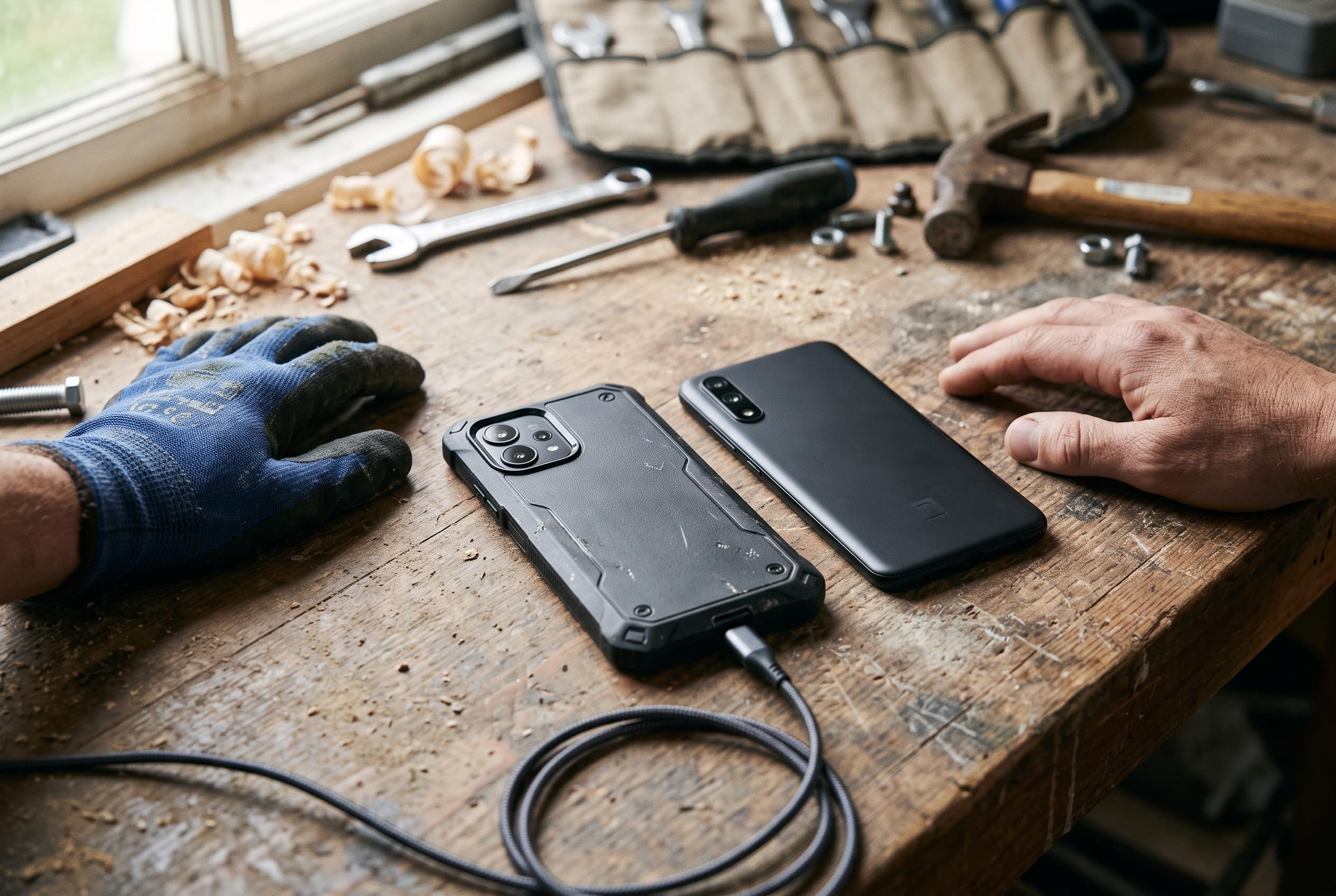

In the competitive budget segment, the itel Power 80 and Tecno Pop 20 align in price but differ significantly in durability, battery life, and imaging, catering to distinct user priorities.
Tecno’s Pop 20 and itel’s Power 80 sit in the same broad budget band, but they are not built to the same brief. Both use the Unisoc T7250 chipset and support 2G, 3G and 4G networks, which keeps them squarely aimed at buyers who want an affordable daily phone rather than a feature-heavy flagship. According to the original comparison, they also share dual nano-SIM support and microSD expansion, so neither model is trying to win on novelty; the real differences lie in the hardware details that affect everyday use.
On the outside, the two handsets look closely matched at first glance. Each uses a large 720p IPS LCD panel with a 120Hz refresh rate, with the Pop 20 at 6.75 inches and the Power 80 at 6.78 inches. That difference is small enough to be irrelevant in practice. What matters more is protection. NaijaTechGuide says the Pop 20 carries an IP64 rating, while other product listings and comparison material describe the Power 80 as having IP68/IP69 resistance, which is a far stronger claim for dust protection and water exposure. In simple terms, the itel device is the one designed to withstand harsher conditions.
Software is another area where the two phones diverge. The Tecno model launched with HiOS based on Android 15, while the itel device shipped with itel OS based on Android 16, according to the material provided. The two interfaces are presented as broadly similar in appearance and operation, although the likely update outlook appears modest on both devices. The Tecno is expected to receive at least one major Android upgrade, but not necessarily quickly, and there is no clear sign that the itel model will be treated much more generously. For buyers choosing in this segment, that means software support is unlikely to be a decisive advantage for either handset.
The largest gap is in imaging and battery life. The Pop 20 is listed with a 13-megapixel rear camera, while the Power 80 is described as using a 50-megapixel main sensor, with both phones carrying 8-megapixel front cameras. On paper, the itel should have the stronger rear camera package. Battery hardware tells a similar story. The Tecno uses a 5,000mAh cell with 15W charging, whereas the itel combines a 7,000mAh battery with 18W charging and reverse charging. Technical listings from other sources reinforce that picture, showing the Power 80 as a larger, longer-lasting device aimed at heavy use and fewer charging stops.
The smaller conveniences also split the field. The Pop 20 includes FM radio, which the Power 80 does not appear to offer, while both phones keep an infrared blaster and a side-mounted fingerprint reader. Pricing reflects the different equipment levels. The Pop 20 is listed at about ₦154,700 for the 4GB/64GB version and ₦163,500 for the 4GB/128GB model, while the Power 80’s 4GB/128GB variant is put at roughly ₦195,300. That puts the itel at a clear premium, but the extra cost is matched by stronger durability, a bigger battery and a better rear camera specification. For buyers who value toughness and endurance, the Power 80 is the more compelling option; for those who want to save money and still get a capable everyday phone, the Pop 20 remains the cheaper route.
Disclaimer: This content is intended for informational purposes only. Readers are advised to exercise their own judgement, conduct due diligence, or consult a qualified expert before acting on any information provided.