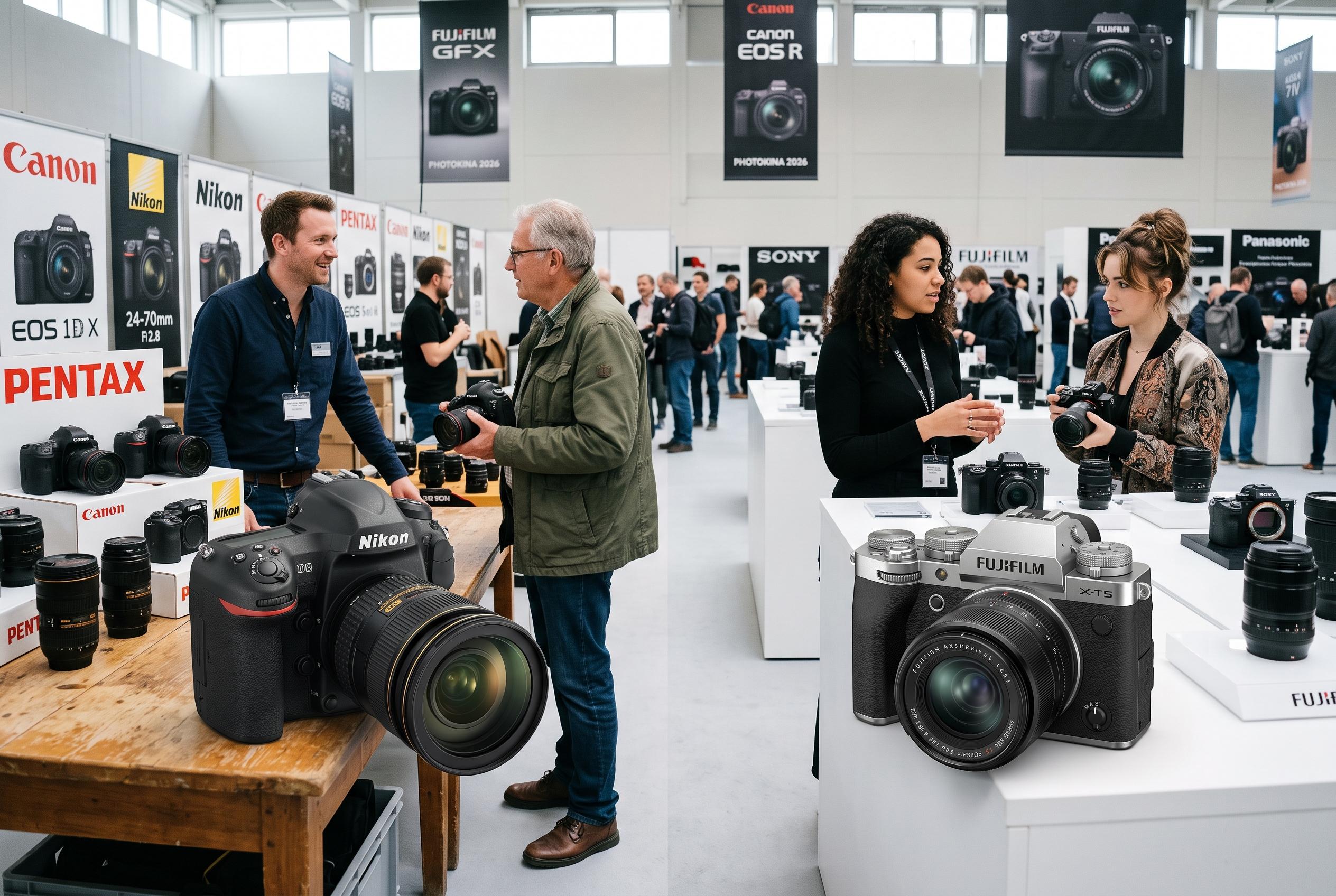

In 2026, buyers face a clear divide in the camera market: traditional DSLR models for stills remain popular, while compact mirrorless cameras are favoured for video and social media content, exemplified by models from Nikon, Canon, and Sony.
In 2026, buyers still face a clear split in the camera market: established DSLRs with optical viewfinders remain attractive for stills, while compact mirrorless bodies are increasingly the better fit for video and social content. A practical shortlist of three models illustrates that divide, spanning a high-end full-frame Nikon, an entry-level Canon and a creator-focused Sony.
According to Nikon’s official specifications, the D850 remains a serious stills-first body. It uses a 45.7-megapixel full-frame FX-format sensor, a 153-point autofocus system with 99 cross-type sensors, and continuous shooting at up to 9 frames per second. The company also lists 4K UHD recording at 30p, a tilting 3.2-inch touchscreen and a weather-sealed magnesium-alloy body, alongside support for both SD and XQD/CFexpress cards. That combination makes it well suited to users who want resolution, durability and a traditional DSLR shooting experience, even if the body is heavy by modern standards.
Canon’s EOS 2000D sits at the opposite end of the market. Canon describes it as an entry-level DSLR built around a 24.1-megapixel APS-C sensor, with a 9-point autofocus system, Full HD video at 30p and compatibility with EF and EF-S lenses. It is intended for beginners rather than demanding action or video work. The appeal is straightforward: lower cost, simple controls and a familiar optical viewfinder approach to learning exposure and composition.
Sony’s Alpha ZV-E10 is the most video-oriented option in the group. Sony positions it as a mirrorless camera for vloggers and content creators, with a 24.2-megapixel APS-C sensor, 425-point phase-detection autofocus and real-time eye tracking. The official product page says it can record 4K video without time limits and includes a fully articulated touchscreen, a directional three-capsule microphone with wind protection and an external microphone input. Its compact size and low weight make it a practical choice for handheld shooting, but it does not include a built-in electronic viewfinder or in-body stabilisation.
Taken together, the three models reflect three different use cases rather than one universal recommendation. Nikon’s D850 is the most capable stills body here, Canon’s EOS 2000D is the clearest low-cost entry point, and Sony’s ZV-E10 is the strongest option for creators who prioritise video, audio and portability over DSLR handling.
Disclaimer: This content is intended for informational purposes only. Readers are advised to exercise their own judgement, conduct due diligence, or consult a qualified expert before acting on any information provided.