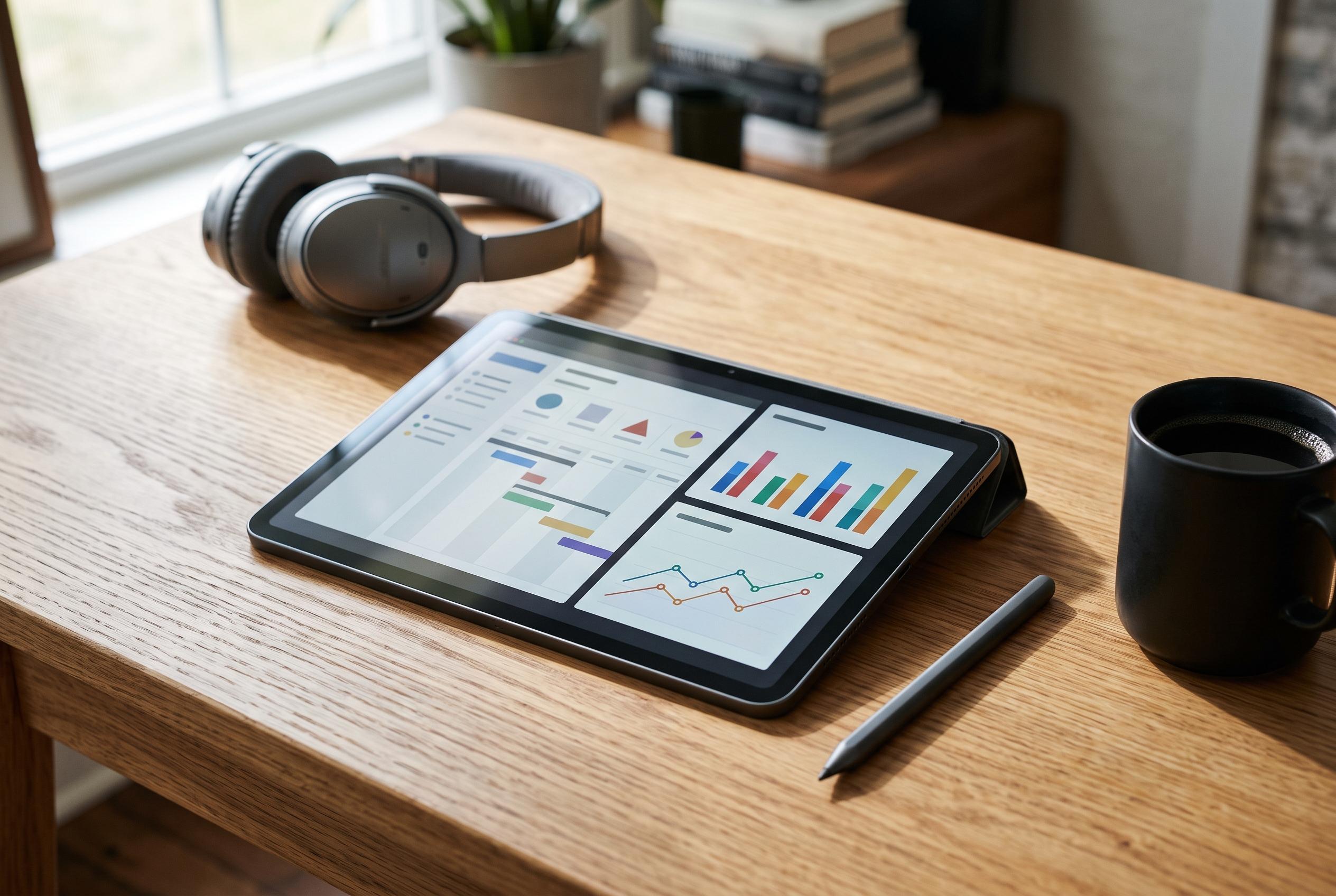

With mid-tier models now capable of handling demanding workloads, professionals must choose between powerful flagship tablets and versatile, cost-effective options tailored to lighter tasks, signalling a reshuffle in the tablet market for 2026.
For professionals choosing a tablet in 2026, the key question is no longer whether a tablet can handle work, but which kind of work it can replace. The Tecnoblog guide draws a clear line between high-end models for demanding creative tasks and more modest devices suited to email, spreadsheets and admin. That distinction is important because, as recent buying guides from Tom’s Guide, TechRadar, Vecosys and Android Central also suggest, the best tablet depends heavily on whether the user values raw performance, battery life, large-screen multitasking or price.
At the top end, Apple and Samsung remain the main reference points. Tecnoblog places the iPad Pro with M5 hardware and the Galaxy Tab S11 Ultra among the strongest options for intensive work, citing their fast chips, generous memory, high-refresh displays and broad multitasking features. Vecosys similarly identifies the iPad Pro M5 as a leading business tablet, while Android-focused round-ups point to the Galaxy Tab S11 Ultra as the premium Android choice for large-screen productivity.
The more practical choice for many buyers is the middle tier. Tecnoblog singles out the Galaxy Tab S10 FE Plus, iPad Air, Lenovo Idea Tab Pro and Vaio TL12 as devices that balance performance with portability or cost. Tom’s Guide also highlights the iPad Air M4 as a strong all-round tablet, describing it as close to laptop-grade in a thin body, while TechRadar’s July guide points to Samsung’s Galaxy Tab S10 Plus as a capable premium Android alternative. The broader pattern is clear: current mid-range tablets are now strong enough for serious multitasking, but not all are equally suited to heavier creative workloads.
For buyers with lighter needs, battery life and included accessories often matter more than headline performance. Tecnoblog recommends the Galaxy Tab S10 Lite and Lenovo Idea Tab as value options for routine office tasks, with can’ra and keyboard support helping them feel more complete. That emphasis on accessories aligns with other 2026 tablet guides, which increasingly treat stylus support, keyboard bundles and multi-window software as core productivity features rather than optional extras.
Connectivity is another practical dividing line. Tecnoblog notes that several of the better work tablets offer 5G variants, which matters for people who are often away from a fixed desk. It also stresses that Android tablets tend to offer more variety across price bands, while iPads remain particularly attractive for design and illustration work. That distinction still holds in the latest recommendations from specialist publications, which continue to position Apple devices as the safest choice for creative professionals and Android tablets as the more flexible option for mixed budgets.
In the end, the best tablet for work depends on the software you actually use. A device with a strong chip, enough RAM, a fluid display and good battery life will suit most office users, but anyone relying on desktop-class software may still need a notebook. Tecnoblog’s list is strongest when read as a practical hierarchy: flagship tablets for demanding production work, mid-range models for balanced productivity, and cheaper devices for lighter administration.
Disclaimer: This content is intended for informational purposes only. Readers are advised to exercise their own judgement, conduct due diligence, or consult a qualified expert before acting on any information provided.