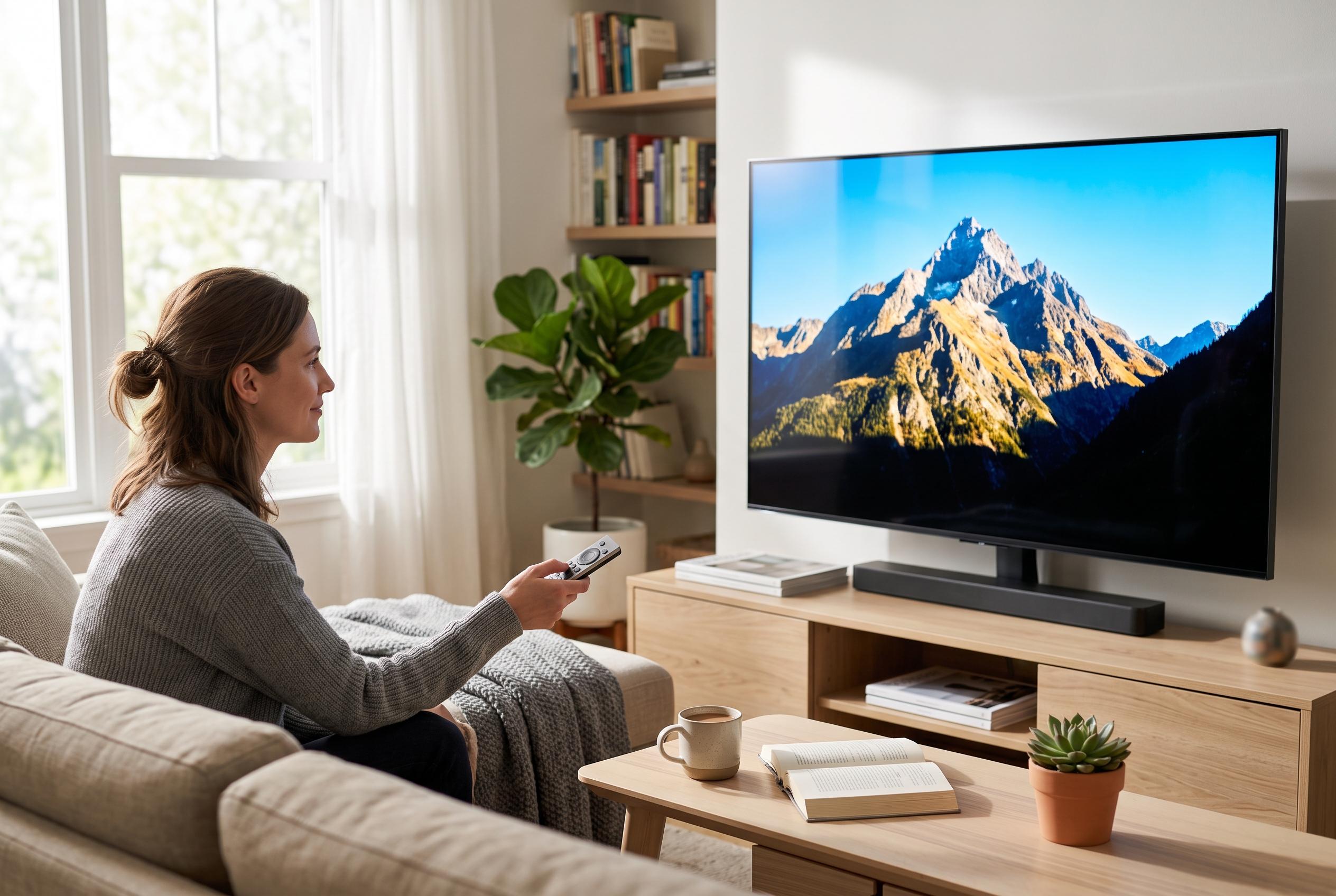

Advancements in mini-LED technology have made high-brightness, contrast-enhancing televisions more affordable, with models like Hisense U8QG leading the way for daylight-friendly viewing, while budget options such as TCL QM7L provide impressive performance at lower costs.
Mini-LED televisions remain the safest choice for rooms that stay bright through the day, because they combine strong sustained brightness with local dimming that helps preserve contrast when sunlight fills the space. The distinction matters: reflections are one problem, but picture washout is another, and only the latter is solved by sheer output. Tom’s Guide’s 2026 Google TV round-up and its HDMI 2.1 guide both underline the same point, placing the Hisense U8QG among the strongest bright-room performers while also noting the Hisense U75QG as a capable, less costly alternative for buyers who still want high brightness and a fast panel.
For readers looking for the clearest single recommendation, the Hisense U8 series stands out because it pairs very high claimed peak brightness with a dense mini-LED backlight and a 165Hz panel, which should help sports and gaming as well as daytime viewing. Tom’s Guide describes the U8QG as especially impressive for brightness, colour accuracy and refresh rate, while TechRadar likewise points to the model as a strong choice for sport thanks to its brightness and motion handling. That makes it a sensible first stop for a sunlit living room where the main issue is not just glare, but a picture that still needs to look punchy at mid-afternoon.
Where direct reflections are the bigger nuisance, Samsung’s Neo QLED range remains the most obvious alternative. TechRadar ranks the QN90F highly for bright-room use and sports, crediting it with strong glare resistance and excellent motion performance, while other buying guides also continue to point to Samsung’s anti-reflection treatment as the more effective answer when a window or lamp lands squarely on the screen. That is the practical divide: a brighter panel helps with daylight washout, but a matte or glare-reducing coating is what stops the television turning into a mirror.
The mid-range market has improved sharply, and TCL’s QM7L is a good example of how much performance is now available below premium prices. Tom’s Guide recently named the QM7L its best mini-LED TV of the year, praising its contrast, colour and gaming credentials, while also noting brightness of up to 2,300 nits and a low input latency that make it more versatile than a typical budget set. For households that need a bright-room television but cannot justify flagship pricing, that combination is often the sweet spot: enough light output to cope with daylight, but not so much spending that the set becomes difficult to recommend on value alone.
At the lower end of the market, the important development is simply that mini-LED has begun to appear at prices that once bought only basic edge-lit panels. Tom’s Guide highlights the Hisense U75QG as a strong value pick with high brightness and a 165Hz refresh rate, while the wider market is also moving towards more affordable QLED and mini-LED sets that still offer usable HDR and better light control than standard LED televisions. For a bright kitchen, den, or secondary room, that matters more than headline peak figures: buyers are usually trying to avoid a dull, grey picture rather than chase reference-level performance.
OLED still has a place, but mainly in rooms where light control is good. TechRadar and Good Housekeeping both continue to favour OLED sets for image quality, particularly models with strong anti-glare treatment, yet even those guides stop short of calling them the best universal answer for bright rooms. That is consistent with the core buying logic: OLED remains superb in dark viewing conditions, but mini-LED usually wins once daylight becomes part of the problem. In practice, the first step before replacing anything is still to turn off any ambient light sensor or eco mode, which can quietly dim a set that is otherwise capable of looking much better in daylight.
Disclaimer: This content is intended for informational purposes only. Readers are advised to exercise their own judgement, conduct due diligence, or consult a qualified expert before acting on any information provided.