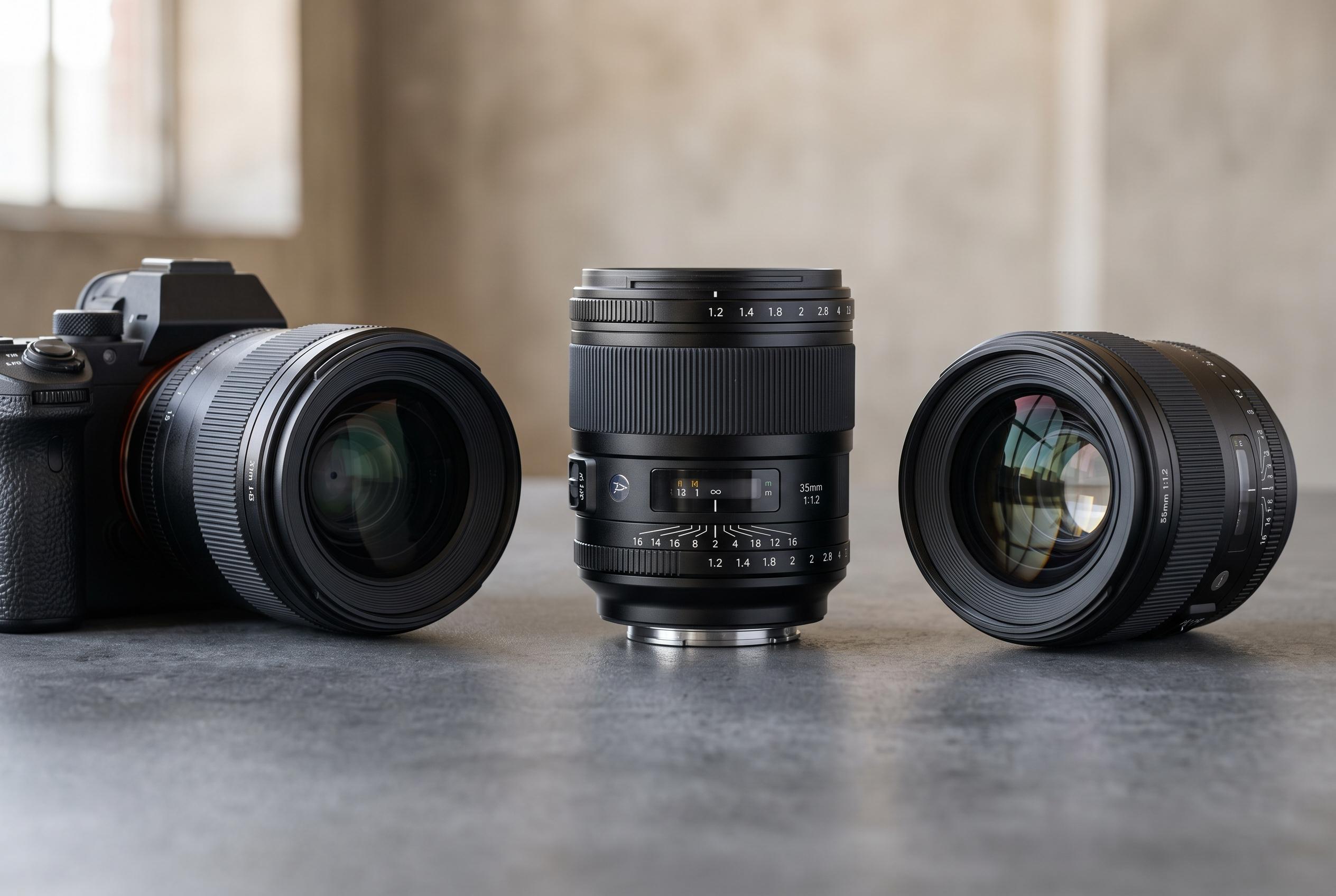

The arrival of Nikon, Sigma, and Viltrox’s latest 35mm f/1.2 lenses signifies a competitive leap in optical performance, size, and affordability, transforming choices for professional and amateur photographers alike.
The latest crop of 35mm f/1.2 full-frame primes shows how far ultra-fast autofocus lenses have moved in a short time. Philip Reeve’s comparison, published on his blog, sets Nikon’s Z 35mm f/1.2 S against Viltrox’s AF 35mm f/1.2 LAB N and Sigma’s 35mm f/1.2 DG Art II, a trio that arrived in 2025 and pushed the category into a new phase of competition. Nikon positions its lens as an S-Line optic for Z-mount users seeking top-tier image quality and smooth rendering, while Viltrox and Sigma are both aiming at the same brief with lower prices or smaller bodies. Nikon’s official materials and press release underline the lens’s premium intent, and third-party reviews have likewise praised its sharpness and build quality, even as they note its considerable size and weight.
Reeve’s measurements suggest that all three lenses are optically formidable, especially by historical standards for a 35mm lens at f/1.2. He found only small differences in transmission, with the Nikon and Sigma effectively level and the Viltrox marginally darker. The Nikon had the lowest measured light fall-off, the Sigma the highest and the Viltrox sat between them. Those gaps were modest enough that Reeve judged them unlikely to matter in practice. He also noted that the lenses’ floating-element designs mean close-focus behaviour can differ from infinity results, which is important for anyone judging these lenses from a single test scenario.
In size and handling, the three lenses split into familiar roles. Nikon’s lens is the largest and heaviest, Sigma’s second-generation design is the smallest and lightest, and Viltrox lands between them. Reeve also pointed out that the Nikon uses a control ring rather than an aperture ring, while the Viltrox is offered in two versions, one with a small OLED display and one without. Digital Camera World’s review of the Viltrox describes a robust, weather-sealed metal build, a dual VCM autofocus system and an 11-blade aperture, while still stressing the lens’s aggressive pricing. That matters because the Viltrox is not merely cheaper; it is also trying to justify itself as a feature-rich tool rather than a stripped-back value option.
Optically, the differences are narrower than the specification sheets might suggest. Reeve found the Nikon to have the lowest vignetting, the Sigma the highest and the Viltrox in the middle. On sharpness, all three lenses performed at a very high level from infinity to portrait distances, with only small shifts in relative behaviour. The Sigma was a touch softer wide open because of mild under-corrected spherical aberration, but Reeve still described all three as better at f/1.2 than many lenses are stopped down. Cameralabs’ separate review of the Nikon Z 35mm f/1.2 S reaches a similar broad conclusion, calling it highly recommended for image quality and build despite its bulk.
The more visible differences emerged in coma, chromatic aberration and bokeh. Reeve found the Viltrox to be best controlled for coma and longitudinal colour fringing, with the Sigma generally next and the Nikon a little behind, though still strong. In backlit scenes, all three handled flare well. The bigger contrast came in rendering: the Sigma produced the smoothest central blur but also the strongest cat’s-eye shaping in the corners, the Viltrox showed the least optical vignetting but a slightly harsher blur character, and the Nikon tried to blend the two approaches. Reeve’s conclusion was that the Nikon is the most balanced, the Viltrox the sharpest bargain and the Sigma the most compact of the premium trio, albeit with a bokeh signature that will not suit everyone.
For photographers choosing between them, price and handling may matter as much as raw image quality. Nikon’s lens is the most expensive and the least portable, but it is also the brand’s flagship 35mm f/1.2 for Z-mount users. Viltrox undercuts both rivals sharply and, according to its own review material, is aimed at shooters who want strong optical performance with modern controls at a lower cost. Sigma’s second-generation lens is more affordable than Nikon’s while being markedly smaller than the first-generation model, which may make it the most practical premium option for many users. Reeve’s overall view is that any of the three can serve as a serious 35mm main lens, but the Viltrox offers the most compelling value, the Sigma the most compact premium design and the Nikon the most even all-round performance.
Disclaimer: This content is intended for informational purposes only. Readers are advised to exercise their own judgement, conduct due diligence, or consult a qualified expert before acting on any information provided.