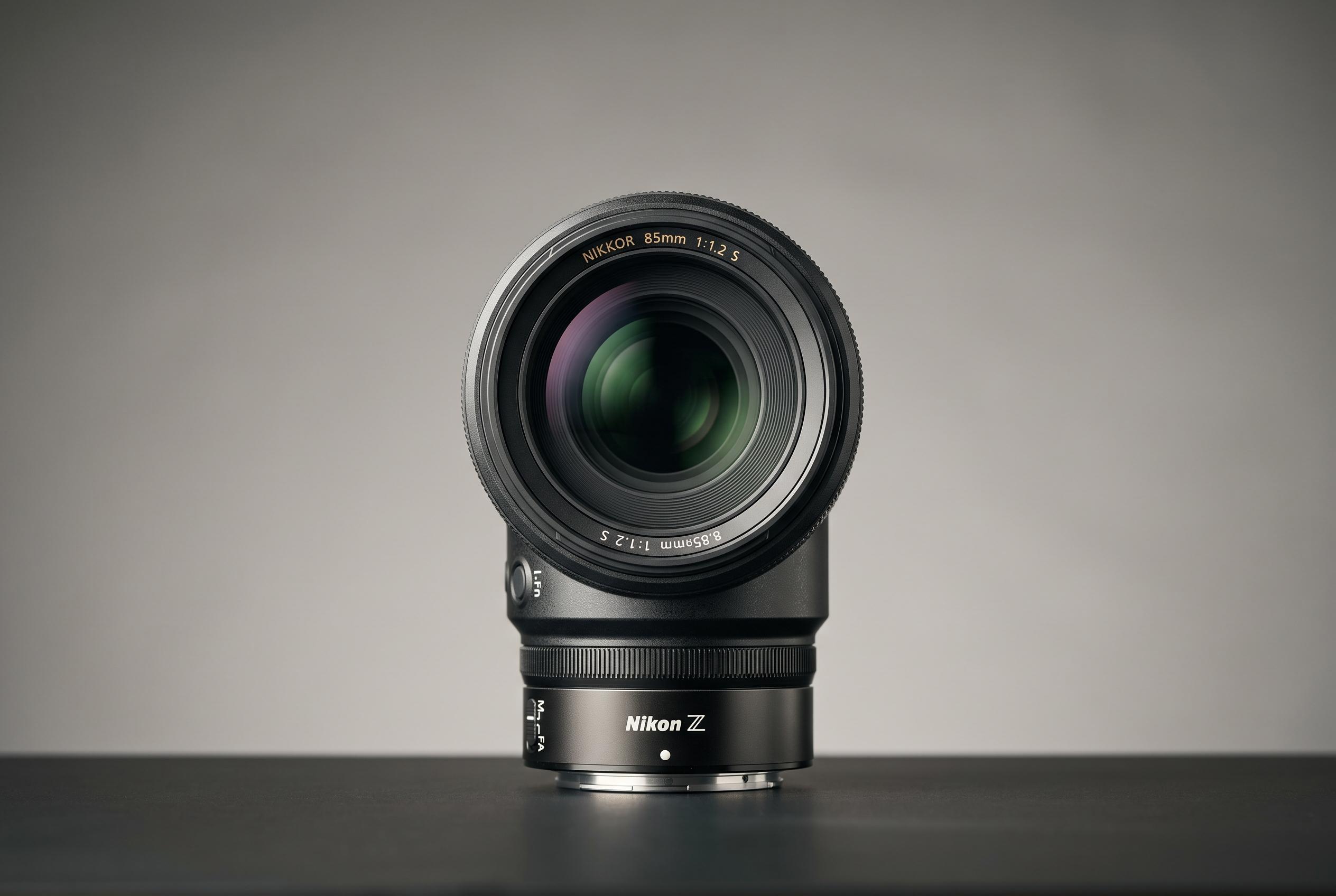

Nikon’s rare 85mm f/1.2 lens for mirrorless systems stands out for its optical quality and build, but experts question whether the significant price premium delivers noticeable benefits in practice, especially compared to more affordable options.
Only a handful of 85mm f/1.2 lenses exist for mirrorless systems, and that scarcity is part of what makes Nikon’s version so provocative. At roughly $2,000 more than the 85mm f/1.8 S, it asks portrait photographers to decide whether the last stop of light and blur is worth a very large premium. In a studio test from Leigh & Raymond Photography, the lens was mounted on a Nikon Z 9 and used for a monochrome portrait session that showed exactly what the flagship optic is built to do: render faces with striking separation, smooth out-of-focus areas and crisp detail even at its widest aperture. According to Digital Camera World, Cameralabs and Photography Blog, the lens has the kind of optical performance that places it firmly in professional territory.
The more interesting question is how much that extra aperture actually changes a portrait in practice. Leigh’s comparison of the same subject at f/1.2, f/1.4 and f/1.8 suggested that the leap from f/1.2 to f/1.4 is subtle at close range, while f/1.8 brings a clearer shift in facial detail into view. That makes sense: shallow depth of field can be both an advantage and a constraint, keeping the eyes sharp while softening the nose and mouth, but also making a slight turn of the head enough to throw one eye out of focus. The video therefore reads less like a lab measurement than a real-world demonstration of how unforgiving ultra-wide apertures can be when subjects move even a little.
Nikon’s own 85mm f/1.8 S offers a much cheaper and lighter alternative, and third-party brands have filled out the middle ground. Leigh also points to the Viltrox 85mm f/1.4 Pro and a budget Meike 85mm f/1.8 as practical options, while noting that the 85mm lens is not as imposing as many buyers might expect when compared with Nikon’s 50mm f/1.2 S. Reviewers have repeatedly said the 85mm f/1.2 S is a large lens, but they also praise its build quality, weather sealing, autofocus speed and smooth bokeh. That combination makes it appealing for working portrait, wedding and fashion photographers, even if the physical burden is substantial.
The broader market shows why the f/1.2 category remains rare. Canon makes an 85mm f/1.2 for mirrorless, while Sigma has announced an 85mm f/1.2 Art in development for E and L mounts. Beyond that, the field narrows quickly, and much of the closest competition comes from manual-focus lenses or slightly different focal lengths. Leigh’s practical point is that focal length often matters as much as aperture in creating background blur and subject isolation, which is why longer lenses such as Nikon’s 135mm f/1.8 S Plena can achieve a similarly shallow look without pushing to such an extreme aperture. For photographers weighing cost against convenience and image character, that may be the real trade-off: the Nikon 85mm f/1.2 S is excellent, but not always necessary.
Disclaimer: This content is intended for informational purposes only. Readers are advised to exercise their own judgement, conduct due diligence, or consult a qualified expert before acting on any information provided.