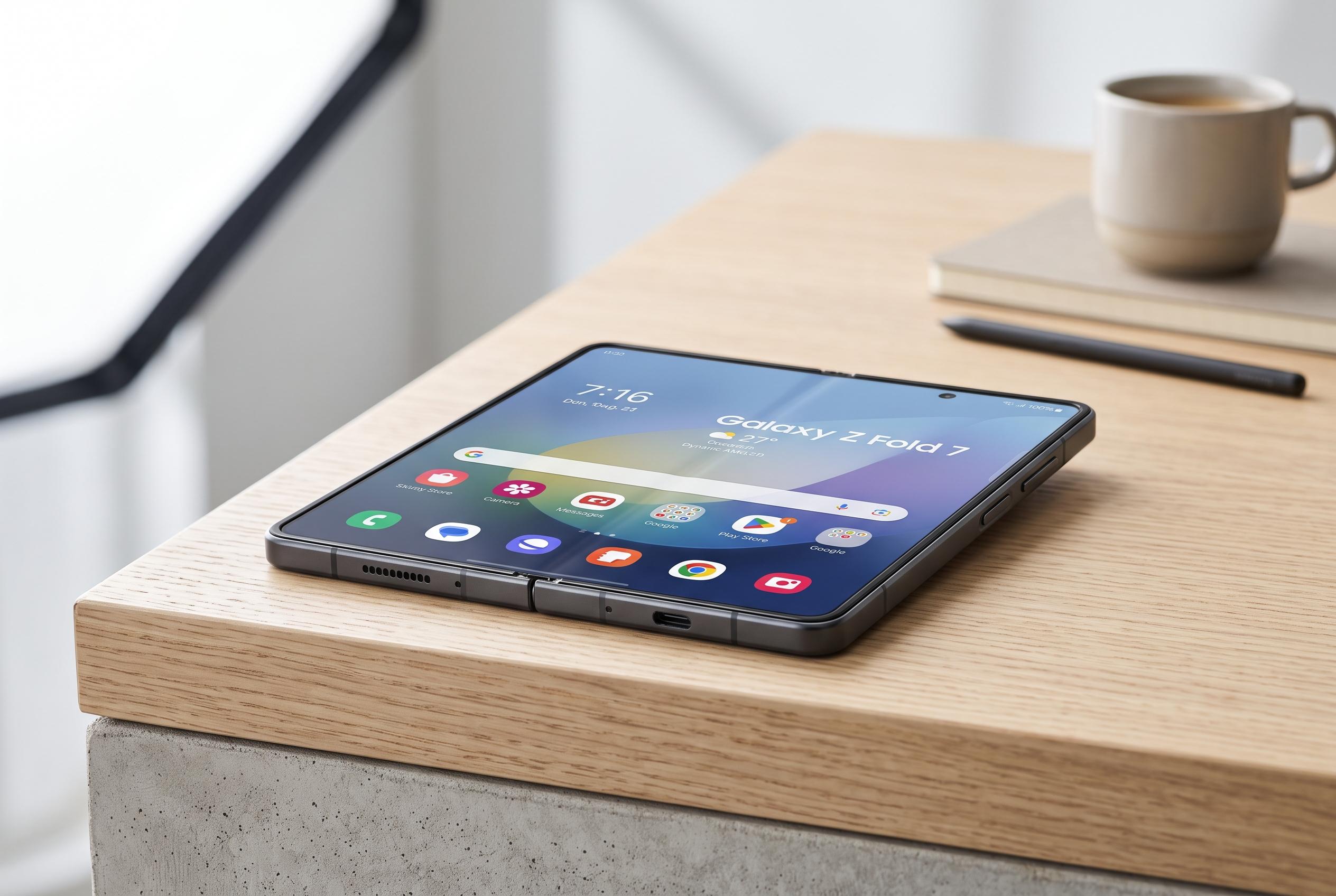

Despite the launch of the Galaxy Z Fold 8 Ultra with improved specs, the Galaxy Z Fold 7 remains a compelling, budget-friendly choice with similar capabilities, thanks to minimal hardware differences and significant price reductions.
Samsung has a familiar trick: it can make a year-old flagship look ordinary simply by launching a shinier successor. Yet the Galaxy Z Fold 7 has proved harder to dismiss than that. The newer Galaxy Z Fold 8 Ultra, which Samsung launched on July 22, 2026, arrives with a bigger battery, a refined design and a higher asking price, but the older device still makes a persuasive case for itself, especially now that discounts have widened the gap between the two. According to Samsung’s own pricing and the comparisons published by PhoneArena and Yanko Design, the question is no longer which model is newer, but which one offers the better balance of design, hardware and value.
The biggest surprise is how little has changed in the hand. The Fold 8 Ultra is only 0.1mm thinner when unfolded than the Fold 7, a difference so small that it is unlikely to matter to most buyers. Both phones weigh 215 grams, too, which means Samsung appears to have found a comfortable ceiling for a book-style foldable last year and then largely stayed there. The Fold 7 was the model that delivered the real breakthrough, cutting weight and bulk dramatically from the Fold 6 while also making the outer display far more usable.
Price is where the older phone becomes genuinely difficult to ignore. The Fold 8 Ultra starts at $2,099.99, while the Fold 7 has fallen to $1,499.99 at Samsung.com, leaving a live gap of $600. That difference is large enough to dwarf the modest design changes between the two. The Fold 7 also still brings a 200MP main camera, a Snapdragon 8 Elite chip, an 8-inch inner display and a 6.5-inch cover screen, alongside Samsung’s seven-year software support promise. For buyers who do not care about owning the newest model on day one, that is a strong package at a much friendlier price.
Camera upgrades on the Fold 8 Ultra do matter, but mainly in specific use cases. PhoneArena says the newer model keeps the 200MP main sensor while upgrading the ultra-wide camera to 50MP and adding a 3x optical zoom telephoto lens, which should help with broader scenes and more flexible shooting. Even so, the Fold 7 remains on equal footing for most everyday photography because its main camera is the same class of hardware and still benefits from Samsung’s image processing. For people who shoot mostly with the primary lens, the older phone is not conceding much at all.
Software support is the other reason the Fold 7 has not aged out of relevance. Samsung’s seven-year update commitment means the device still has a long runway ahead of it, and the Fold 8 Ultra does not gain a meaningful advantage on that front. Both phones run Android 17 with One UI 9 according to PhoneArena, so the newer model is ahead only in timing, not in long-term entitlement. That leaves the Fold 7 in an unusual position: it is old enough to be cheaper, but new enough to remain current for years. Add in the fact that the Fold 8 Ultra does not restore S Pen support and the argument for paying extra narrows further.
None of this means the Fold 8 Ultra is a weak follow-up. It is thinner, it packs a larger 5,000mAh battery and it brings worthwhile camera and charging gains. But the Fold 7 did the hard work of turning Samsung’s foldable into something that felt practical rather than novel, and that achievement still holds. For first-time foldable buyers, the newer model may be the more complete showcase. For everyone else, especially anyone staring at a $600 price difference, the older phone remains the sharper buy.
Disclaimer: This content is intended for informational purposes only. Readers are advised to exercise their own judgement, conduct due diligence, or consult a qualified expert before acting on any information provided.