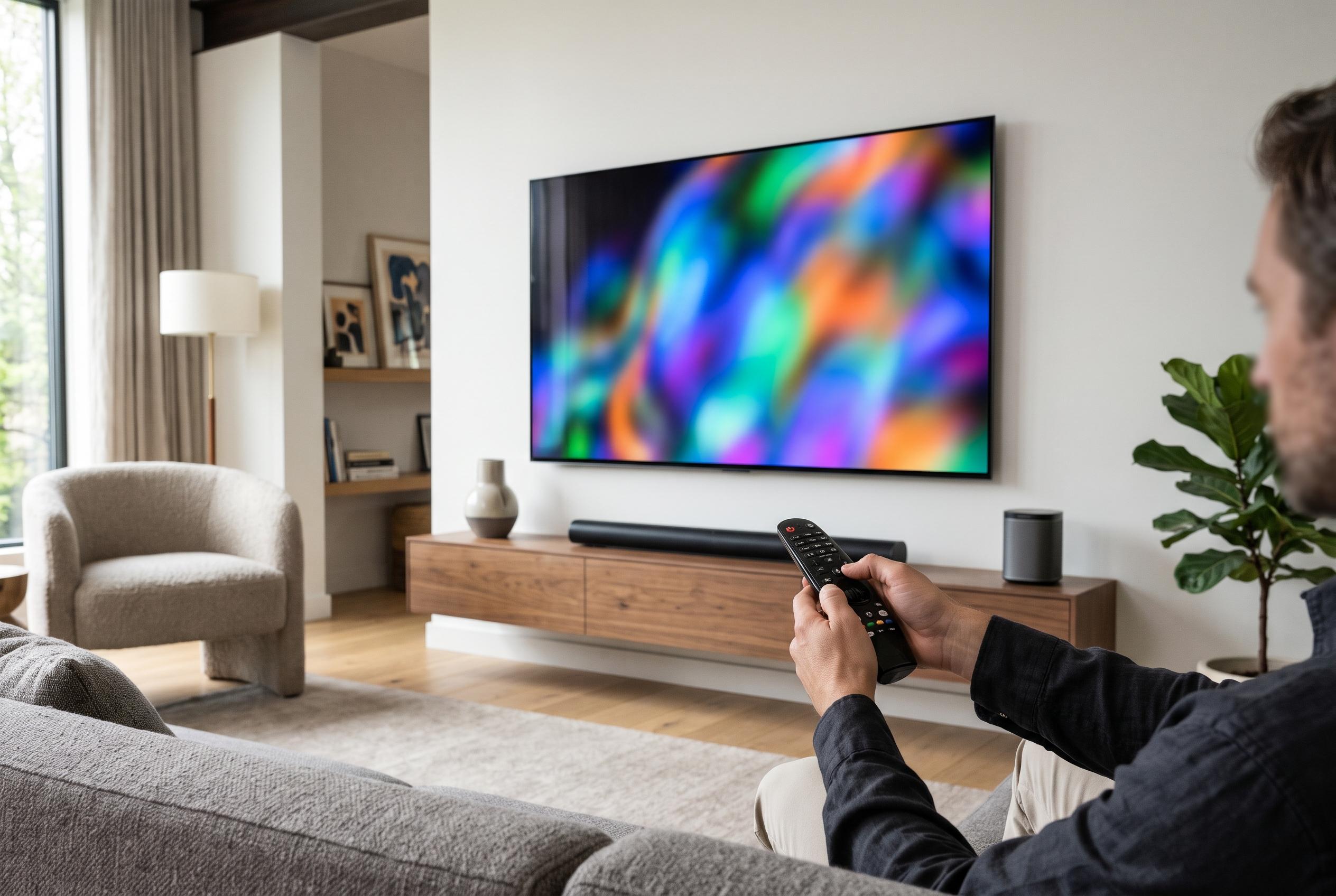

From screen size and refresh rates to HDR formats and burn-in protection, these are the key checks to make before paying a premium for an OLED television in 2026.
OLED televisions remain the premium choice for buyers who prioritise picture quality, particularly for films, sport and gaming. Their self-emissive pixels allow each part of the screen to light independently, which gives them deeper blacks and more precise contrast than LCD-based LED sets. That fundamental design also helps OLED panels maintain strong viewing angles and smooth motion, especially on models with high refresh rates. For many households, the question is no longer whether OLED looks better, but whether the room, usage pattern and budget justify paying for it.
The wider market in 2026 shows that the strongest OLED options continue to come from LG, Samsung and Sony. What Hi-Fi’s 2026 buying guide places the Samsung S99H at the top of its overall OLED rankings, describing it as a refined QD-OLED model with exceptional brightness and contrast. The same publication points to the LG C6 as a standout mid-range OLED, while also highlighting a 48-inch version for smaller spaces. TechRadar and Tom’s Guide similarly single out LG’s latest C-series sets for balanced performance, strong gaming support and reliable all-round picture quality.
Screen size remains one of the most practical decisions. A 55-inch OLED suits many living rooms and is the size most often used for mainstream comparisons, while a 65-inch panel delivers a more cinematic experience if the room is large enough. Some buyers will want to think beyond size alone and look at how the television handles different content. For example, TechRadar’s recent coverage of 120Hz 4K sets says the best gaming and film experiences depend not only on panel quality, but also on low input lag, HDMI 2.1 support and a stable 120Hz or higher refresh rate. Those details matter for anyone using a PlayStation 5, Xbox Series X or gaming PC.
Feature checks should be more specific than the showroom pitch. Dolby Vision remains valuable for supported streaming services, while HDR10+ matters more on some Samsung sets. A native 120Hz panel is still the safest choice for smooth sport and gaming, and some premium OLEDs now go beyond that with even faster refresh rates on compatible PCs. Buyers should also look for VRR, ALLM and eARC if they plan to connect modern consoles or a soundbar. Just as important are the built-in protections against burn-in, such as pixel shifting and panel refresh routines, particularly for homes that watch channels with static logos or use the television as a large monitor.
Price continues to separate the good from the best. The lead guide lists current India models from Samsung, LG, Panasonic and Sony, spanning 55-inch and 65-inch screens at sharply different price points, from roughly Rs. 1.2 lakh for entry-level OLED options to well above Rs. 3 lakh for a Sony QD-OLED model. That spread reflects not only panel type, but also processing, audio hardware and brand positioning. The practical approach is to compare real content rather than specification sheets alone: watch dim scenes, fast-moving sport and standard-definition channels, then judge skin tones, shadow detail and motion handling. For most buyers, that remains the clearest way to decide whether a premium OLED is worth the extra money.
Disclaimer: This content is intended for informational purposes only. Readers are advised to exercise their own judgement, conduct due diligence, or consult a qualified expert before acting on any information provided.