
As portable power stations become mainstream for various uses beyond camping, selecting the right model hinges on capacity, chemistry, port options, and recharge flexibility to ensure reliable power during outages and outdoor activities.
Portable power stations have become a mainstream category rather than a camping accessory, with buyers now using them for home backup, road travel, outdoor work and remote offices. The appeal of a 1,024Wh unit is that it sits in a practical middle ground: large enough to keep essential devices running, but still movable enough for everyday use. TechRadar’s 2026 buying guide also points to this class as a sweet spot for many users, noting that capacity, charging options, port layout, UPS behaviour and portability matter as much as headline battery size.
That is why two models with the same stated capacity can serve very different owners. The EcoFlow DELTA 3 Classic, for example, pairs a 1,024Wh LiFePO4 battery with 1,800W of AC output and multiple charging methods, including AC, solar and car charging. The broader point, reinforced by EcoFlow’s own LiFePO4 guidance, is that battery chemistry is not a minor detail: lithium iron phosphate cells are designed for long service life, stronger thermal stability and repeated deep discharge, which makes them a sensible choice for frequent use.
Capacity alone also does not tell you what the station can actually run. Appliances with compressors, motors or heating elements can demand far more power at start-up than they do in steady use, so continuous output and surge headroom deserve close attention. TechRadar highlights output rating and UPS switchover time as key buying factors, while comparable 1,024Wh products show how design priorities differ: some emphasise a broader spread of ports and faster charging, while others focus on stronger surge performance or lower weight.
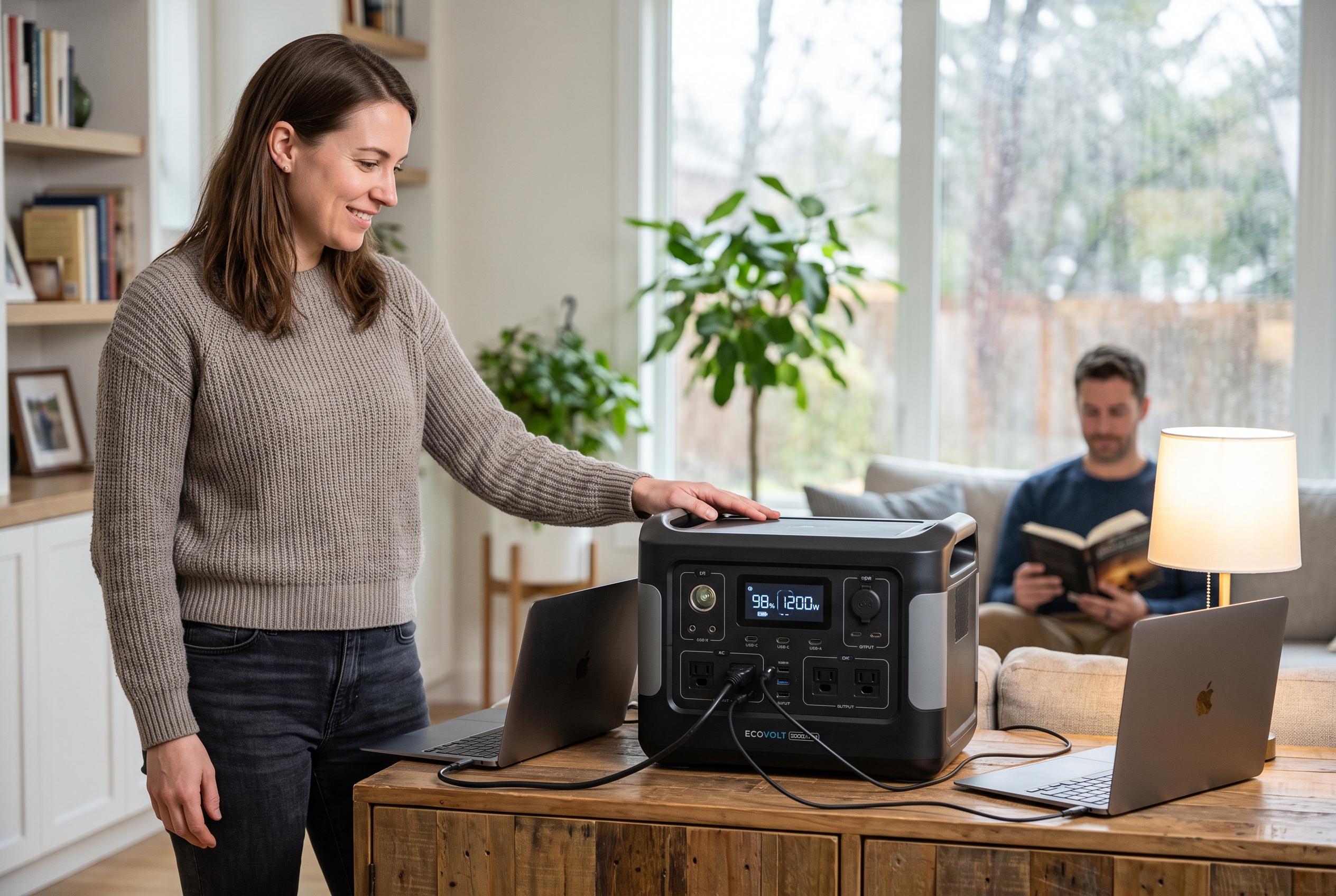
For many households, the real test is not whether the unit can power everything, but whether it can reliably support the essentials during an outage. That usually means routers, laptops, phones, lighting and, where compatible, devices such as CPAP machines or small fridges. Actual runtime depends on load, inverter losses, temperature and battery state, so a 1,024Wh label is only a starting point. If solar recharging matters, the input ceiling is also important: a higher limit helps only if the user has enough compatible panels to take advantage of it.
The most useful buying approach is simple. List the devices you need to run, check their wattage, decide how often the station will be carried, and compare recharge options before looking at extras. LiFePO4 chemistry is worth prioritising for long-term ownership, but port selection, surge capacity, solar input, app controls and warranty terms can be equally decisive. In practice, the best portable power station is not the one with the longest feature sheet. It is the one that fits the specific load, location and charging pattern you actually have.
Disclaimer: This content is intended for informational purposes only. Readers are advised to exercise their own judgement, conduct due diligence, or consult a qualified expert before acting on any information provided.