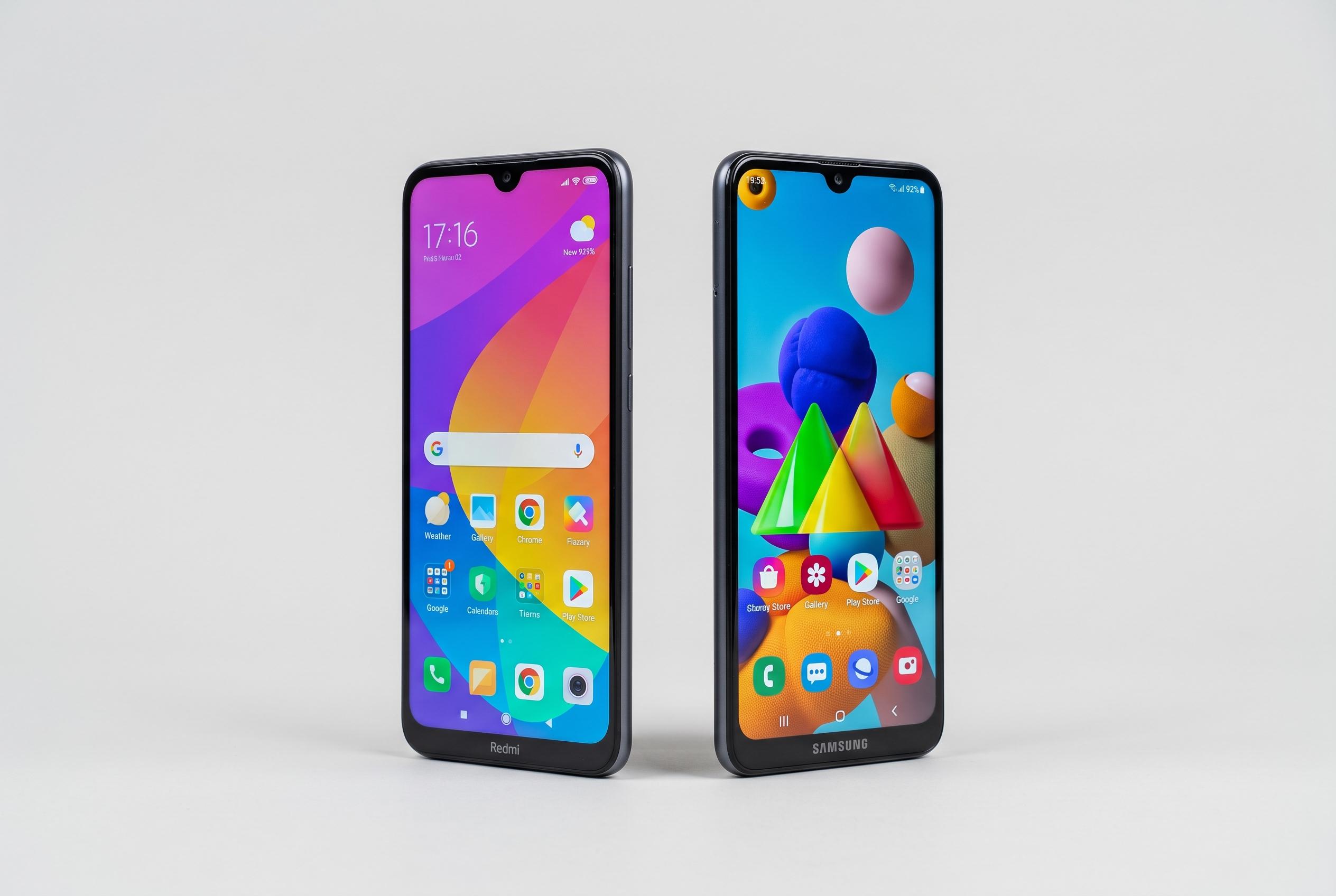

In the sub-€200 segment, Xiaomi’s Redmi 17 excels in battery life and size, while Samsung’s Galaxy A17 4G offers superior display and software support, highlighting divergent priorities for cost-conscious buyers.
In the sub-€200 bracket, the choice between Xiaomi’s Redmi 17 and Samsung’s Galaxy A17 4G is less about raw ambition than about priorities. Frandroid’s comparison places the two phones in the same increasingly tight segment, where price pressure has made convincing entry-level models harder to find. Samsung leans towards long-term reassurance, while Xiaomi pushes endurance and size. For buyers trying to stretch a modest budget, that difference matters more than headline specifications.
On hardware, both phones make sensible compromises rather than chasing premium design. The Redmi 17 goes for scale and a touch of spectacle, with a large body, an RGB light on the back and stronger ingress protection than Samsung’s rival, according to Frandroid. The Galaxy A17 4G is the quieter option: thinner, lighter and easier to handle every day. The Samsung also looks better equipped for photography on paper, with a 50-megapixel main camera, optical stabilisation, an ultra-wide lens and a macro sensor, while the Xiaomi omits the stabilised lens and ultra-wide module in favour of a simpler dual-camera layout.
The display comparison is more decisive. Frandroid says the Redmi 17 uses a 6.9-inch LCD panel with HD+ resolution, which is very large but not especially refined. Samsung answers with a smaller 6.7-inch Super AMOLED screen at Full HD+, giving it the clearer and more vibrant image. That is an important distinction for anyone reading, watching video or browsing for long periods. Samsung also has the more mature software proposition: it arrives with Android 15 and One UI 7.0, and promises six years of major and security updates, plus Google tools such as Gemini and Circle to Search. Xiaomi’s HyperOS 3 is more customisable, but its support window is far shorter.
Performance is broadly modest on both devices. Frandroid notes that each uses a MediaTek chip with 4GB of RAM, which keeps everyday tasks serviceable but leaves little room for demanding gaming. Social media, messaging and web use should be fine; heavier 3D titles are not the intended workload. Where Xiaomi pulls ahead sharply is battery life. Its 7,500mAh cell is unusually large for this class, with 45W charging and even reverse wired charging. Samsung’s 5,000mAh battery is more conventional, backed by 25W charging, which is adequate but less ambitious. For broader context, Xiaomi’s newer Redmi Note 17 family has continued the brand’s preference for oversized batteries and large OLED panels, underlining how central endurance has become to the company’s low-cost strategy.
The result is a straightforward split. The Galaxy A17 4G is the safer recommendation for most people, because it offers the better screen, more useful camera hardware and vastly stronger software support. The Redmi 17 makes more sense for users who value battery life above everything else, especially if they spend much of the day streaming, scrolling or away from a charger. One is the more balanced phone; the other is the marathon runner.
Disclaimer: This content is intended for informational purposes only. Readers are advised to exercise their own judgement, conduct due diligence, or consult a qualified expert before acting on any information provided.