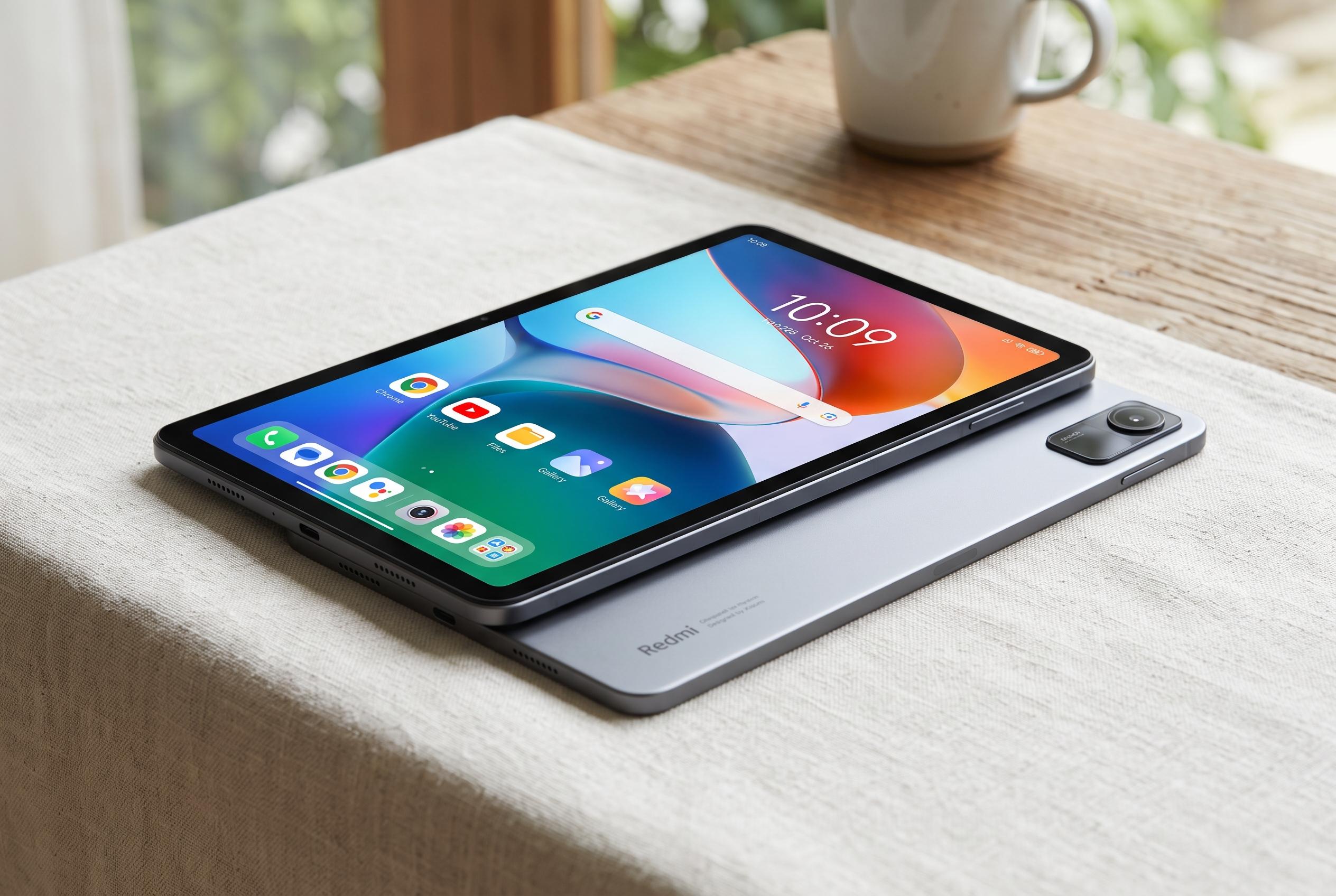

As affordability continues to define budget tablets, the Redmi Pad 2 offers a sharper display and longer battery life, making it a more future-proof choice compared to Infinix’s XPAD line, although software support remains limited.
Choosing an affordable tablet with a three-to-five-year horizon requires more than checking the launch price. The key questions are whether the display remains comfortable to use, whether storage and memory are sufficient for future apps, whether the battery will still feel practical, and how long the software will remain supported. In that respect, Redmi Pad 2 and Infinix’s XPAD line are pitched at the same budget-conscious buyer, but they do not age in quite the same way. VIVA says the comparison becomes most meaningful when long-term use, not first-day value, is the main priority.
The clearest advantage for Redmi Pad 2 is its screen. It uses an 11-inch panel with a 2,560 x 1,600 resolution and a 90Hz refresh rate, giving it a sharper image than the first-generation Infinix XPAD, which is listed with an 11-inch Full HD+ display at 90Hz. That matters over time because a higher pixel density is easier on the eyes for reading, document work and video playback. Xiaomi has also added TÜV Rheinland certifications for low blue light, flicker-free operation and circadian-friendly use, which may appeal to buyers expecting to spend long periods with the tablet.
The processing and software picture is more mixed. Comparison listings from gsmchoice, Kimovil and Gadgets 360 place the Redmi Pad 2 on MediaTek’s Helio G100 family with Android 15, while the Infinix Xpad is shown with the Helio G99 and Android 14. Infinix’s newer XPAD 20 is also reported by VIVA to arrive with Android 15, up to 8GB of RAM and as much as 256GB of storage, along with microSD expansion up to 1TB. For buyers who want the newest software version at the point of purchase, that gives XPAD 20 a clear argument, even if the underlying hardware class remains modest.
Battery capacity also favours Xiaomi on paper. GSMChoice and Smartprix list the Redmi Pad 2 with a 9,000mAh battery, compared with 7,000mAh for the Infinix Xpad. That should translate into longer intervals between charges, which is valuable if the tablet is expected to remain useful for years. Even so, the broader lesson from VIVA’s comparison is that budget tablets rarely receive flagship-level software support. Infinix says the original XPAD gets two years of security patches, and VIVA reports a similar two-year security commitment for XPAD 20, so neither family is built for an exceptionally long update cycle. For long-term buyers, Redmi Pad 2 looks stronger on display and battery life, while XPAD 20 looks more current on software at purchase.
Disclaimer: This content is intended for informational purposes only. Readers are advised to exercise their own judgement, conduct due diligence, or consult a qualified expert before acting on any information provided.