

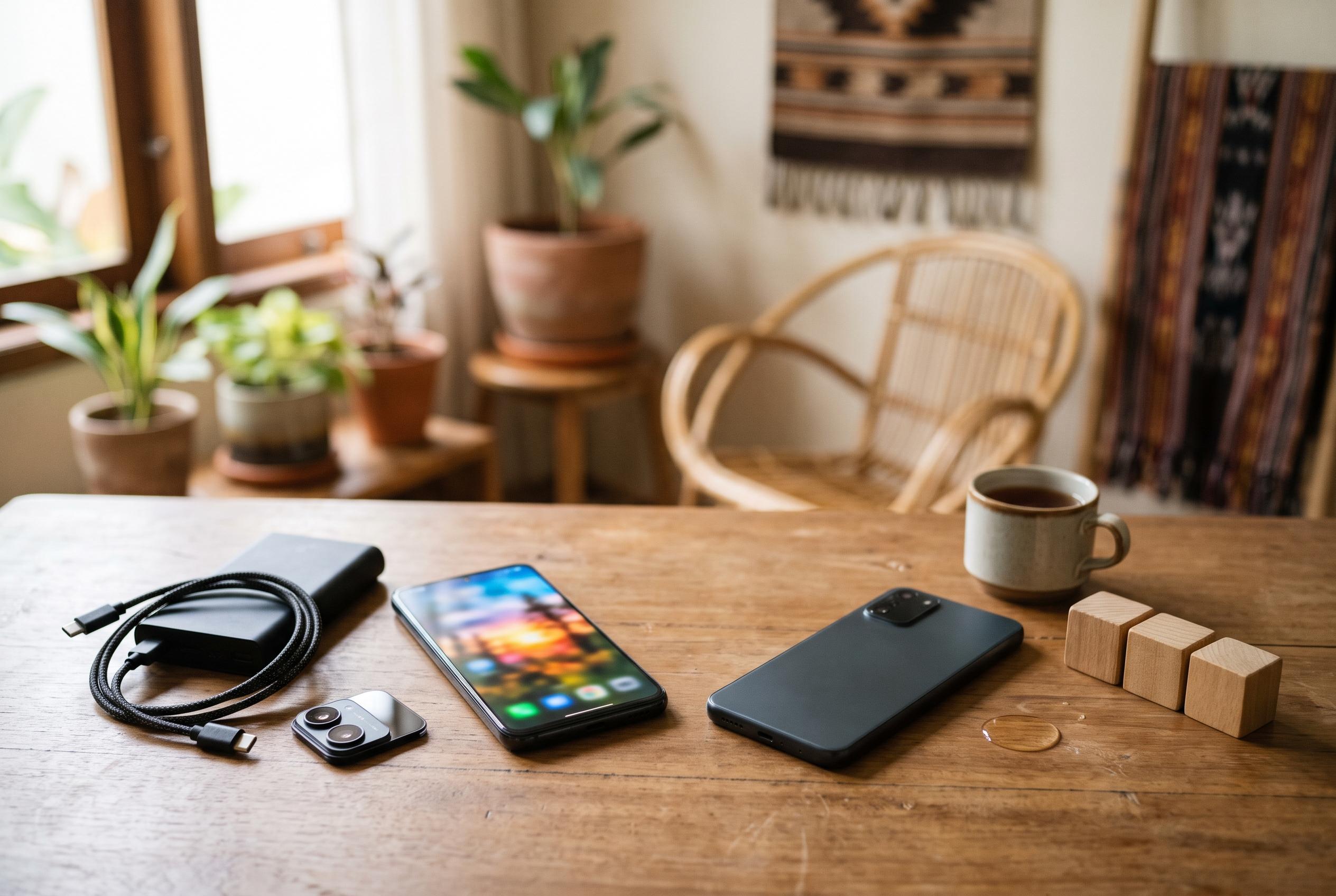

Xiaomi offers a sharper screen, larger battery and headline-grabbing camera, while Samsung counters with water resistance and a longer software-support commitment for Indonesian buyers.
For buyers weighing a mid-range phone in late 2026, price alone is no longer a sufficient guide. Screen quality, camera stabilisation, battery endurance, build protection and software longevity now matter just as much, particularly for people who want a handset that will remain usable for several years rather than just a single upgrade cycle. In that context, Samsung’s Galaxy A36 5G and Xiaomi’s Redmi Note 15 Pro 5G emerge as two very different propositions for Indonesian consumers.
Samsung’s Galaxy A36 5G is built around a 6.7-inch FHD+ Super AMOLED panel with a 120 Hz refresh rate and peak brightness of up to 1,200 nits, according to Samsung’s Indonesian product page and launch materials. The company also highlights IP67 dust and water resistance, Knox Vault security, six generations of operating-system upgrades and six years of security patches, features that strengthen the case for buyers who value long-term support over raw specifications. Xiaomi, by contrast, positions the Redmi Note 15 Pro 5G as the more ambitious hardware package, with a 6.83-inch AMOLED display at 1.5K resolution and a 120 Hz refresh rate, plus a Mediatek Dimensity 7400-Ultra chipset, according to its Indonesian specifications page.
On paper, the Redmi holds the advantage in several areas that are easy to spot in a shop comparison. Xiaomi lists a 200-megapixel main camera with optical image stabilisation, a 6,580 mAh battery and 45 W charging, making the device more appealing for users who prioritise photography and stamina. Independent coverage from Notebookcheck also points to strong battery life and a bright screen, although it notes that overall performance is not class-leading. Samsung’s A36 5G is less aggressive on headline numbers, but its main camera includes optical stabilisation and the phone is backed by the company’s longer update commitment, which can matter more over time than a larger sensor specification.
Pricing remains a moving target, and buyers should not rely on launch figures alone. Gadgetren reported Indonesian launch prices of Rp4,699,000 for the Redmi Note 15 Pro 5G 8 GB/256 GB model and Rp5,599,000 for the 12 GB/512 GB version earlier in 2026, while Samsung’s official channel lists the Galaxy A36 5G in 8 GB/256 GB configuration, with regional pricing and promotions subject to change. VIVA’s own price guide suggests that the Samsung can be found in the roughly Rp4.9 million to Rp6 million range, while the Redmi sits around Rp5.1 million for 8 GB/256 GB and about Rp6 million for 12 GB/512 GB, although those figures should be verified at the point of purchase because stock, discounts and warranty terms can alter the effective cost.
For most buyers, the choice comes down to priorities. The Redmi Note 15 Pro 5G looks stronger on display resolution, battery capacity and camera hardware, which makes it a more obvious value play for media consumption and photography. The Galaxy A36 5G, however, is the safer long-term buy for users who care about software support, water resistance and a more established update policy. If the purchase decision is based on the next three to five years rather than the first impression in a retail store, Samsung has the more durable argument; if it is based on specification density at roughly the same price, Xiaomi makes the louder case.
Disclaimer: This content is intended for informational purposes only. Readers are advised to exercise their own judgement, conduct due diligence, or consult a qualified expert before acting on any information provided.



