
Roku’s affordable first OLED delivers class-leading responsiveness, accurate colour and an easy-to-use interface, but weaker brightness, sound and overall picture quality leave its older LCD model ahead.
Roku’s first OLED television arrives with an appealing pitch: premium panel technology, a familiar streaming interface and a starting price that undercuts many rivals. But a fuller reading of recent reviews shows a more complicated picture. CNET found that the 55-inch and 65-inch Roku Pro Series OLED combine excellent gaming responsiveness, accurate colour and a price that places OLED within reach of more buyers, yet the same review concluded that the outgoing LCD-based Roku Pro delivered a better overall picture and stronger sound. The set also drops Roku’s previous Soundstage audio port, a casualty of the thinner OLED design.
That tension between value and refinement runs through the broader coverage. RTINGS praised the set’s near-perfect blacks, consistent off-axis performance and solid out-of-box colour accuracy, while noting that brightness trails brighter rivals and that low-resolution material is not a strong suit. TechRadar likewise highlighted the TV’s contrast, black level and four HDMI inputs, but said HDR impact is limited and reflections can be troublesome in bright rooms. WIRED also pointed to the attractive combination of deep blacks, rich colour and Roku’s simplified picture controls, while warning that modest brightness can mute the usual OLED punch in daylight viewing.
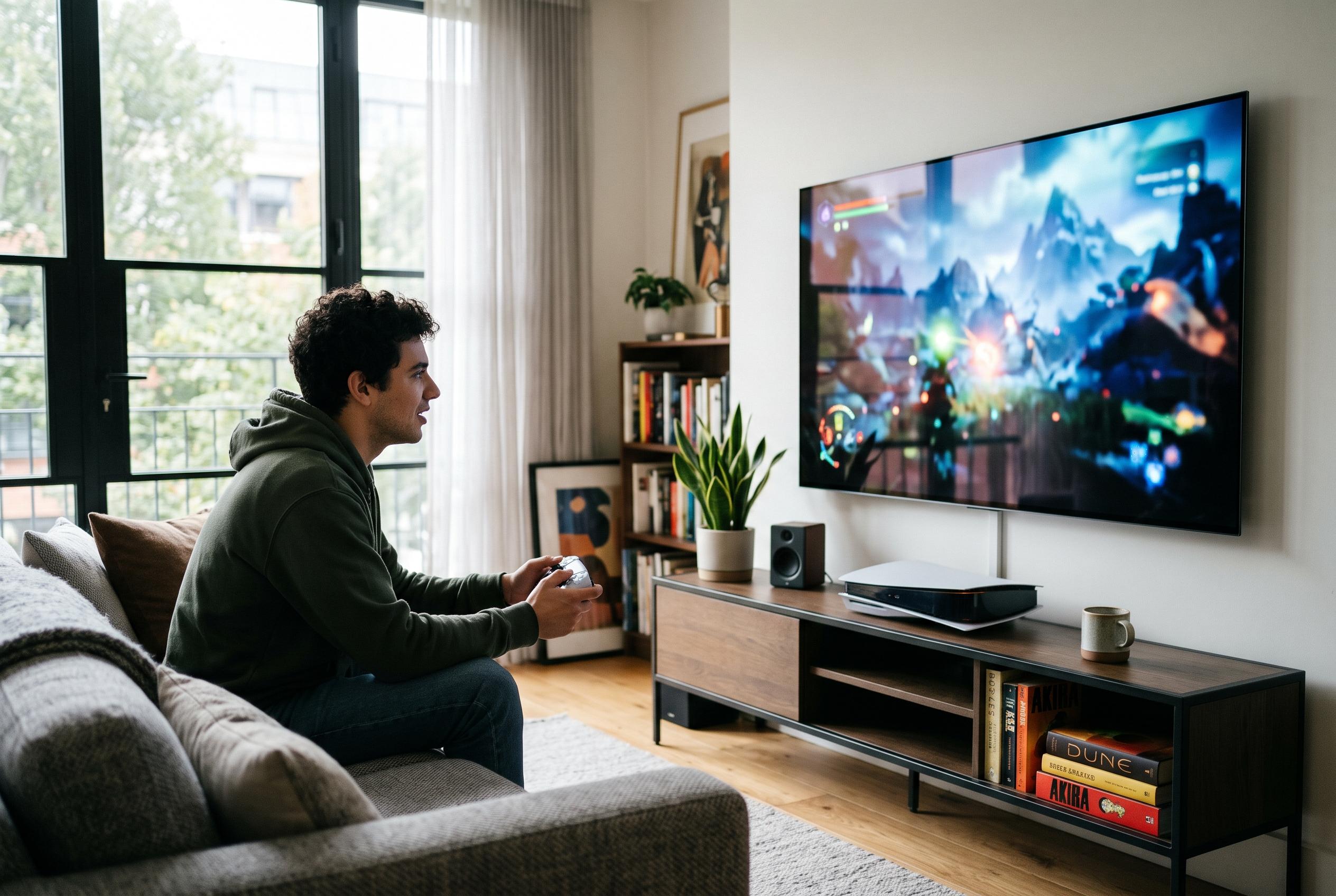
Gaming is where the Roku Pro Series OLED appears most clearly differentiated. CNET measured the fastest 4K input lag it has recorded, at 8.87 milliseconds, and said that response translated into a notably nimble experience in competitive games. Tom’s Guide reached a similar conclusion, citing low latency and support for variable refresh rates as major strengths. The specification sheet backs that up: the set includes a 120Hz panel, HDMI 2.1 connectivity, FreeSync Premium and automatic game mode support. In practice, however, CNET found that the TV’s gaming image could look darker than desirable, especially when compared with brighter competitors.
The design is as pared-back as Roku’s pricing strategy suggests. What Hi-Fi? reported that the standard Pro Series OLED starts at $999 for the 55-inch model, with a more expensive Pro Series LX version offering a 144Hz panel, increased brightness and a more advanced anti-reflection coating. Roku’s own model swaps in a slim chassis, an adjustable stand and a backlit voice remote, but the minimalist construction appears to come at a cost. CNET said the OLED version loses the better sound of the older Pro, while TechRadar described the built-in audio as weaker and less immersive than on some competitors.
Roku’s software remains one of the set’s strongest selling points. Reviewers across CNET, TechRadar and WIRED continued to praise the platform’s ease of use, large icons and straightforward remote, even as some questioned the redesigned home screen and its more aggressive content recommendations. That familiarity may matter to buyers who want an OLED television without a steep learning curve. Yet the consensus from the early reviews is clear: the Roku Pro Series OLED is best understood as an inexpensive, fast and easy-to-use OLED, not the most polished picture performer in Roku’s own line-up. For buyers prioritising gaming and price, that may still be enough. For those chasing the best overall image, the older Roku Pro LCD or a brighter competitor remains the safer choice.
Disclaimer: This content is intended for informational purposes only. Readers are advised to exercise their own judgement, conduct due diligence, or consult a qualified expert before acting on any information provided.