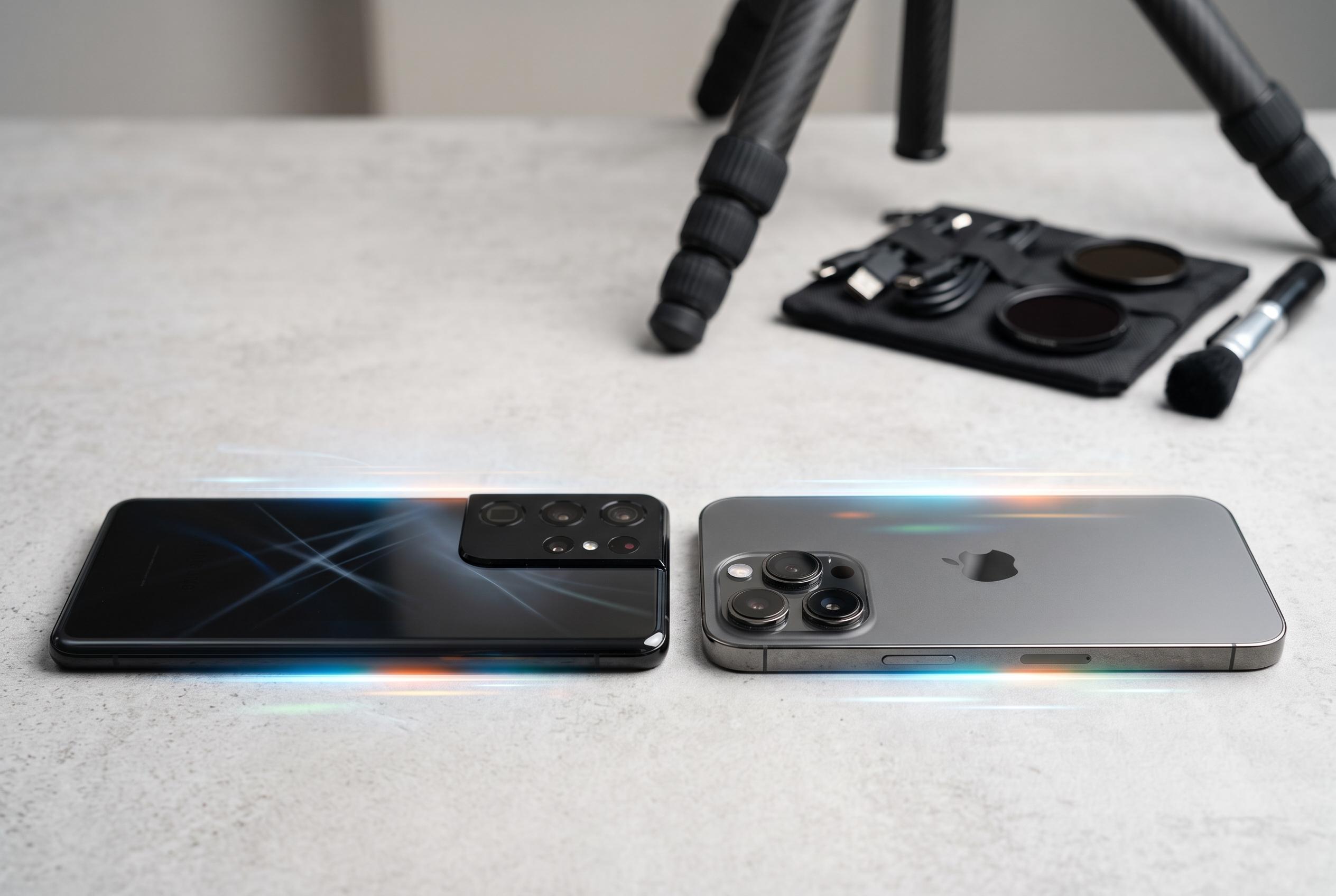

Leading brands Samsung and Apple unveil new models featuring advanced 4K video recording, stabilisation, and professional editing tools, reshaping mobile videography for creators and enthusiasts alike.
Smartphones with 4K video recording remain a key choice for users who want detailed footage without carrying a dedicated camera. Yet resolution alone does not decide which handset is strongest for video. Frame rate, stabilisation, sensor size, low-light performance and the availability of professional tools matter just as much, particularly for creators who edit footage after capture.
At the top end of the market, Samsung’s Galaxy S26 Ultra stands out for breadth of video options. Tecnoblog says the phone can record in 8K at 30fps and 4K at 120fps, while Samsung’s newer APV format, Log video and dual recording tools are aimed at users who want more control over colour and multi-camera capture. The front camera also records in 4K, and the rear system adds optical stabilisation with horizontal lock, which should help keep footage steady during movement.
The Galaxy S25 Ultra remains close behind. Its camera array is broadly similar, with a 200MP main sensor, a 50MP ultrawide and two telephoto modules. PhoneArena notes that it records 8K at 30fps and 4K at 120fps, with improved HDR processing that moves from 8-bit to 10-bit capture for richer colour and wider dynamic range. SamMobile also reports that 8K recording can be used across the main, ultrawide and telephoto cameras, which adds flexibility for high-resolution shooting.
Apple’s iPhone 17 Pro is positioned for users who want more advanced post-production options. Tecnoblog highlights 48MP rear cameras, 4K Dolby Vision recording up to 120fps and a front camera that also shoots in 4K at 60fps. Apple’s ProRes, ProRes RAW, Apple Log 2, ACES and Genlock support make it particularly attractive for professional workflows, although that comes with the usual Apple ecosystem constraints and a high price.
For buyers seeking flagship-style tools at a lower cost, the iPhone 16 Pro and Samsung Galaxy S25 FE sit in more accessible territory. Tecnoblog says the iPhone 16 Pro can shoot 4K at 120fps in Dolby Vision and includes Audio Mix, Apple Log and the Camera Control button for quicker adjustments. The Galaxy S25 FE, meanwhile, offers a 50MP main camera with OIS, 4K at 60fps and access to Samsung’s video software features, making it a practical choice for vloggers and short-form content creators.
In the upper-mid-range, the Galaxy A57 and Redmi Note 15 Pro show that 4K recording is no longer confined to flagships. Tecnoblog says the Galaxy A57 records 4K at 30fps with optical stabilisation and IP68 protection, while the Redmi Note 15 Pro uses a 200MP main camera with OIS and captures 4K at 30fps from the rear camera. The trade-off in both cases is a more modest secondary-camera system and fewer professional-grade video controls.
At the entry level, the Galaxy A36 and Moto G35 are notable for bringing 4K to cheaper phones. Tecnoblog says the Galaxy A36 records 4K at 30fps on both front and rear cameras, while the Moto G35 records 4K at 30fps only on the back camera. That makes the Motorola the more affordable route into Ultra HD video, although it lacks optical stabilisation and front-facing 4K. For most buyers, the best choice depends less on resolution alone than on how often they shoot, how much editing they plan to do and whether they need storage headroom, since 4K files can quickly consume space.
Disclaimer: This content is intended for informational purposes only. Readers are advised to exercise their own judgement, conduct due diligence, or consult a qualified expert before acting on any information provided.