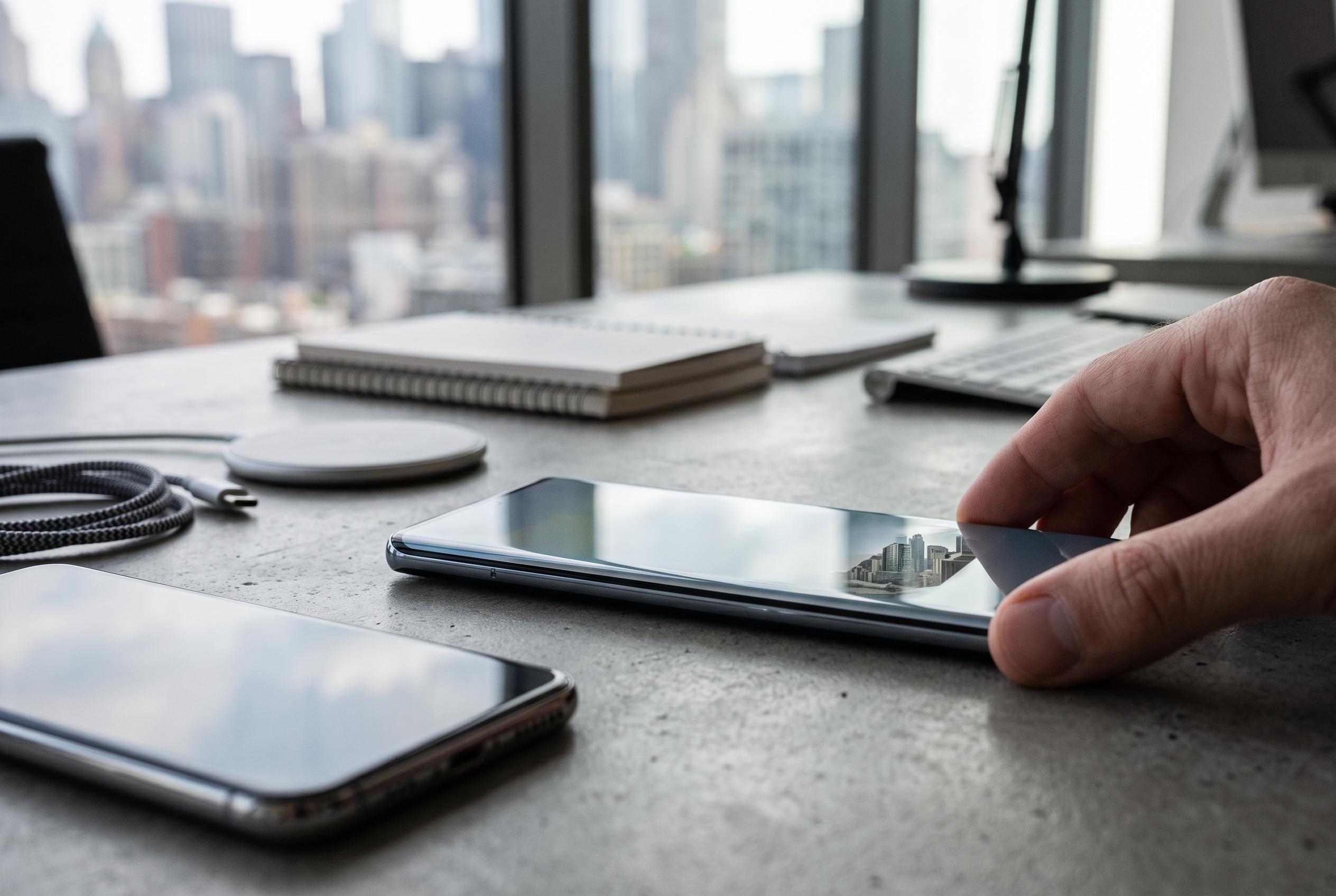

The Samsung Galaxy S26 Ultra emerges as the closest Android competitor to Apple’s new iPhone 18 Pro Max, offering a lighter build, advanced zoom capabilities, and a more competitive starting price, raising questions about what features matter most for daily use.
For buyers looking for an Android phone that sits directly opposite Apple’s iPhone 18 Pro Max, Samsung’s Galaxy S26 Ultra is the clearest match. According to the comparison material from Telefonino and other hands-on spec comparisons, the two devices occupy the same premium bracket in size, display and ambitions, yet the Samsung starts at a lower Italian list price: €1,499 for 256 GB, against €1,639 for the iPhone 18 Pro Max with the same storage. That €140 gap does not make the Samsung a budget option, but it does sharpen the value argument at the top end of the market.
On paper, the two phones are strikingly close in footprint. Both use 6.9-inch displays with refresh rates of up to 120 Hz, and both are aimed at users who want a large screen for media, games and productivity. The more noticeable difference is weight: reports from Android Central and other comparison sites put the iPhone 18 Pro Max at 249 grams, while the Galaxy S26 Ultra comes in at 214 grams. That 35-gram saving is meaningful in daily use, especially on a device that is carried and held for long periods. Samsung is also thinner and includes the S Pen, while Apple continues to lean on features such as Dynamic Island, the Action button and camera control.
Performance is less about raw specification counting than software tuning and platform design. The iPhone 18 Pro Max uses Apple’s A20 Pro chip, while the Galaxy S26 Ultra relies on Qualcomm’s Snapdragon 8 Elite Gen 5 for Galaxy. Comparison coverage from PhoneArena and Gizmochina suggests that both are firmly in the top tier for 2026, handling gaming, multitasking, photography and on-device AI without difficulty. In practice, the processor choice is less a question of absolute speed than of how each company balances efficiency, graphics performance and integration with its own operating system.
The cameras show the clearest difference in philosophy. Samsung follows a specification-heavy route, with a 200-megapixel main camera, a 50-megapixel ultrawide, a 10-megapixel 3x telephoto and a 50-megapixel 5x telephoto. Apple takes a more restrained path on resolution, using three 48-megapixel cameras, but adds a variable physical aperture on the main sensor. That feature changes how much light reaches the sensor and gives Apple more control over depth of field. The result is not a simple contest between 200 megapixels and 48 megapixels; it is a contrast between Samsung’s zoom flexibility and Apple’s emphasis on optical behaviour and image control.
Battery and storage also reflect different priorities. Samsung equips the Galaxy S26 Ultra with a 5,000 mAh battery, while European documentation cited for the iPhone 18 Pro Max indicates a nominal capacity of 5,391 mAh. Those figures should not be read as a direct verdict on endurance, because iOS and Android manage power differently and the official battery tests are not identical. What matters more is that both phones are designed as all-day premium handsets, with real-world endurance depending on network use, brightness, camera activity, gaming and AI workloads. Samsung offers up to 1 TB of storage and, in some configurations, 16 GB of RAM. Apple does not disclose iPhone RAM officially, but pushes storage as far as 2 TB, albeit at a sharply higher price of €3,139 for that version.
Taken together, the choice is not really about which phone has the most impressive individual specification. It is about which approach to a flagship feels more useful. Samsung offers a lighter body, the S Pen, a more elaborate zoom system and a lower entry price. Apple counters with the A20 Pro, the variable aperture camera, a 2 TB option and the tighter integration of its own ecosystem. For anyone trying to identify the closest Android rival to the iPhone 18 Pro Max, the Galaxy S26 Ultra is the obvious answer. The harder question is which one better suits the way the device will actually be used every day.
Disclaimer: This content is intended for informational purposes only. Readers are advised to exercise their own judgement, conduct due diligence, or consult a qualified expert before acting on any information provided.