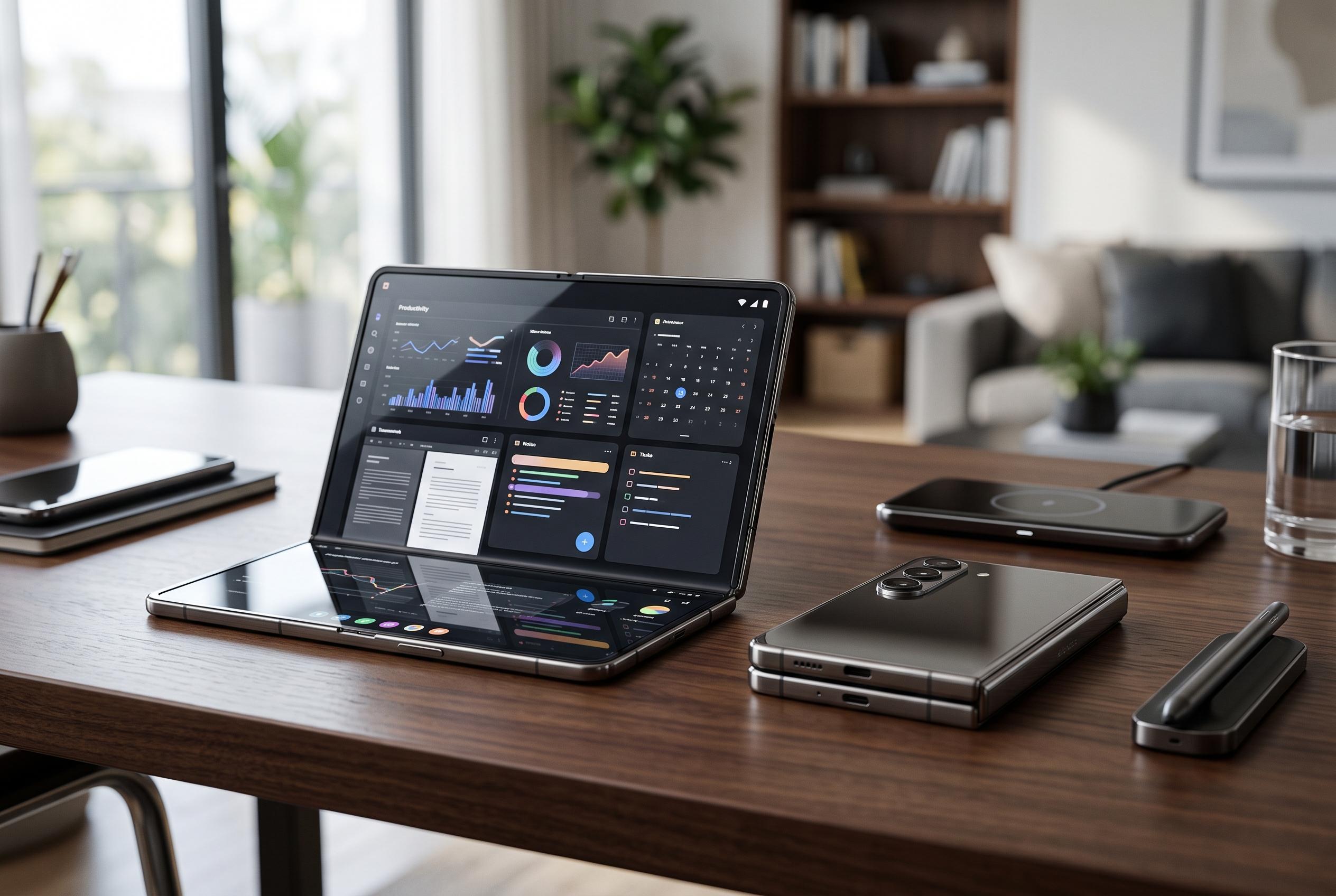

As Samsung’s Galaxy Z Fold 8 Ultra and Apple’s anticipated foldable iPhone near launch, they showcase sharply different approaches, Samsung emphasizing size and productivity, while Apple aims for seamless integration into its ecosystem, signalling a new era for premium foldable smartphones.
Samsung’s Galaxy Z Fold 8 Ultra and Apple’s first foldable iPhone are shaping up as two distinct answers to the same question: what should a premium foldable phone do best? According to comparison coverage from PhoneArena and Tom’s Guide, both devices are still prospective rather than formally launched, but the expected specifications already suggest very different priorities. Samsung is leaning into size, maturity and productivity, while Apple appears to be aiming for a foldable that fits more closely into the wider iPhone experience.
On display hardware, Samsung is expected to offer the larger internal panel, with an 8-inch AMOLED screen and a 6.5-inch outer display. The Apple device is described as having a 7.6-inch inner OLED screen and a smaller 5.4-inch cover display. That gives Samsung the edge for people who want more room for reading, video, document editing and split-screen use, especially when the handset is unfolded into something closer to a compact tablet.
Performance is likely to be competitive, with Samsung said to be using Qualcomm’s Snapdragon 8 Elite Gen 5 for Galaxy and Apple expected to rely on its A20 Pro chip. Neither side has a clear lead on paper, and any firm judgement will depend on independent testing once devices are available. The same caution applies to battery life. Samsung is said to have a 5,000mAh battery, while Apple is expected to use a dual-cell design focused on sustaining all-day use in a thinner chassis.
Camera capability is one of Samsung’s more obvious strengths. Reports describe a 200-megapixel main sensor, a 50-megapixel ultra-wide lens and a 10-megapixel telephoto camera with 3x optical zoom. Apple’s foldable is said to use two 48-megapixel rear cameras. That does not settle image quality, since software processing matters as much as sensor counts, but Samsung’s dedicated zoom lens should offer more flexibility for distant subjects. Apple, meanwhile, is likely to rely on its established strengths in computational photography and video capture.
Durability and software may prove just as important as raw specifications. Samsung’s device is said to carry an IP48 rating, while Apple’s is expected to reach IP68, which would give it stronger resistance to dust and water. On pricing, the Samsung model is expected to start at about $2,100, compared with $1,999 for Apple’s foldable. The narrower gap may matter less than ecosystem loyalty: Samsung’s long experience with foldables gives it an advantage in multitasking and split-screen workflows, while Apple’s version is likely to appeal most to users already invested in iPhone, MacBook, Apple Watch and AirPods.
Disclaimer: This content is intended for informational purposes only. Readers are advised to exercise their own judgement, conduct due diligence, or consult a qualified expert before acting on any information provided.