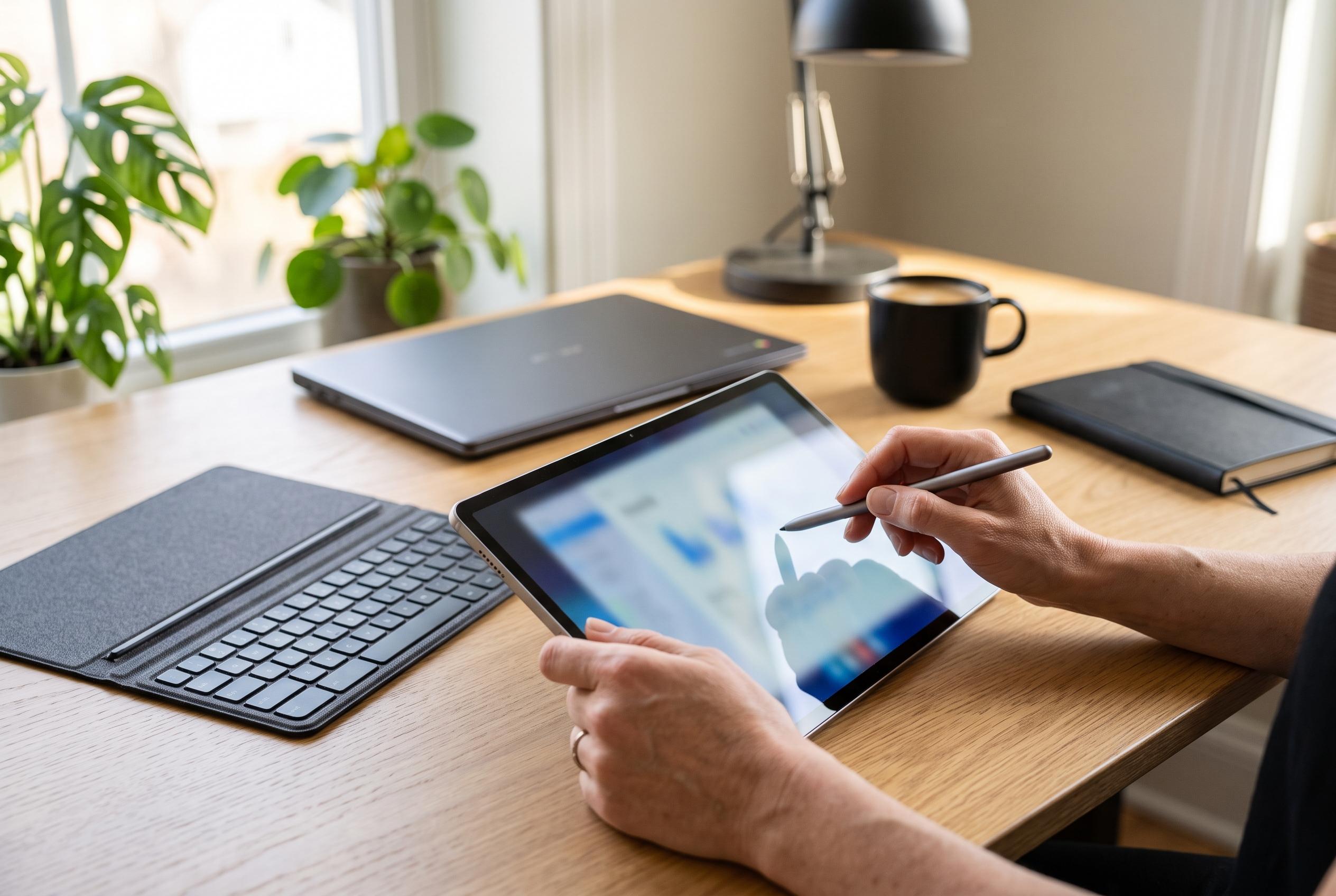

Samsung’s latest Galaxy Tab S12 series offers a mature, versatile alternative to Google’s new Galaxybook laptops, challenging the notion that Android-first notebooks are the future of productivity.
Samsung’s Galaxy Tab S12 series arrives at an awkward moment for Google’s new laptop ambitions. While Google has been pitching Googlebook as a premium Android-first notebook with Gemini at its core, Samsung’s latest tablets make a more convincing case that the best way to bridge the gap between phone and PC is still a well-built tablet. The contrast is especially stark now that the Tab S12 Plus and Tab S12 Ultra are on sale, with Samsung positioning them as productivity machines rather than experimental devices.
That matters because Googlebook’s appeal depends heavily on features that are not entirely new. Google has framed the platform around Android app support, Chrome with extensions and a desktop-style experience, but much of that continuity already exists across Android devices in other forms. On a Windows PC, Phone Link already gives many users a workable bridge to their phones, while Samsung’s own ecosystem offers its own set of mature hand-off tools, messaging continuity and file-sharing options between Galaxy devices. In practice, the promise of seamless cross-device use feels less like a breakthrough than a repackaging of ideas Android users have seen before.
There is also a hardware question. According to Android Central, Google has warned that some Googlebook models built around Intel processors may run into app-compatibility issues because many Android apps are still tuned for ARM-based chips. That complicates Google’s pitch for a premium laptop line that is supposed to feel effortless from the outset. Googlebook may offer a modern OLED display, local AI features and a high-end build, but early limitations around app support could matter more than the marketing suggests.
By contrast, Samsung’s Tab S12 range looks like a more settled product category. What Hi-Fi reported that the Tab S12+ and Tab S12 Ultra use large Dynamic AMOLED 2X panels and spatial audio support, with the Ultra stretching to a 14.6-inch display and the Plus model using a 12.6-inch panel. The tablets run Android 17 with One UI 9 and use MediaTek’s Dimensity 9500 chip, with up to 16GB of RAM. PhoneArena said Samsung announced the series on 30 September 2026 and made it available from 7 October 2026, with the Ultra model promising up to 23 hours of battery life.
That specification sheet only tells part of the story. The Tab S12’s strength is that it builds on an established idea: a large-screen Android tablet that can become a laptop substitute when paired with a keyboard and trackpad, yet still feels like a tablet when used on its own. Samsung’s DeX mode remains one of the clearest implementations of that concept, letting users switch into a desktop-like interface with a tap, either on the tablet itself or on an external display. The broader Galaxy ecosystem also adds continuity features, such as shared browsing, notes, calls, clipboard tools and Quick Share, all of which reduce the friction that Googlebook is trying to solve.
For buyers who want a device that can sketch, write, multitask and travel easily, that maturity is hard to ignore. Tom’s Guide said Samsung is clearly aiming the Tab S12 at students and productivity users, pointing to the series’ multitasking tools and S Pen support as key advantages. The larger premium model will not suit every budget, but Samsung also has cheaper tablets in its line-up, while rivals such as OnePlus and Motorola offer lower-cost Android tablets with stylus support. That means the Android tablet route is not confined to one expensive flagship experiment.
Googlebook may still find an audience among users who want a new kind of Android laptop. But for now, Samsung’s tablet approach looks more practical, better proven and less dependent on AI flourishes that may not age well. A premium Android notebook can be interesting. A premium Android tablet that already knows what it is, and does it well, looks more compelling.
Disclaimer: This content is intended for informational purposes only. Readers are advised to exercise their own judgement, conduct due diligence, or consult a qualified expert before acting on any information provided.