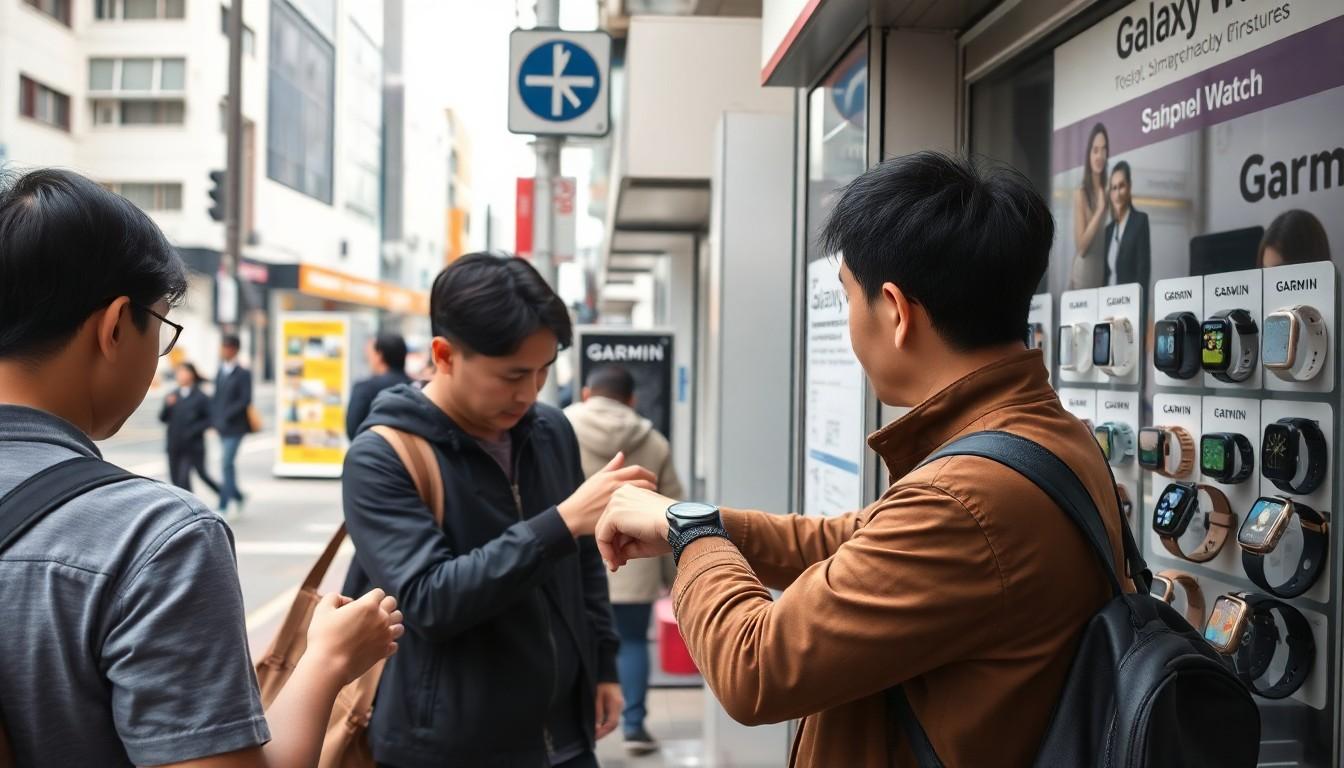

Samsung’s latest Galaxy Watch 9 introduces incremental upgrades and a higher price, prompting consumers to reconsider older models and competitors like Google’s Pixel Watch and Garmin amidst a shifting smartwatch market.
Samsung’s latest smartwatch arrived in July with a familiar look, a higher asking price and only incremental changes for many buyers, sharpening attention on rival models and on the company’s own older devices. According to Samsung, the Galaxy Watch 9 adds a larger battery, new Vitals health insights, AI-assisted sleep tracking and personalised fitness coaching, but the launch also marked a clear price rise, with the 40mm model starting at $379.99 and the 44mm version at $409.
That pricing has made the Galaxy Watch 8 an obvious point of comparison. Samsung’s previous generation still shares much of the same design language, display sizing and core health and sleep tracking, while newer bands remain compatible thanks to the same strap mechanism. Reviewers have also noted that some of the Watch 9’s health features are expected to reach the Watch 8 through software updates, which makes last year’s model look like the more practical purchase for many Android users.
Google’s Pixel Watch line remains one of the most credible alternatives for people who want a clean Wear OS experience. The current model offers strong heart-rate and sleep tracking, faster charging and battery life that can stretch across multiple days, although some premium health tools still sit behind a subscription. Unlike Samsung’s wearables, it does not tie the full experience to a specific phone brand.
Samsung’s own Galaxy Watch 7 is still an attractive value option, particularly now that prices have fallen well below launch levels in some channels. It keeps the traditional round watch face, supports dual-band GPS and is due to receive some of the newer health metrics through software updates. Samsung has also committed to supporting the device with operating system upgrades through 2028, making it a longer-lived buy than its age might suggest.
For those who want the most advanced Samsung wearable, the Galaxy Watch Ultra 2 sits at the top of the range rather than the Watch 9. Announced at the same July event, it uses Qualcomm’s new Snapdragon Wear Elite platform and adds satellite messaging, alongside a much higher price of $699.99 for its 47mm cellular configuration. The device is aimed squarely at endurance athletes and outdoor users who value durability and larger battery capacity over compact styling.
Outside Samsung and Google, Garmin continues to appeal to buyers who care more about training depth than app stores. The Venu 4 offers more than a week of battery life, strong fitness tracking and turn-by-turn navigation through Google Maps integration, while keeping a more refined look than many rugged sports watches. Its weaker point remains a comparatively limited app ecosystem and the absence of an on-device AI assistant.
Amazfit’s Balance 2 is another battery-first option that narrows the gap on premium features. It offers sapphire glass, 32GB of storage, dual-band GPS and up to 21 days of battery life, along with 10 ATM water resistance suitable for diving. For buyers who want long runtime and a straightforward health app rather than a broad app catalogue, it is one of the more competitive mid-priced choices.
Xiaomi’s latest smartwatch also targets value-conscious shoppers. Launched in March, it pairs Wear OS 6 with Google Gemini integration and a large 930mAh battery that Xiaomi says can last around six days in normal use and up to 18 days in power-saving mode. Reviewers have flagged quirks in the software, a proprietary charging dock and the lack of ECG or blood pressure monitoring, but the price remains aggressive for a Wear OS watch.
Apple’s Watch SE 3 is the straightforward answer for iPhone owners who do not need the flagship model’s extra sensors. Released in September 2025, it starts at $249 and uses the S10 chip, but it does without an always-on display and several high-end health features. Even so, it remains a strong option for everyday notifications, activity tracking and tighter iPhone integration.
OnePlus and Garmin also fill two different niches for Android users. The OnePlus Watch 2R uses a dual-chip design to stretch battery life while still supporting third-party apps, making it one of the better-value Wear OS watches. Garmin’s Venu X1, meanwhile, is built for serious training, with dual-frequency GNSS, 10 ATM water resistance and structured workout tools, though its large case and uneven battery reports may put off some buyers.
In the end, the best alternative depends less on headline specifications than on the phone you already own and the way you plan to use the watch. Wear OS devices from Samsung and Google offer the broadest app support, while Garmin, Amazfit and Xiaomi tend to prioritise battery endurance and fitness depth. With newer models such as the Pixel Watch 5 expected soon, prices across the category may continue to shift in the short term.
Disclaimer: This content is intended for informational purposes only. Readers are advised to exercise their own judgement, conduct due diligence, or consult a qualified expert before acting on any information provided.