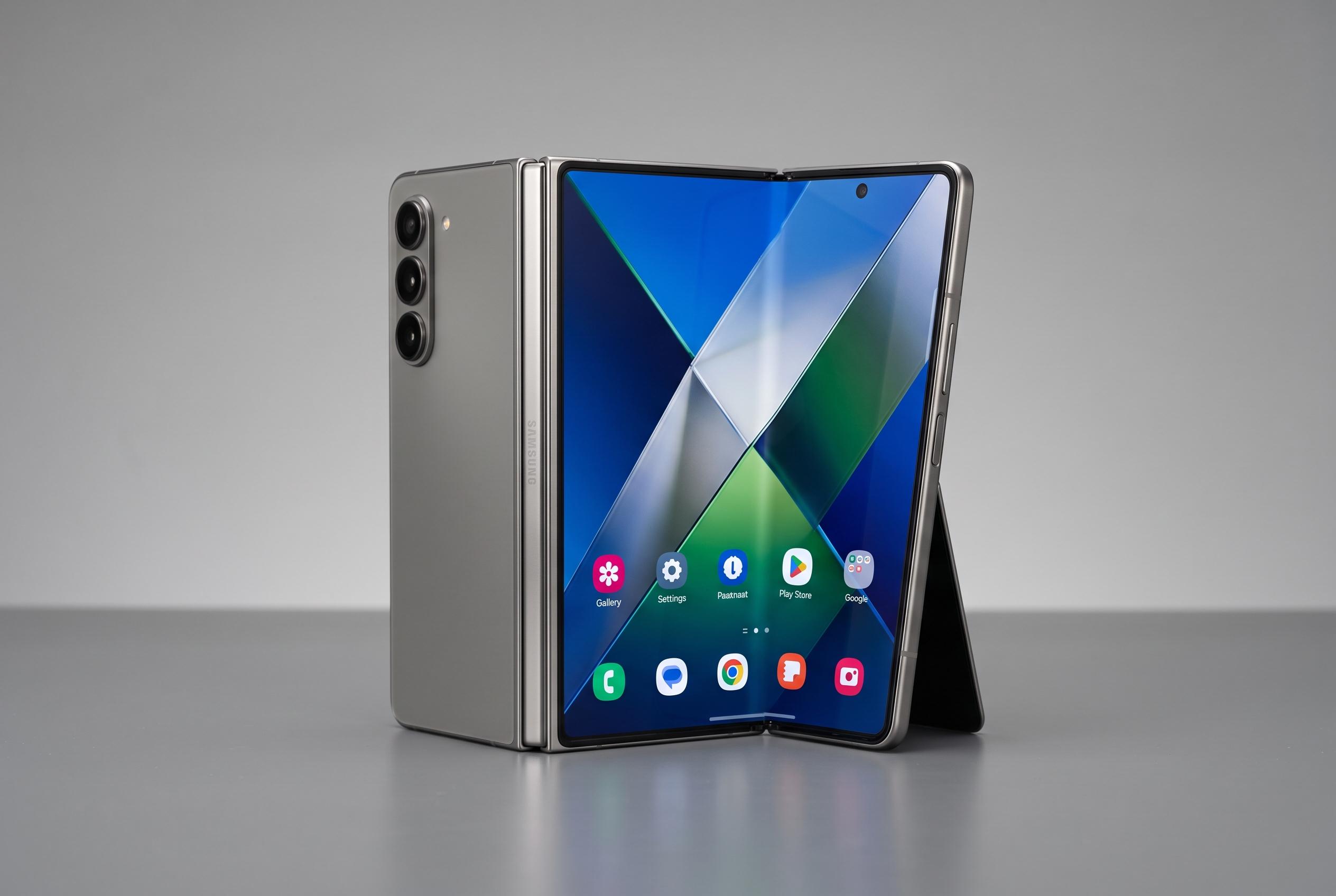

Samsung’s Galaxy Z Fold 8 and Ultra challenge traditional categorisation, with the Ultra emerging as the more complete, premium option despite similarities in core features and a narrower gap than expected.
Samsung’s latest foldable pair is a study in positioning as much as hardware. The Galaxy Z Fold 8 and Galaxy Z Fold 8 Ultra are aimed at different buyers, but in practice the gap between them is far narrower than their names suggest. That has led to an awkward question for anyone considering Samsung’s most expensive phones: if the Ultra costs only $200 more, is the standard Fold 8 already the wrong choice?
On paper, the two devices share much of their core foundation. Both run on Qualcomm’s latest Snapdragon chip, support 45W wired charging, carry IP48 dust and water resistance, use the same software platform and include identical selfie cameras. The Fold 8 Ultra does have the stronger specification sheet, however, with a 200MP main camera, a 50MP ultrawide lens, a 10MP telephoto camera with 3x optical zoom and a 5,000mAh battery, which is 200mAh larger than the Fold 8’s cell. Samsung’s first Ultra-branded foldable also comes with a sharper display and a slimmer interpretation of the company’s established book-style design, according to SamMobile.
The biggest difference is not raw speed or software, but feel. The Fold 8 takes Samsung in a new direction with a wider, more compact body that is easier to slip into a pocket and easier to hold shut. That design is the point of the device, and for some buyers it will be the main reason to choose it. Yet the broader format can take time to adjust to, particularly for people used to Samsung’s narrower foldables. By contrast, the Fold 8 Ultra stays closer to the familiar formula and refines it rather than reinventing it.
That refinement matters in daily use. Android Authority found that the Ultra is the more comfortable all-rounder because it feels more complete without asking the user to adapt to a new shape. Its wider cover screen behaves more like a conventional smartphone when folded, while the larger battery and upgraded camera system add practical value. Tom’s Guide also found that the Ultra’s dedicated telephoto lens gives it a clear edge for zoom photography, even if the difference is not always dramatic at shorter ranges. In short, the Ultra looks like the safer bet for readers who want the most capable foldable Samsung offers.
There is also a broader strategic angle. Samsung may be using the Fold 8 to establish a new form factor while keeping the Ultra as the premium default. That would make sense in a market where design cues often move quickly across brands and where Apple’s eventual entry into folding phones is widely expected to influence the category. A second book-style Fold also broadens Samsung’s portfolio at a time when the company may be reassessing the role of clamshell devices, with rumours suggesting the Galaxy Z Flip 8 could be its last clamshell for a while.
For most buyers, then, the calculation is simple. The Fold 8 is the more experimental phone, but the Fold 8 Ultra looks like the one Samsung has polished into a clearer premium product. If a shopper is already prepared to spend close to $2,000, another $200 for the Ultra may be easier to justify than living with the sense that the better option was left on the shelf. The standard Fold 8 still has a place, especially for readers who specifically want its wider, more compact design, but the Ultra appears to be the more convincing all-round purchase.
Disclaimer: This content is intended for informational purposes only. Readers are advised to exercise their own judgement, conduct due diligence, or consult a qualified expert before acting on any information provided.