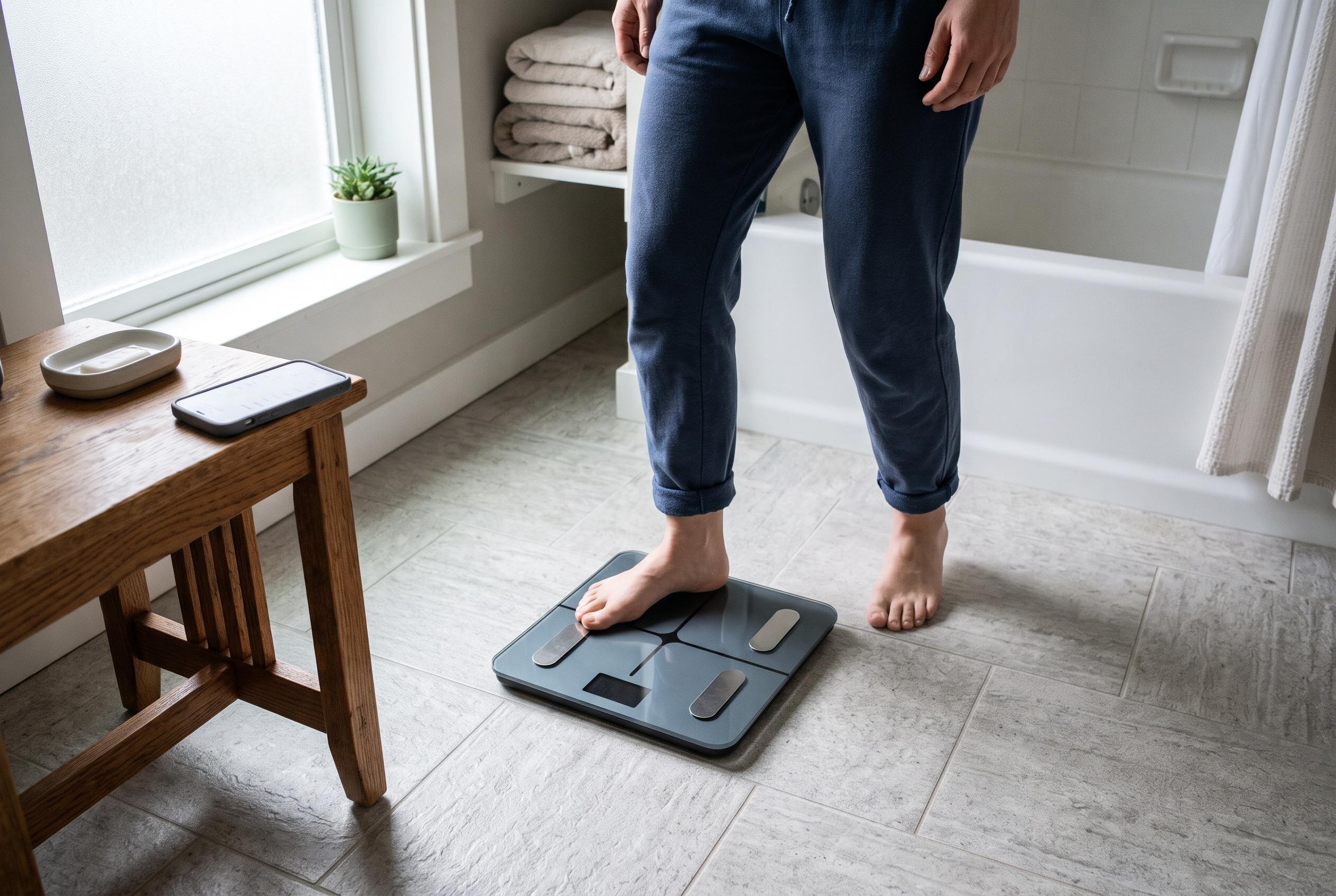

Budget smart scales costing less than Rs. 2,500 offer app-based tracking of body fat, muscle and water levels, but their readings are best used to follow trends rather than make medical decisions.
Smart body-composition scales are moving from specialist fitness kit to everyday home equipment, and the appeal is easy to see. For people who care about more than body weight, these devices can track muscle mass, body fat, water levels and other estimates that help show whether training and diet are changing the body over time. News18’s roundup highlights five models priced below Rs. 2,500, led by the Meditive Bluetooth Body Composition Scale at Rs. 895, followed closely by the HealthSense BS161, Cult’s smart body fat scale, Beurer’s BF 183 and RENPHO’s Bluetooth scale.
The main attraction is not precision in the laboratory sense, but convenience and continuity. These scales use bioelectrical impedance, sending a low electrical signal through the feet to estimate composition metrics. That method is useful for identifying trends, but it is sensitive to hydration, exercise and even the time of day. Two scales can return different readings for the same person, which is why most experts advise using them as a trend tool rather than a diagnostic device. For medical decisions, a clinician’s assessment remains the more reliable reference point.
Among the budget options, the Meditive scale is positioned as the cheapest choice and the highest-rated in News18’s list, with support for up to 180 kg and 18 tracked parameters. HealthSense’s BS161 stands out for scale of adoption, with more than 46,000 reviews and Bluetooth syncing to its app, while the Cult model is pitched as a better fit for households already using the brand’s ecosystem, with support for multiple profiles and more than 20 measurements. Beurer’s BF 183 adds visceral-fat and metabolic-age readings and carries the longest warranty in the group, at three years, while RENPHO appeals to users who want wider app compatibility and more established global branding.
Independent product coverage suggests that higher-priced smart scales can add refinements, but not necessarily a different class of measurement. TechRadar’s review of the Withings Body+ described it as a feature-rich option with a strong app and broad health tracking, illustrating how the market ranges from low-cost entry models to more polished connected devices. The common thread is the same: most buyers are paying for the software layer, profile management and trend tracking, not for clinical-grade body analysis.
For shoppers, the practical advice is straightforward. Measure at the same time each day, ideally in the morning before breakfast, and stand barefoot so the sensors can make contact. Users with implanted medical devices should check manufacturer guidance before relying on body-composition readings. It also makes sense to compare live prices carefully, as Amazon discounts and bank offers can change quickly during sales periods. For many gym-goers, that combination of low cost and routine tracking is enough to justify a smart scale beside the weights bag.
Disclaimer: This content is intended for informational purposes only. Readers are advised to exercise their own judgement, conduct due diligence, or consult a qualified expert before acting on any information provided.