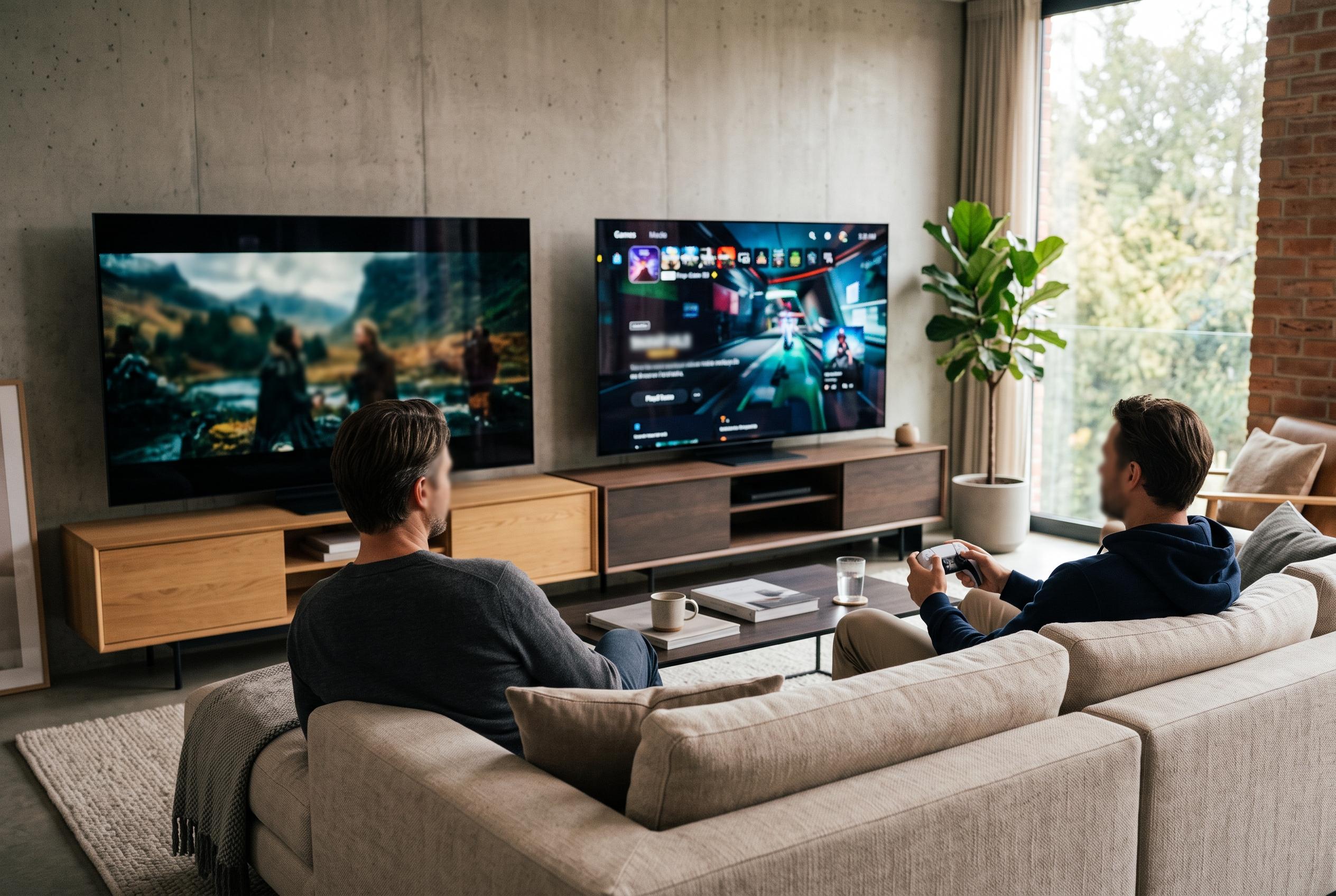

Sony’s Bravia 9 II delivers the more refined image in early tests, but Samsung’s R95H undercuts it on price and offers the stronger gaming specification as RGB Mini LED enters the premium TV market.
Sony and Samsung’s 2026 flagship RGB Mini LED TVs point to a faster-moving shift in premium television hardware, but they also underline how early this category still is. In TechRadar’s side-by-side testing, the Samsung R95H and Sony Bravia 9 II both delivered strikingly strong colour, contrast and reflection handling, yet the Sony was judged the more refined picture overall, while the Samsung remained the more practical purchase because of its lower price and stronger gaming specification. RTINGS also describes both models as RGB Mini LED sets, with Sony using its RGB Backlight Master Drive Pro system and Samsung its Micro RGB panel, a sign that the two companies are pursuing the same idea through slightly different engineering paths.
The biggest advantage of RGB backlighting remains colour reproduction, and on that measure both sets impressed. TechRadar said the Bravia 9 II produced the deeper, richer image, while the R95H often appeared brighter and more forceful, particularly in high-impact scenes. RTINGS likewise notes that Sony’s model aims for a more accurate image, while Samsung’s panel is designed to broaden colour range over standard Mini LED televisions. In practice, that meant one set could look more vivid in one shot and the other more natural in the next, depending on the material being shown.
Contrast and black-level performance were equally important, because RGB backlighting has often been promoted as a route to OLED-like performance without the same self-emissive panel structure. TechRadar found that both televisions handled dark scenes with unusual confidence for backlit displays, with the Bravia 9 II producing the denser blacks and stronger perceived depth, while the Samsung occasionally preserved more shadow detail thanks to its higher brightness. RTINGS says Sony’s set uses a matte Black Screen Pro coating to cut reflections, and What Hi-Fi? notes that Samsung’s own panel and processing still fall short of OLED class in overall dimensionality and black-level finesse.
Brightness, however, remains a more complicated measure than the raw numbers suggest. TechRadar recorded a much higher peak output from the Bravia 9 II than from the R95H, but found the Samsung often looked brighter in real content, especially in highlights and high-contrast scenes. Tom’s Guide’s review of the Sony also places the Bravia 9 II among the brightest TVs it has tested, with peak HDR output close to 3,900 nits, reinforcing the sense that the Sony is built for extreme light output even if subjective impact can vary by scene. That gap between lab figures and what viewers actually see appears to be especially pronounced with this new RGB class of display.
Both companies have also paid close attention to usability in bright rooms. TechRadar said Samsung’s Glare Free matte finish remained highly effective, but Sony’s anti-reflective coating was unexpectedly close behind, especially compared with the older Bravia 7 II. RTINGS says the Bravia 9 II is equipped with Sony’s Black Screen Pro coating, while What Hi-Fi? highlights Samsung’s slim design and full suite of current gaming features, including 4K at 165Hz, VRR and ALLM. Those specifications matter because the R95H offers four HDMI 2.1 ports, while the Sony model has only two, a limitation that may affect buyers using several next-generation devices at once.
That leaves value as the decisive factor. TechRadar said the Bravia 9 II is the more enjoyable television to watch, mainly because of its richer colour and stronger black levels, but the Samsung R95H is the better buy at current pricing because it costs less and offers a more generous gaming specification. RTINGS reaches a similar conclusion in different terms, saying the Sony feels a little more polished, while the Samsung is better suited to gaming. Even so, both sit in a premium bracket where flagship OLED models from Sony and Samsung can cost the same or less, which keeps OLED at the top of the picture-quality hierarchy for now. The larger point is that RGB Mini LED is no longer just a concept: in its first generation, it is already capable of delivering a credible challenge to established premium TV technologies.
Disclaimer: This content is intended for informational purposes only. Readers are advised to exercise their own judgement, conduct due diligence, or consult a qualified expert before acting on any information provided.