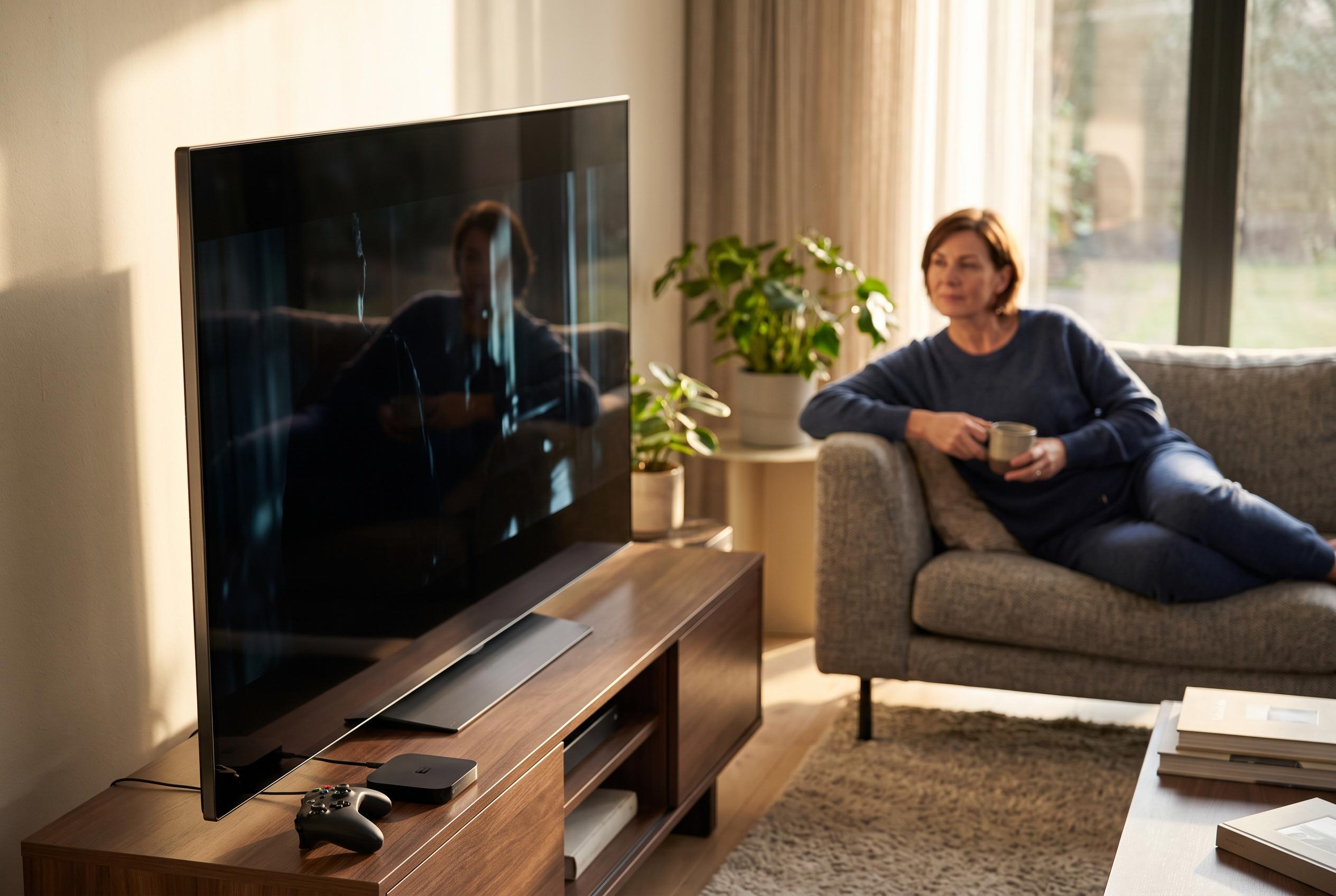

In 2026, the premium 65-inch OLED TV market has become more accessible, with older flagship models offering unbeatable value. Buyers now focus on panel technology, brightness, and gaming features to find the best fit for their living rooms, transforming OLEDs from niche luxury to mainstream choice.
Moving to a 65-inch OLED television is the point at which a living room starts to feel closer to a cinema. The attraction is obvious: perfect black levels, wide viewing angles and the sort of contrast that makes films, sport and games look markedly more immersive. What has changed in 2026 is the price. As buying guides from Tom’s Guide, OLEDTracker and Zen Tech Hub all note, the segment has matured enough that serious 65-inch OLED sets are now routinely found around the €1,000 to €1,500 mark, with older flagships often offering the best balance of performance and value.
That does not mean every cheap OLED is a smart purchase. The real calculation is not simply whether the screen is large or whether the badge says OLED, but whether the panel generation, brightness system and feature set still make sense in 2026. RTINGS stresses that peak brightness, screen coating and the underlying OLED type matter more than many buyers first assume, especially if the television will be used in a bright room. That is why recent premium models remain so attractive: they bring stronger HDR output, better anti-reflection treatments and more capable processing than bare-bones current-year entry sets.
For most buyers, the best value still comes from last year’s upper-tier models rather than the cheapest new release. Tom’s Guide’s coverage of the LG C6, for example, highlights a 65-inch OLED that combines flagship-class picture quality, Dolby Vision support and four HDMI 2.1 ports with 4K at 120Hz, VRR and AMD FreeSync Premium. OLEDTracker makes a similar point about flagship-grade panels delivering substantially higher HDR brightness than mid-range alternatives, while Zen Tech Hub argues that discounted older premium models often outperform newly launched budget sets at roughly the same price. In practical terms, that means a mature flagship can be the smarter buy even when a more affordable 2026 model sits beside it on the shelf.
Panel technology also matters. WOLED and QD-OLED each have their own strengths, and the choice affects how the image looks in everyday use. Samsung’s QD-OLED approach is generally associated with stronger colour volume and more vivid highlights, which is why Samsung’s high-end sets continue to draw attention in buying guides. At the other end of the spectrum, LG’s WOLED-based televisions remain a safer all-round choice for many homes because they tend to offer broader compatibility, strong processing and a more predictable value curve. RTINGS notes that OLED is still best suited to darker environments, while brighter rooms may favour sets with more aggressive anti-glare treatment or even a Mini-LED alternative.
That distinction is particularly important in large-screen sizes. A 65-inch panel can measure roughly 145 centimetres across, so buyers need enough wall space or furniture clearance, as well as a sensible viewing distance. In broad terms, the sweet spot is usually around two to 2.5 metres from the screen. Sit too close and the image becomes tiring to take in; sit too far away and the television loses much of the impact that justifies the size. This is also why premium anti-reflective coatings have become more valuable: once the panel is large enough to dominate the room, reflections and ambient light become much harder to ignore.
Gaming support is now another deciding factor rather than a bonus. Modern flagship OLEDs increasingly offer four HDMI 2.1 ports, 120Hz or higher refresh rates, VRR and low input lag, which makes them suitable for PlayStation 5, Xbox Series X and high-end PC use. Tom’s Guide’s coverage of the LG C6 points to precisely that mix, while TechRadar’s review of Samsung’s R95H underlines how high-end displays now combine bright-room usability with strong gaming performance and full VRR support. In other words, if the television will also serve as the main gaming display, the specification sheet should be checked as carefully as the picture quality claims.
Taken together, the market now rewards careful buyers rather than first-time OLED shoppers chasing the lowest sticker price. The best 65-inch OLEDs are no longer exotic purchases reserved for a few enthusiasts; they are mainstream premium products whose value depends on how well they match the room, the light levels and the devices connected to them. For many households, the right answer will still be a discounted flagship from the previous year. For others, especially those wanting the newest software, improved anti-reflection treatment and a cleaner long-term support horizon, a current-generation set may justify the extra outlay. The common thread is that 65-inch OLED has finally become a category where sensible comparison, not blind ambition, leads to the best result.
Disclaimer: This content is intended for informational purposes only. Readers are advised to exercise their own judgement, conduct due diligence, or consult a qualified expert before acting on any information provided.