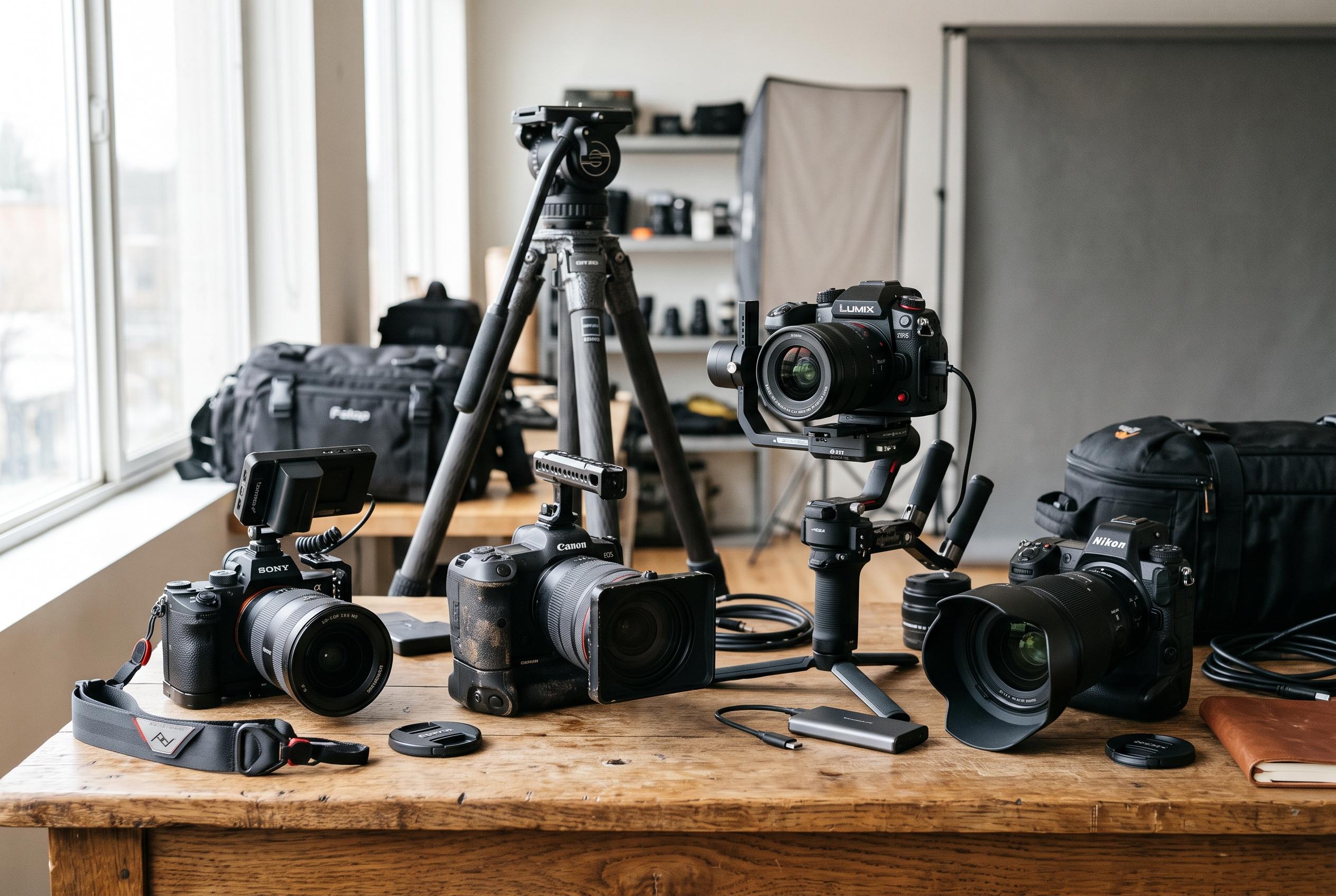

From Canon’s cooled 7K hybrid to Sony’s low-light specialist, Panasonic’s stabilised workhorse and Nikon’s rugged all-rounder, these cameras target the varied demands of professional shooters.
For professional image-makers, the challenge is rarely a single, fixed shooting scenario. A small studio may one week be producing a commercial spot, the next covering a conference, concert or wedding. That shift places a premium on full-frame mirrorless cameras that can cope with both demanding video work and stills, without forcing a compromise in reliability, colour, or handling.
Among the more video-oriented options, Canon’s EOS R6 V stands out as a practical hybrid tool. According to the source material, it uses a 32.5-megapixel full-frame sensor and Canon’s Dual Pixel CMOS AF system with subject recognition for people, animals and vehicles. More importantly for paid production work, it offers Canon Log 2 and Canon Log 3, with the former claimed to deliver more than 15 stops of dynamic range, alongside 7K 30p open-gate recording. An active cooling fan, graphite heat management and thermal structure are presented as the basis for longer uninterrupted recording, including 4K 120p and extended 4K 60p sessions.
That combination makes the Canon a sensible fit for crews that move between controlled commercial shoots and live events. The article argues that its 3:2 sensor capture allows easier reframing into both landscape and vertical deliverables in post-production, which is useful when a single shoot must supply broadcast-style footage, social clips and advertising cut-downs. It also highlights 24-bit, four-channel LPCM audio recording, together with wind reduction and noise suppression, as useful features when capturing speech or ambient sound on location.
Sony’s Alpha 7S III is positioned in a different part of the market: as a camera built first and foremost for low-light video. The article credits it with strong high-ISO performance and a robust body layout that includes multiple threaded mounting points, making it easier to build out a rig with cages, monitors and follow-focus accessories. Its broader lens ecosystem is also presented as a major advantage, particularly for small independent crews and agencies that need to scale a kit according to budget and assignment.
Panasonic’s LUMIX S5II is described as a strong choice for handheld production. The source material stresses the brand’s stabilisation expertise, saying the camera can produce relatively steady footage even without a gimbal, which matters for documentary, corporate and event work where setup time is limited. It also notes support for high-bitrate recording and direct capture to an external SSD, a practical benefit when shoots generate large volumes of footage and teams want to reduce card costs and speed up offload workflows.
Nikon’s Z5II is framed as the dependable all-rounder for outdoor and mixed stills-and-video work. According to the article, it offers solid weather resistance and a durable build, which should appeal to photographers who work in less predictable conditions. The camera is also presented as a natural transition step for stills-first professionals moving into higher-end video production, thanks to improved handling and more capable in-camera video recording.
Sony’s Alpha 7 V is cast as the most balanced option in the group, aimed at users who need speed and efficiency rather than specialist features. The source material says it uses responsive AI-driven autofocus and recognition, with a lightweight body that suits daily assignments such as short-form content, wedding coverage and routine event work. While it is not presented as the most advanced model for prolonged high-spec recording, it is described as a practical tool for high-frequency shooters who value convenience, quick operation and broad versatility.
Taken together, the cameras in this roundup reflect different ways of solving the same problem: how to build a full-frame system that matches real-world workloads. For crews that regularly face long recording sessions, shifting light and mixed video and stills deliverables, the decisive factors are not only image quality but also heat management, autofocus behaviour, lens support, stabilisation and workflow efficiency. In that sense, the best purchase is less about headline specifications than about which camera fits the work most often performed.
Disclaimer: This content is intended for informational purposes only. Readers are advised to exercise their own judgement, conduct due diligence, or consult a qualified expert before acting on any information provided.