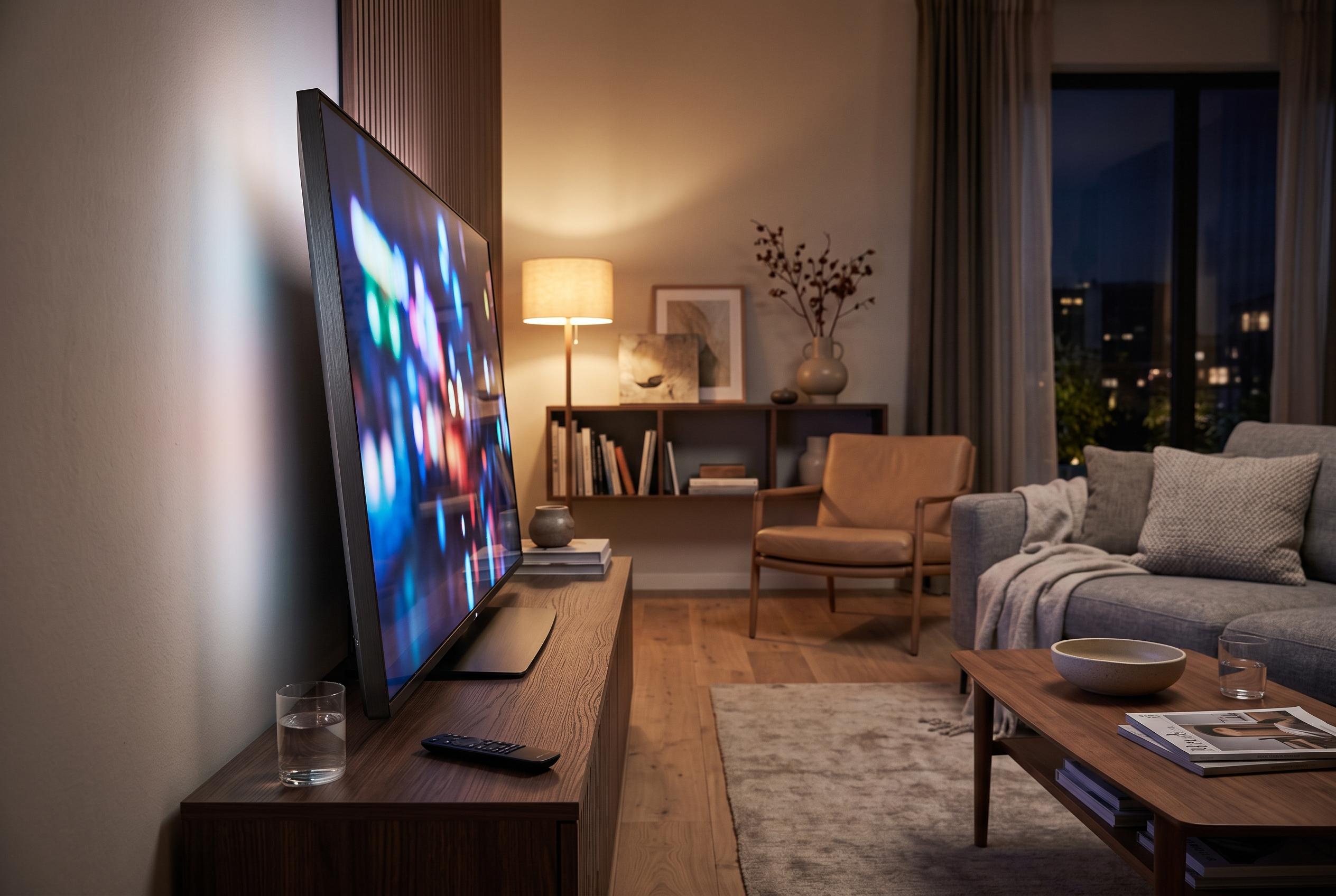

As RGB-Mini LED and TCL’s SQD-Mini LED compete for attention, shoppers should look beyond brightness and dimming-zone claims to the backlight architecture that actually shapes picture quality.
In the rush to buy a larger television for the home cinema this Double 11 season, one term has become impossible to ignore: RGB-Mini LED. The phrase now appears across social platforms, shopping advice and product launches, but the argument behind it is less about marketing than about how different backlight systems actually produce colour, brightness and contrast. That distinction matters because the premium being charged is not always for the same technology, even when the sales copy sounds similar.
At the centre of the dispute are three competing approaches. One uses red, green and blue LEDs as the backlight source; this is the route taken by brands such as Hisense and Sony in their latest sets. Another, which still dominates much of the Mini LED market, uses blue emitters with quantum-dot conversion. TCL has taken a third path with SQD-Mini LED, a proprietary system it says relies on a single-chip white light source paired with Super Quantum Dot materials rather than grouped RGB emitters. The company says this design is meant to improve colour accuracy, brightness and control while reducing the limitations it associates with conventional RGB-Mini LED.
That is why the debate has become so technical so quickly. A television described as having high colour gamut may not share the same architecture as another with an identical claim. According to TCL, SQD-Mini LED is designed to deliver 100% of BT.2020, up to 10,000 nits of peak brightness and more than 20,000 dimming zones in its flagship implementation. Sony’s Bravia 9 II, by contrast, is positioned as a premium RGB mini-LED set with a bright anti-glare panel, strong motion handling and what TechRadar describes as colour performance close to OLED, although the review also notes its high price, limited HDMI 2.1 support and some blooming at off-axis viewing angles.
For buyers, the more useful question is not whether a set is labelled RGB, but what sort of backlight sits behind that label. In practice, there is a meaningful difference between a system built from separate red, green and blue emitters and one based on a blue backlight plus quantum dots. TCL argues that its SQD method avoids some of the brightness and control trade-offs it sees in RGB designs. The opposing camp says RGB can produce excellent colour and black levels when executed well, but the engineering is more complex and the final result depends heavily on the number of controlled zones, the signal processing and the panel itself.
That makes the numbers in marketing material easy to misuse. Dimming-zone counts, peak brightness claims and colour-gamut percentages are often presented as if they were directly comparable across brands, when they are not always measuring the same thing in the same way. A set with a higher zone count may still suffer from poor processing; another with lower numbers may look better in real viewing if its colour control and anti-reflection performance are stronger. In other words, the headline specification is only the beginning of the calculation, not the conclusion.
The practical advice for shoppers is straightforward. In a dedicated dark room, black level, halo control and low-light uniformity should come first, and OLED still remains the safest benchmark if the budget allows. In a bright living room, anti-glare treatment, peak brightness and stable colour under daylight matter more than the marketing term attached to the backlight. For mixed use, including gaming, ports, refresh rate and input lag may be more important than whether the set is called RGB-Mini LED or SQD-Mini LED. The wider market is already moving in that direction: what began as a flagship feature is now being pushed into mid-range pricing, and that makes the details more important, not less.
Disclaimer: This content is intended for informational purposes only. Readers are advised to exercise their own judgement, conduct due diligence, or consult a qualified expert before acting on any information provided.