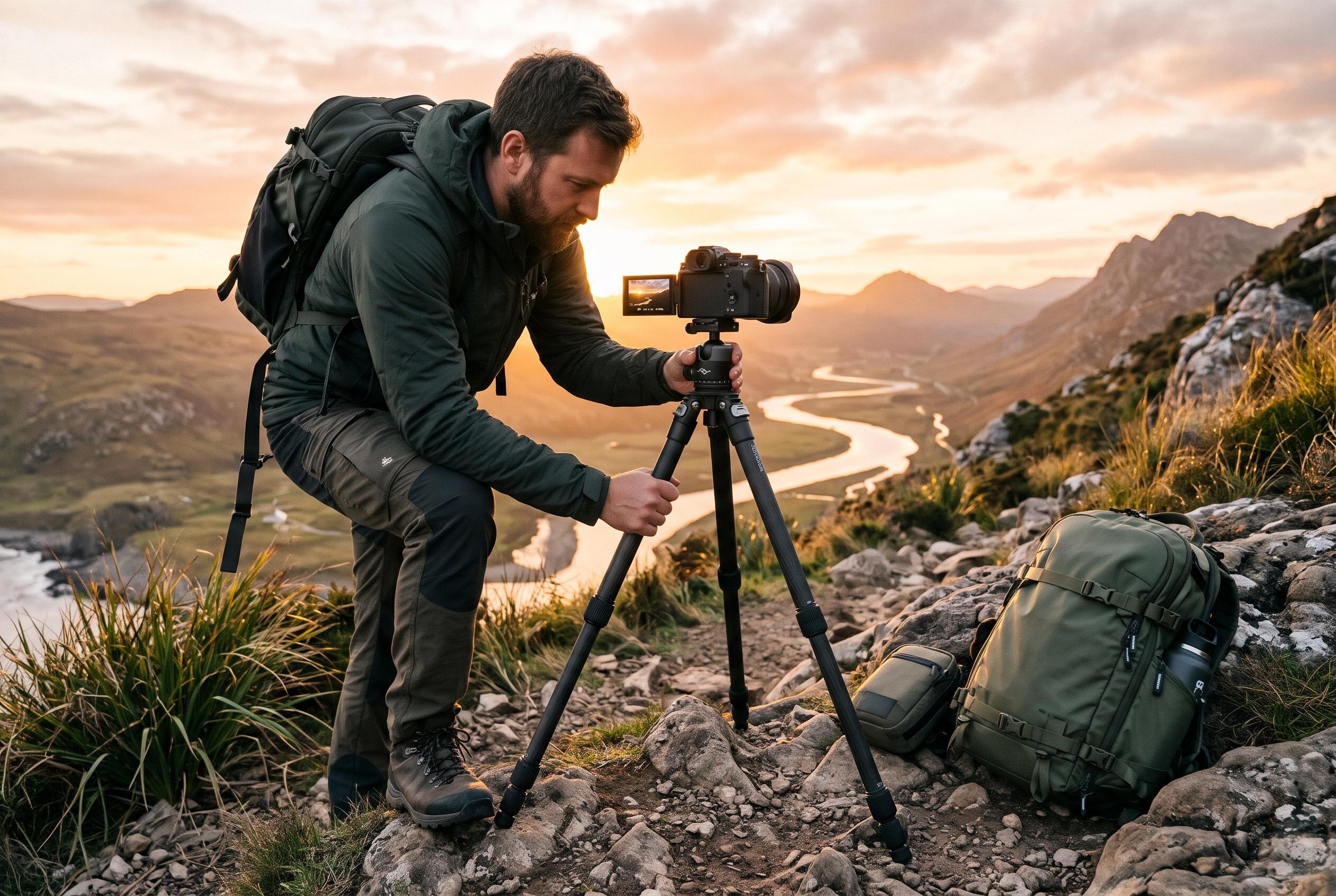

From compact travel models to 90-inch supports, the right mirrorless tripod depends on kit weight, stability, working height and how often it will be carried.
Mirrorless cameras have made portable shooting easier, but they have not removed the need for a stable support. For landscapes, portraits, video, long exposures and self-timed frames, the tripod still matters. Guides from Digital Camera World, The Inspect Aspect and ITechGuides all point to the same practical rule: the best choice is not the tallest or the lightest, but the one that matches the weight of the full kit, the way it will be used, and how often it will be carried. Stability, head quality, folded size and leg design usually matter more than marketing claims.
That is reflected in the spread of tripods selected here. The budget models favour portability and simple three-way heads, while the more capable options add taller maximum heights, stronger load ratings, monopod conversions or accessory mounts. For travellers, weight and packed length remain crucial. For studio work, events and creator setups, working height and steadiness usually come first. The right answer depends on whether the camera is a small body with a compact lens or a heavier full-frame setup with extras attached.
For those who want the simplest travel option, the Endurax 60-inch model is a practical starting point. It is light, folds small and includes useful extras such as a phone holder, remote shutter and carry bag. The Amazon Basics 50-inch tripod is even lighter, though its lower load rating makes it better suited to compact kits. At the other end of the scale, the CAMBOFOTO 74-inch tripod and the JOILCAN 74-inch model are aimed at users who need more height without moving into professional carbon-fibre pricing.
Several of the stronger value options lean on ball heads and Arca-type compatibility, which makes them more flexible for stills work and general-purpose framing. The NEEWER Basics TP12 is built around a compact travel design with a ball head, panoramic control and phone support, while the K&F Concept 64-inch model adds a stronger load rating and low-angle shooting support. These designs suit photographers who want quick repositioning and an easier carry, rather than a heavier, more specialised support system.
The more versatile mid-range models add features that matter in the field. SmallRig’s CT-10 converts from tripod to monopod, which is useful for hiking, events and fast repositioning. XXZU’s 75-inch tripod goes further with independently adjustable legs, a detachable centre column and a remote, making it more useful on uneven ground and for mixed camera-and-phone shooting. K&F CONCEPT’s 75-inch model focuses on comfort and everyday use, with a lighter frame and mobile-device accessories that make it easier to use across camera, tablet and smartphone work.
The tallest and most specialised tripods in the group are designed for situations where standard working height is not enough. K&F CONCEPT’s 90-inch ultra-high model is built for overhead compositions and elevated angles, but its size and weight make it less convenient for casual travel. That mirrors a point made in technical buying guides: once a tripod grows taller, the quality of the head, the rigidity of the legs and the stability of the centre column become even more important. A tall tripod that wobbles is usually less useful than a shorter one that locks down cleanly.
The broader market for mirrorless support also shows how blurred the line has become between tripod and creator rig. Digital Camera World’s separate 2026 gimbal guide makes clear that moving video work often calls for motorised stabilisation rather than a static stand. That does not make tripods less relevant; it simply means buyers now have to choose between motion support and fixed support, or in some cases buy both. For stills, livestreams, top-down demonstrations and controlled video, the tripod remains the more practical tool.
For most buyers, the decision comes down to a few checks. First, confirm that the stated load capacity comfortably exceeds the full camera-and-lens combination, not just the body alone. Second, decide whether portability or height matters more, because the two are often in tension. Third, look at the head type, quick-release plate and accessory support, since these details shape day-to-day usability. A well-chosen mirrorless tripod should be stable enough for the heaviest planned setup, but light and compact enough that it will actually be taken out and used.
Disclaimer: This content is intended for informational purposes only. Readers are advised to exercise their own judgement, conduct due diligence, or consult a qualified expert before acting on any information provided.