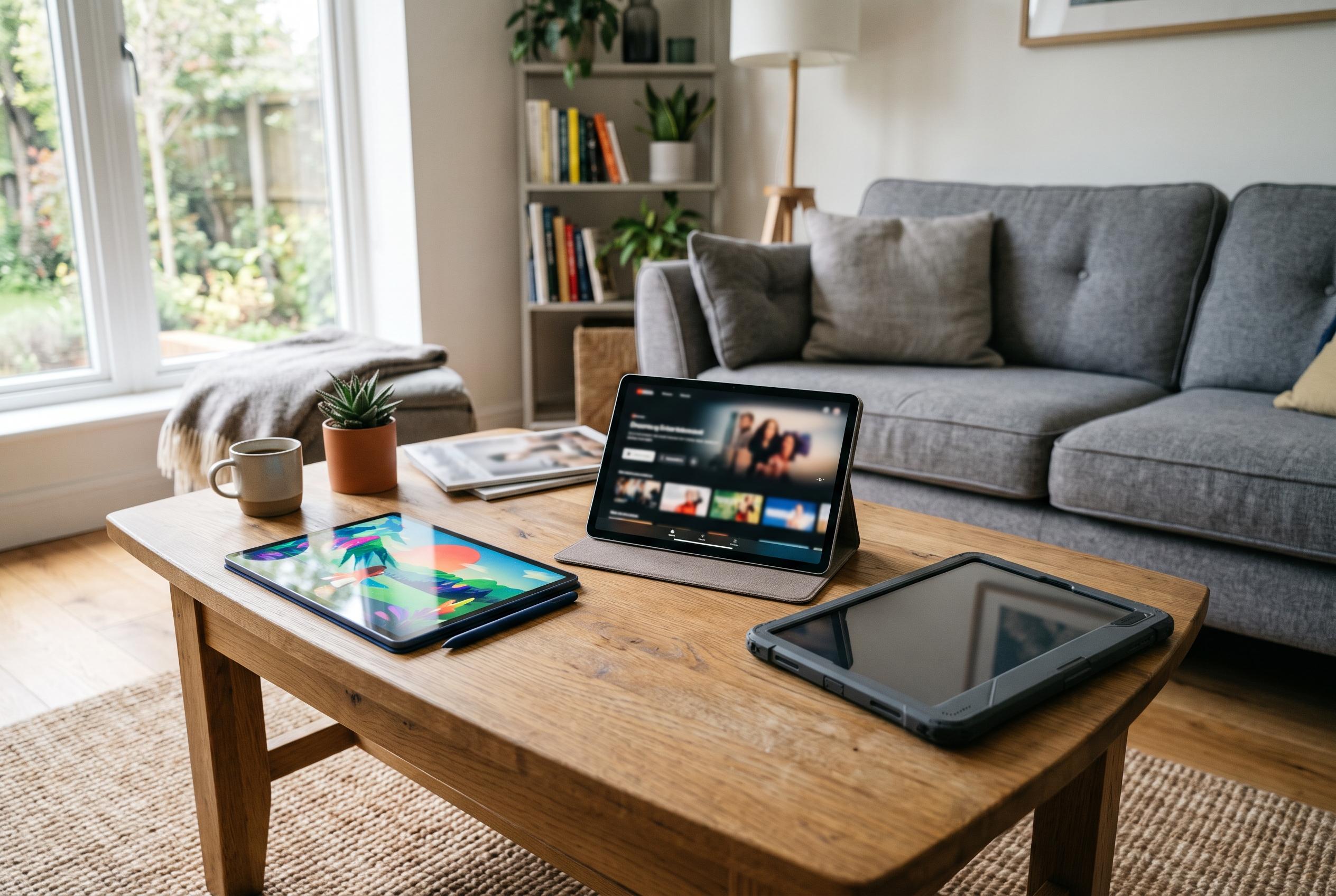

Lenovo’s Xiaoxin Pad 11 and OnePlus Pad Lite target affordable entertainment, while HONOR’s MagicPad 2 adds a larger OLED screen and faster performance for work and creative use.
Before comparing screens, it is worth deciding how a tablet will actually be used at home. For casual viewing on the sofa, reading news, or following a recipe in the kitchen, a modest model is often enough. If the device is expected to replace a laptop for part of the day, the case for spending more becomes stronger. That distinction is the key to the three tablets here: Lenovo’s Xiaoxin Pad 11 and OnePlus’s Pad Lite sit in the entry-level bracket, while HONOR’s MagicPad 2 moves into a higher tier with a larger OLED display and more powerful silicon.
Lenovo’s Xiaoxin Pad 11 2025 is the most straightforward option for entertainment and general use. According to Gizmochina, the China launch model uses MediaTek’s Dimensity 6300 chip, an 11-inch 2.5K display with a 90Hz refresh rate, and up to 8GB of RAM and 256GB of storage, with microSD expansion available up to 2TB. That specification mix makes it well suited to streaming, reading and light browsing, and it explains why the tablet is presented as the sensible choice for sofa use rather than heavy productivity.
OnePlus’s Pad Lite covers much of the same ground, but it tries to win on endurance and polish. TechRadar says it has an 11-inch 1920 x 1200 LCD panel at 90Hz, a MediaTek Helio G100 processor and OxygenOS 15.0.1, while TechAdvisor praises the clean software and battery life. Notebookcheck, however, notes that the screen is less bright and less sharp than some rivals, and points out omissions such as expandable storage, a fingerprint reader and a headphone jack. In practice, that makes the OnePlus a competent media tablet, especially for buyers who value battery life and an uncluttered interface over extras.
The HONOR MagicPad 2 is a different proposition altogether. The Spanish article describes it as the model that raises the whole category, and that is consistent with its larger 12.3-inch OLED panel, which delivers deeper blacks and richer colour than the LCD panels on the two cheaper tablets. It is also described as using a high-end mobile processor, which should help with multitasking, drawing and more demanding apps. That extra capability comes with more weight and a higher price, so it makes most sense for people who expect to study, work or create on the device for long sessions.
The practical buying decision is therefore quite simple. If the tablet is mainly for streaming, reading and occasional use, the Lenovo is the most balanced choice, particularly in its larger-storage version. If the Lenovo is unavailable, the OnePlus offers similar value and adds stronger battery life. The HONOR only really justifies its cost if the user will notice the better panel and extra performance every day. As the article notes, the discount shown by AliExpress is less important than the final amount at checkout, which is the figure that should guide the purchase.
Disclaimer: This content is intended for informational purposes only. Readers are advised to exercise their own judgement, conduct due diligence, or consult a qualified expert before acting on any information provided.