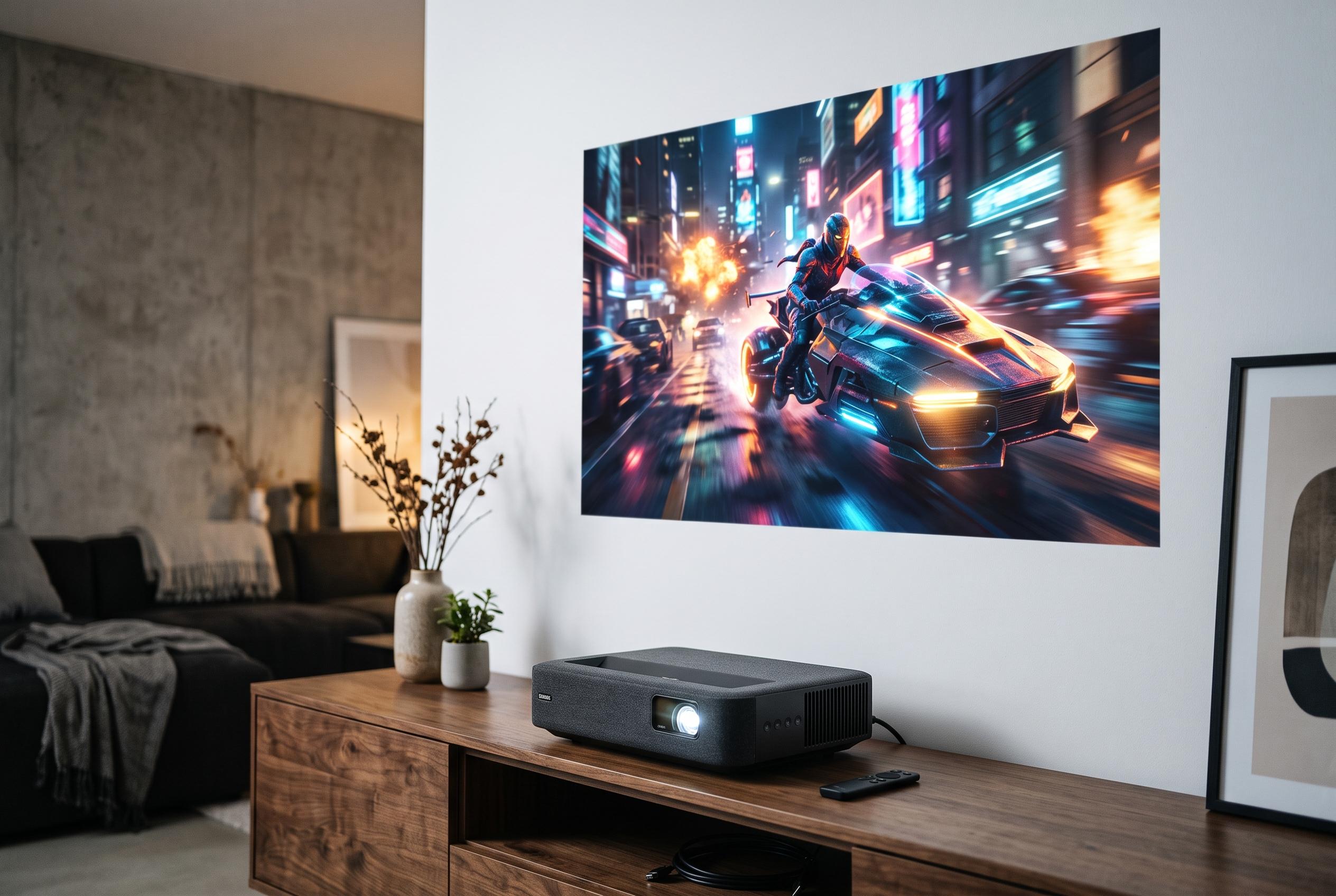

Advancements in laser brightness, gaming support, and streaming integration have propelled ultra-short-throw projectors from niche to mainstream, offering a compelling alternative to large TVs for modern living rooms.
Ultra-short-throw projectors have moved from niche kit to a serious television alternative. Recent buying guides from RTINGS, Tom’s Guide and TechRadar all point to the same trend: buyers want a cleaner living-room setup, a far larger image and fewer installation compromises than a conventional projector or large TV can offer. That shift is especially visible in 2026, when brighter laser models, stronger gaming support and better streaming platforms have made UST units more practical for everyday use.
The AWOL Vision Aetherion Max stands out as the most capable all-rounder in this field. Its 3,300 ISO lumen triple-laser light source gives it the headroom to cope with daylight viewing, while its native contrast and image processing help preserve depth in films with difficult shadow detail. It is also the most gaming-focused model in this group, with HDMI 2.1a support, very low input lag and features such as VRR and ALLM that matter to console players. Anti-rainbow technology and Google TV add further polish.
For buyers who want a premium image without paying top-tier money, the Hisense PX3-PRO is the strongest compromise. It combines triple-laser colour, solid brightness and Dolby Vision support with a responsive Google TV interface and genuinely useful built-in speakers. Hisense’s calibration claims also appear credible in testing, which matters for users who want accurate skin tones without extensive manual adjustment. Its main weakness is the awkward auto-keystone workflow, which feels less refined than the rest of the product.
The Hisense PL2 remains the most sensible budget option. It offers the core UST experience: 4K laser projection, Dolby Vision, smart streaming and enough brightness for controlled living-room use. It does not match the more expensive models in dark-scene detail or colour range, but it is still a convincing entry point for first-time buyers. In contrast, the Hisense PT1 splits the difference, adding a 240Hz panel and lighter chassis for users who care more about gaming responsiveness and easier placement.
AWOL Vision’s LTV-3000 Pro is the more specialist choice. Its built-in centre-channel speaker is unusual and genuinely useful, particularly for buyers building a compact home cinema around a 3.1 or 5.1 layout. It also supports active 3D, a feature that is now rare in this category. The trade-off is that it lacks an integrated smart platform, so external streaming hardware is effectively mandatory.
The LTV-2500 is the safer AWOL model for most first-time UST buyers. It is quieter than several rivals, includes a Fire TV Stick 4K Max and delivers a broadly complete home cinema package straight out of the box. Formovie’s Theater, by contrast, wins on audio. Its Bowers & Wilkins speaker system is the best integrated sound solution in this roundup, making it attractive for smaller rooms where a separate soundbar would be unwelcome. The price for that convenience is weaker app support and mixed reliability reports.
Epson’s EpiqVision Ultra LS800 remains the brightness specialist. Its 3LCD engine avoids the rainbow artefacts that can trouble some DLP users, and its 4,000 lumen output makes it the easiest model here to recommend for a very bright room. The downside is that its renewed-unit status and slower Android TV interface make it a less straightforward purchase than the best Hisense and AWOL models. Across the category, the same advice keeps appearing in expert round-ups: match the projector to the room, use a proper ALR or CLR screen, and do not ignore placement or input lag if gaming matters.
Disclaimer: This content is intended for informational purposes only. Readers are advised to exercise their own judgement, conduct due diligence, or consult a qualified expert before acting on any information provided.