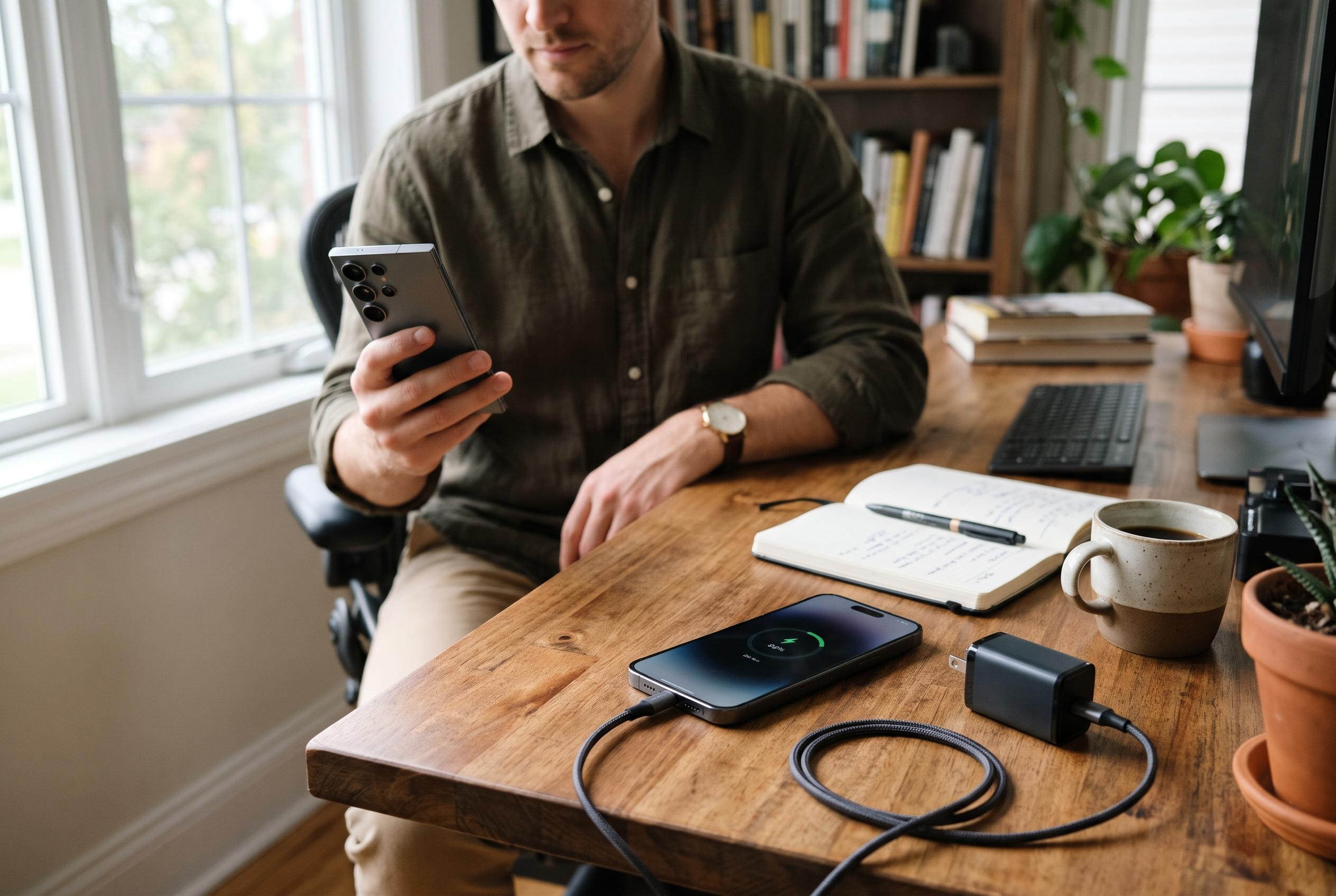

The vivo V80 delivers a stabilised telephoto camera, a 7,200mAh battery and 90W charging, while Samsung’s Galaxy A57 5G offers a lighter design, steadier performance and six Android upgrades.
The vivo V80 and Samsung’s Galaxy A57 5G sit in the same broad price tier in India, but they are built around different priorities. At launch, the V80 8GB/256GB cost ₹69,999, while the Galaxy A57 5G in the same configuration was priced at ₹56,999, leaving a gap of ₹13,000. That extra money buys a 3x stabilised telephoto camera, a much larger battery, faster wired charging and a higher-refresh display. Samsung counters with longer software support, a slimmer and lighter design, and more measured sustained performance, making it the safer long-term option for buyers who care more about endurance and longevity than about portraits and headline specifications. According to the comparative material from 91mobiles and Smartprix, the V80 also brings a 144Hz panel and a 7,200mAh battery, while the A57 5G relies on a 120Hz screen and a 5,000mAh cell.
The clearest separation between the two phones is in imaging. The vivo model uses a 50MP telephoto camera with optical stabilisation, a feature the Galaxy does not match with anything comparable in its rear array. Reviews cited in the source material suggest that this makes the V80 more useful for portrait work and tighter framing, even if its processing is not always perfectly consistent. By contrast, the Samsung phone leans on its 50MP main camera for crop-based close-ups and adds only a 12MP ultrawide and 5MP macro lens. That means the A57 5G can produce respectable everyday shots, but it does not offer the same native zoom flexibility. Comparison sites including 91mobiles, SimplyAmplifying and Smartprix all point to the V80’s stronger camera hardware as one of the main reasons it commands a higher price.
Battery life and charging are another area where vivo appears to stretch ahead on paper. The V80’s 7,200mAh battery is significantly larger than the A57 5G’s 5,000mAh unit, and its 90W charging is twice as fast as Samsung’s 45W support. In practice, the gulf is less dramatic than the raw wattage suggests, but the larger battery still gives the vivo phone a clearer advantage for heavy users and long days away from a charger. The trade-off is weight: the V80 is the heavier handset, while Samsung’s device is easier to carry and feels less cumbersome in the hand. The comparison data from 91mobiles and Smartprix also shows that the V80 reaches only 128GB in some storage configurations, while the Galaxy A57 5G goes to 256GB, which may matter more to buyers who keep large photo libraries or download a lot of media.
Performance and software support are where Samsung makes its strongest case. The Galaxy A57 5G is described as the steadier phone under sustained load, with the better-balanced option for people who keep devices for several years. Its main advantage is not peak speed but predictability: it is thinner, lighter and backed by six Android version upgrades, compared with four for the vivo handset. That longer support window is one of the most important practical differences between the two phones, because it affects security, features and resale value over time. The Vivo V80, meanwhile, appears aimed at buyers willing to accept a shorter update policy in exchange for the larger battery, faster charging and telephoto camera.
Taken together, the V80 is the more specialised phone and the Galaxy A57 5G the more conservative one. The vivo is the better fit for users who care about portraits, zoomed shots and staying away from the charger for as long as possible. Samsung’s handset is easier to justify for anyone looking for a lighter device, longer software support and a lower entry price. The extra ₹13,000 therefore does not buy a universally better phone; it buys a particular set of features, and whether that premium is worthwhile depends on how much value a buyer places on camera versatility and battery headroom.
Disclaimer: This content is intended for informational purposes only. Readers are advised to exercise their own judgement, conduct due diligence, or consult a qualified expert before acting on any information provided.