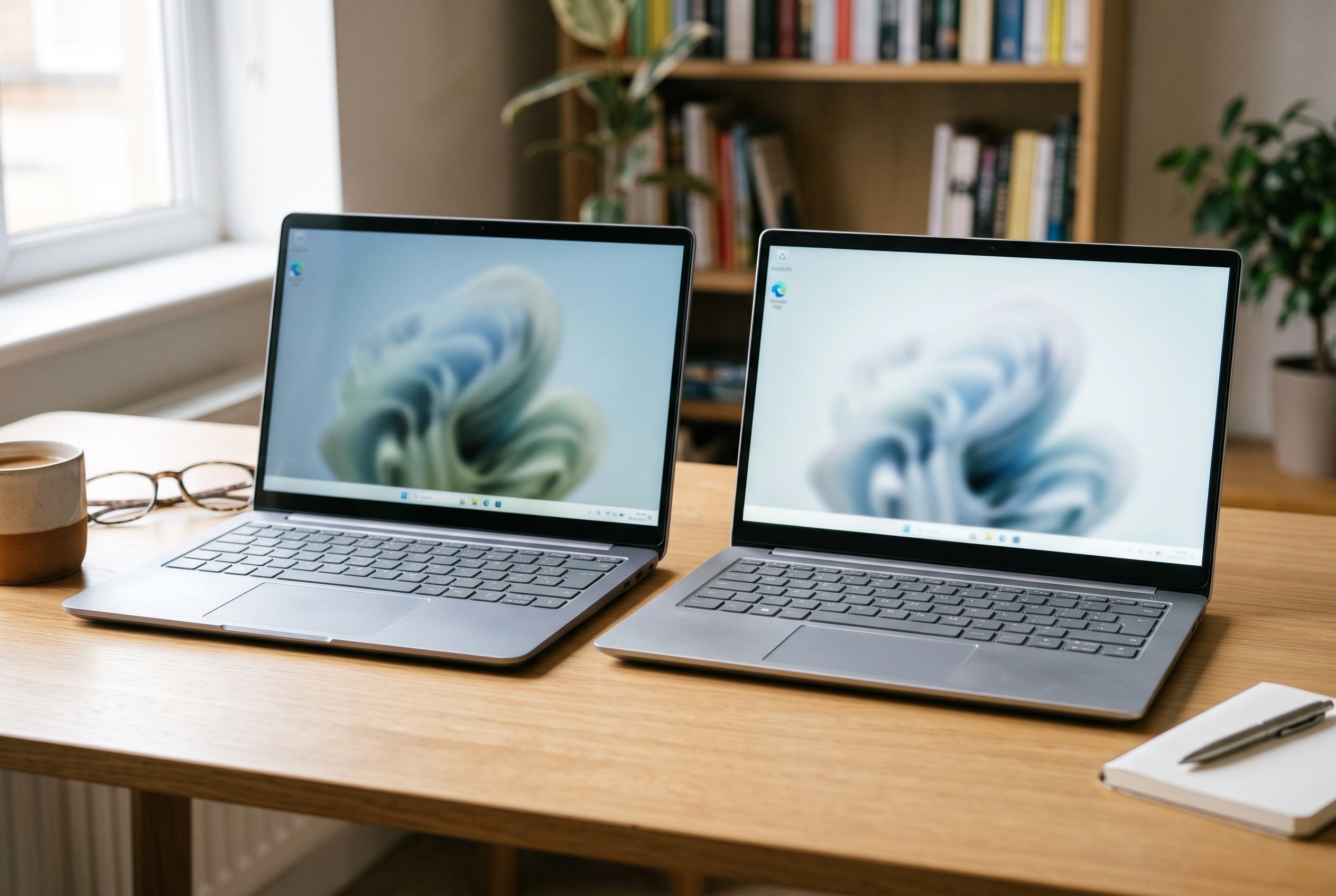

With 8GB of memory fixed across these everyday laptops, newer processors, larger SSDs and Full HD displays make the biggest difference. HP’s Core i5 model and Dell’s Core 3 options lead the pack.
The market for 8GB Windows 11 laptops is crowded with machines that look similar on paper but behave very differently in use. The broad rule is simple: 8GB is enough for everyday browsing, email, documents and video calls, but the processor, storage and screen quality determine whether a laptop feels merely adequate or genuinely comfortable. Microsoft’s Windows 11 requirements confirm that 4GB is the minimum memory level for the operating system, which puts 8GB above the baseline, but not in performance territory that suits heavy multitasking or demanding creative work. In that context, the strongest options in this group are the newer HP and Dell models built around recent Intel chips and larger SSDs. According to the round-up, those are the models most likely to feel responsive in day-to-day use.
Among the leading choices, the HP 15.6-inch touchscreen with a Core i5-1334U and 512GB SSD stands out for its stronger processor and touch support. Intel’s specifications identify the Core i5-1334U as a 13th-generation chip with ten cores and twelve threads, which helps explain why it is positioned as one of the most capable everyday options in the group. The same roundup also places Dell’s Core 3 100U configurations near the top, and Dell’s own product pages show that this family is offered with 8GB of DDR5 memory, a 512GB SSD and a 15.6-inch Full HD non-touch screen. Intel describes the Core 3 100U as a six-core, eight-thread processor from the Core Series 1 line, launched in early 2024, which makes it a more current everyday platform than many older budget chips.
Storage is the other dividing line. Several machines in the list pair 8GB of RAM with only 128GB of SSD space, and that can become restrictive once Windows updates, applications and offline files start to accumulate. The review therefore favours 256GB and, more decisively, 512GB configurations for most buyers. That preference is practical rather than luxurious: a larger drive does not make the laptop faster in isolation, but it does reduce the sense of clutter that comes with a small system disk. In a comparison of otherwise similar laptops, that extra space is often the difference between a machine that feels manageable and one that needs constant housekeeping.
Screen quality is equally important. A 15.6-inch Full HD panel gives much more usable space than a 1366 × 768 display, especially for documents, spreadsheets and split-screen work. That is why the roundup treats the Full HD Dell and HP options as more practical than older or compact models with lower-resolution panels. It also explains why touchscreens and 2-in-1 designs are presented as specialised choices rather than universal upgrades. They are useful for note-taking, casual browsing or quick taps and swipes, but they do not compensate for a weak display, dated processor or small SSD. Buyers who work mostly at a desk should usually prioritise clarity and keyboard comfort over convertible flexibility.
The article is also careful about renewed business laptops. Models such as the Dell Latitude 3190, HP EliteBook 840 G5 and Dell Latitude 5591 may offer features that are still useful, including Windows 11 Pro, sturdier business-oriented construction or better port selection. But their age matters. A strong older processor does not automatically beat a newer mainstream chip, and condition, battery wear and warranty length become part of the buying decision. The same logic applies to listings with vague specifications: where memory, storage or display details are inconsistent, the safest approach is to confirm the exact configuration before purchasing. That caution is especially relevant for renewed units, where the headline specification can hide a less predictable real-world experience.
The practical conclusion is straightforward. For most people, the best 8GB Windows 11 laptop is the one that combines a recent processor, at least 256GB of storage and a screen resolution high enough to make daily work comfortable. The HP Core i5-1334U model and Dell Core 3 100U laptops fit that brief best, while the touchscreen HP Ryzen 3 option is better for buyers who value direct input. Older business laptops and 128GB models remain serviceable, but mainly for narrower use cases. In a segment where memory is fixed at 8GB, the smartest purchase is not the cheapest sticker price; it is the configuration that leaves the most room for ordinary work without constant compromises.
Disclaimer: This content is intended for informational purposes only. Readers are advised to exercise their own judgement, conduct due diligence, or consult a qualified expert before acting on any information provided.