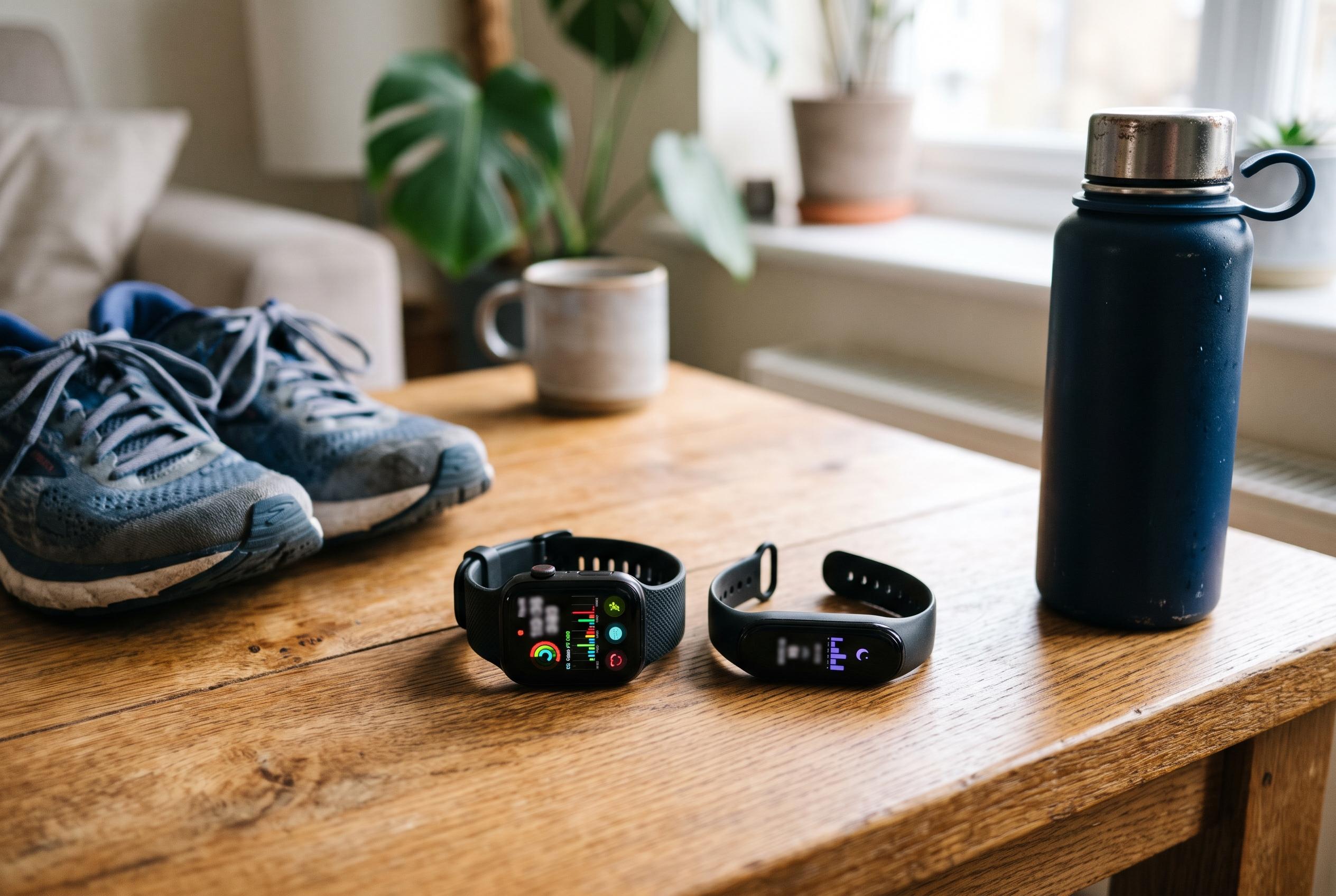

Xiaomi offers stronger workout analysis, a larger display and longer claimed battery life, while Huawei counters with a slimmer design, faster charging and richer overnight health tracking.
Xiaomi’s Smart Band 10 and Huawei’s Band 10 sit in the same part of the market, but they are aimed at slightly different users. The Xiaomi model is the stronger option for most people who train regularly, thanks to its longer claimed battery life, larger display and broader workout feedback. Huawei, by contrast, has made the Band 10 thinner and lighter, with faster charging and a stronger emphasis on overnight health tracking.
For exercise, Xiaomi gives the more ambitious set of tools. The company says the Smart Band 10 supports more than 150 sport modes and adds metrics such as VO2 max, training load and recovery time. It also includes guided running sessions and, for swimmers, real-time underwater heart-rate tracking as well as claimed lap-count accuracy of 96%, according to the the5krunner comparison. Huawei’s Band 10 is less focused on coaching and more on general activity tracking, with 100 workout modes and swim data support, but no comparable running plans or training-load measures.
That difference carries through to sleep and health monitoring. Huawei places greater weight on nocturnal data, including sleep heart-rate variability, breathing-related indicators and overnight monitoring of blood oxygen and respiration, with activity rings to prompt movement during the day. Xiaomi still offers the usual heart-rate, SpO2 and stress tracking, but it is the broader training package and sleep-improvement planning that stand out in its software, according to the comparison published by the5krunner.
Battery life is another clear split. Xiaomi claims up to 21 days in typical use and 8 days with always-on display and heavier tracking enabled, while Huawei quotes up to 14 days at best and around 3 days with always-on display switched on. The companies use different testing conditions, so the numbers are not directly comparable, but Xiaomi still appears to have the advantage on endurance. Huawei, however, counters with quicker charging: it says a full top-up takes 45 minutes, with five minutes on charge enough for two days of use.
There are limits on both devices. Neither model includes built-in GPS, so outdoor route tracking still depends on a connected phone. Neither specification sheet lists NFC for contactless payments. Quick replies to calls are limited to Android phones on both bands, while Huawei’s more detailed sleep analysis sits inside Huawei Health and Xiaomi’s earbud and camera controls rely on a Xiaomi phone running HyperOS 2. For most buyers, the decision is straightforward: Xiaomi if workouts, swimming and battery life matter most; Huawei if a slimmer fit and richer overnight health data are the priority. Comparisons from smartwatchspecifications.com, mundowatch.com.br, turbovs.com, smartwatchbanden.nl and Chinese smartwatches all point to the same broad trade-off.
Disclaimer: This content is intended for informational purposes only. Readers are advised to exercise their own judgement, conduct due diligence, or consult a qualified expert before acting on any information provided.