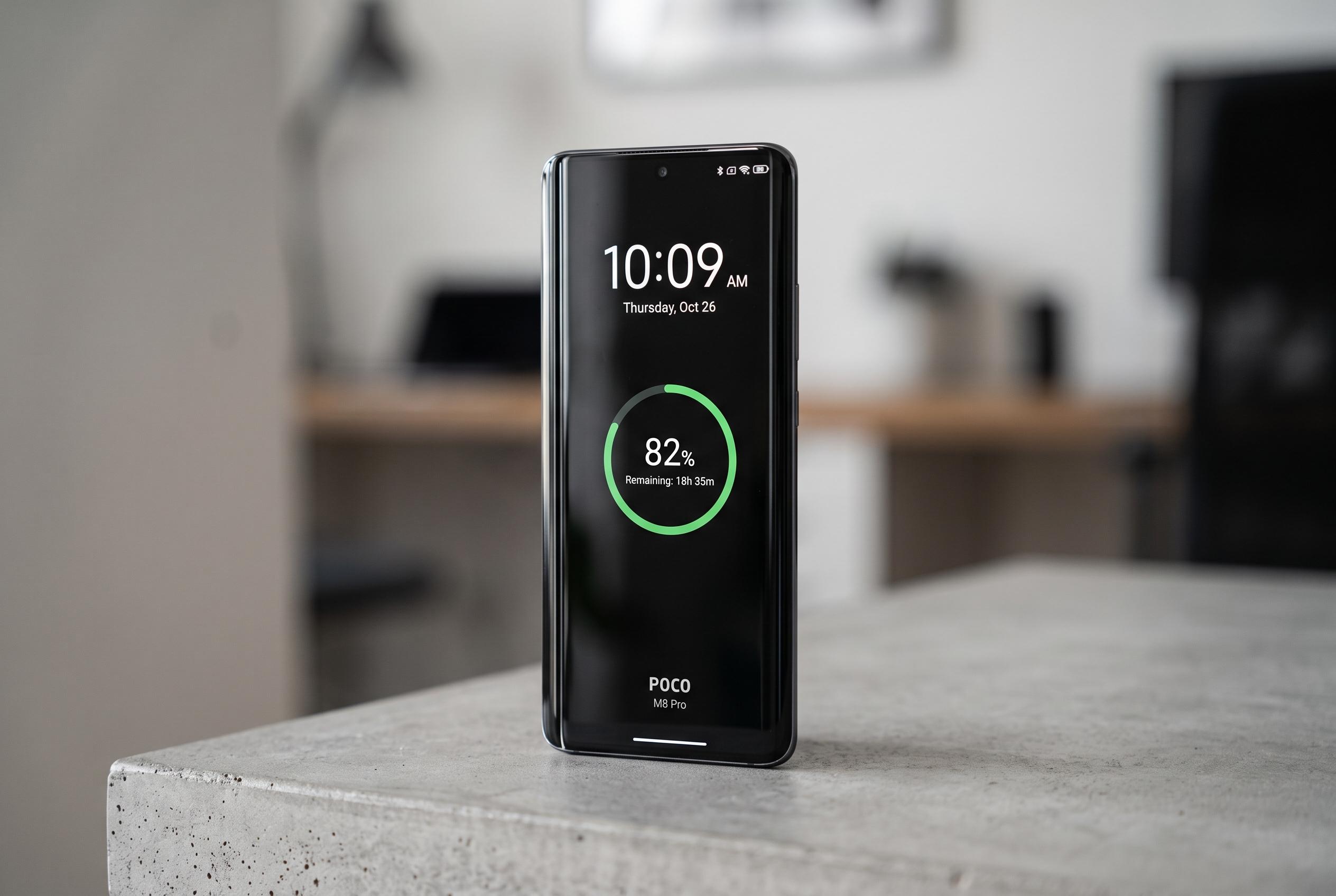

The POCO M8 Pro outperforms the Galaxy A37 in display, battery life, and price, making it a more compelling choice for budget-conscious buyers seeking robust hardware, while Samsung offers a more refined design and longer software support.
Xiaomi’s POCO M8 Pro and Samsung’s Galaxy A37 are aimed at the same buyer: someone wanting a well-rounded mid-range phone without stepping into premium pricing. According to Oficina da Net, both handsets landed this year, with Xiaomi introducing the POCO in January and Samsung unveiling the Galaxy in March. On paper, they share several fundamentals, but the balance between design, performance, battery life and price tilts clearly towards one model.
The Galaxy A37 takes a more refined route. It uses a glass rear panel with plastic sides, carries an IP68 rating for water and dust resistance and is protected by Gorilla Glass Victus+ on both the front and back. The POCO M8 Pro is built entirely from plastic, but it compensates with an IP68 rating of its own and an additional IP69K certification, which covers high-pressure water jets. It is also the heavier and thicker phone. In practice, Samsung appears to be aiming for a more polished hand feel, while Xiaomi is prioritising ruggedness.
Display quality is one of the clearest differences. The Galaxy A37 has a 6.7-inch Super AMOLED screen with Full HD+ resolution and a 120Hz refresh rate. The POCO M8 Pro goes larger with a 6.83-inch AMOLED panel, sharper 1,280 x 2,772 resolution, 120Hz refresh rate, HDR10+ and Dolby Vision support, plus a much higher quoted peak brightness of 3,200 nits. That should make the Xiaomi easier to read outdoors and more capable for video playback.
Performance and battery life also favour the POCO. It uses Qualcomm’s Snapdragon 7s Gen 4, while the Galaxy A37 relies on Samsung’s Exynos 1480. The Samsung chip remains competent for everyday use and most mobile games, but the Qualcomm platform is the stronger option for heavier workloads and demanding titles. Memory and storage capacity are more generous on the POCO as well, with configurations up to 12GB of RAM and 512GB of storage, compared with 8GB and 256GB on the Galaxy. Battery size is another major gap: 6,500mAh and 100W charging for Xiaomi versus 5,000mAh and 45W for Samsung.
Camera hardware is more evenly matched. Samsung gives the A37 a triple rear setup with a 50-megapixel main camera, 8-megapixel ultrawide and 5-megapixel macro lens, alongside a 12-megapixel selfie camera. The POCO M8 Pro drops the macro sensor and instead uses a dual-camera arrangement with a 50-megapixel main sensor and 8-megapixel ultrawide, plus a higher-resolution 32-megapixel front camera. Both phones record video at up to 4K at 30 frames per second. On software, the Galaxy A37 starts with One UI 8.5 based on Android 16 and Samsung promises six years of system and security updates. The POCO M8 Pro ships with HyperOS 2 on Android 15, with Xiaomi promising four major Android upgrades and five years of security patches.
Pricing sharpens the comparison further. Oficina da Net says the Galaxy A37 launched at R$3,299 but can now be found around R$1,600, while the POCO M8 Pro is appearing at roughly R$1,500 through trusted retailers, despite not having an official Brazilian launch. That makes Xiaomi’s phone the stronger value proposition overall. Samsung still has an appeal of its own, especially for buyers who want a glass-backed phone with longer software support, but the POCO M8 Pro is the more complete hardware package.
Disclaimer: This content is intended for informational purposes only. Readers are advised to exercise their own judgement, conduct due diligence, or consult a qualified expert before acting on any information provided.