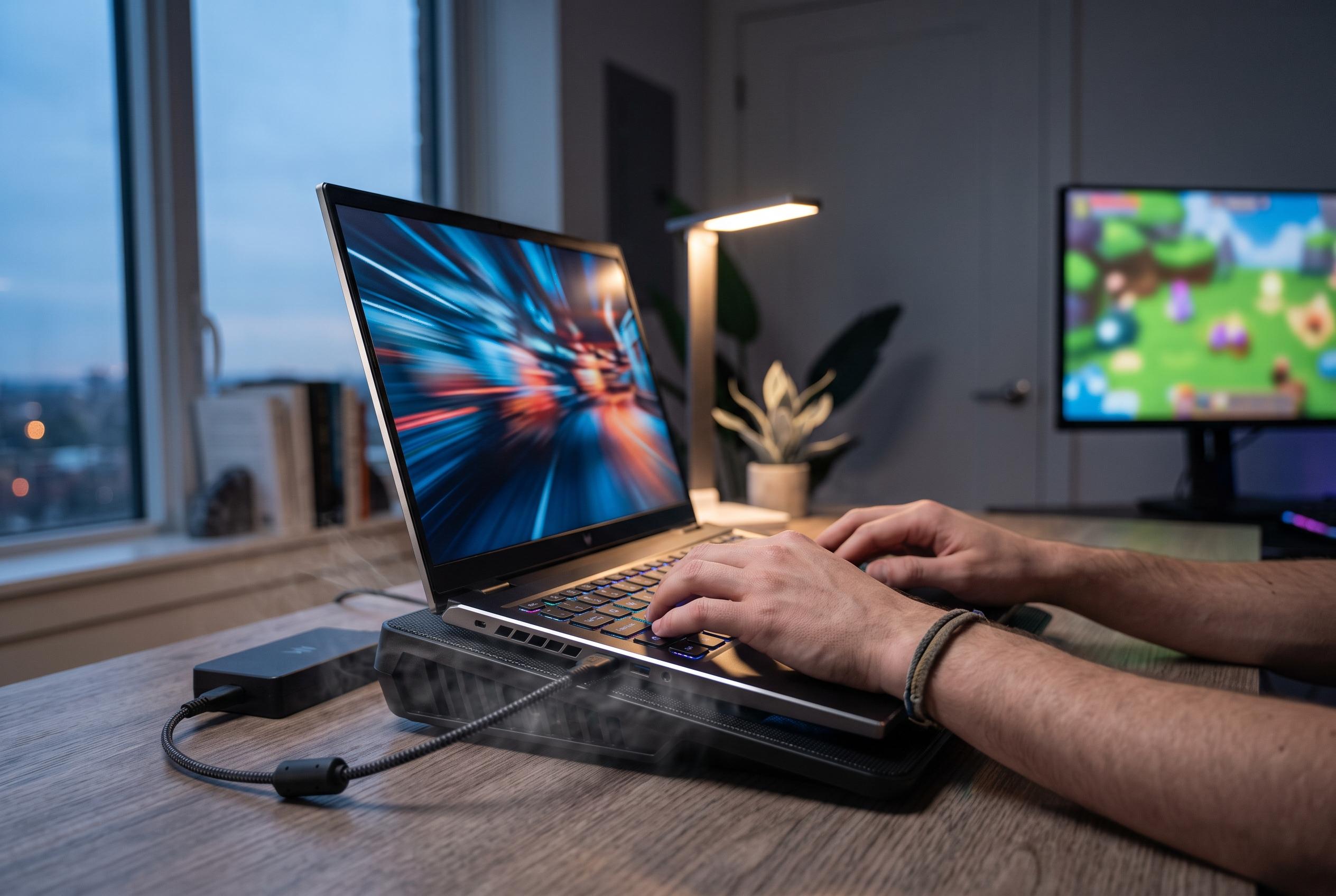

The Acer Predator Helios Neo 14 AI emerges as a top contender during Prime Big Deal Days, boasting a high-refresh display and NVIDIA GeForce RTX 5060, offering a compelling choice for portable gaming enthusiasts despite some design flaws.
The Acer Predator Helios Neo 14 AI stands out in this year’s Prime Big Deal Days gaming-laptop field because it pairs an NVIDIA GeForce RTX 5060 with a high-refresh 14.5-inch display, giving it a more credible gaming specification than the lighter listings in the roundup. Notebookcheck says the machine is built around Intel’s Core Ultra 9 285H and an RTX 5060 Laptop GPU, while PCGamesN praised its 165Hz panel, strong cooling and balanced performance in a compact chassis. PCWorld, however, was less enthusiastic about the wider ownership experience, citing a bulky feel, an awkward keyboard and a design that does not clearly separate it from close rivals such as the Asus ROG Zephyrus G14. That makes the Acer a serious but not flawless choice for buyers who want portable gaming hardware rather than a desk-bound performance laptop.
The Predator’s appeal is strongest when judged as a specification-led purchase. Laptop Watch describes the PHN14-71-760T configuration as a small chassis with an RTX 5060, a Core Ultra 7 255H and a 14.5-inch WQXGA 165Hz G-SYNC display, while Notebookcheck’s overview of the same family lists a 14.5-inch 16:10 OLED panel at 2,880 x 1,800 pixels and a 120Hz refresh rate. Those variations underline an important point for deal hunters: the Predator family can differ meaningfully by panel, processor and configuration. PCGamesN’s testing also noted that the machine is happiest at 1080p gaming rather than native resolution, which is relevant for anyone expecting the panel to carry every game at maximum settings. In practical terms, the laptop is best treated as a compact gaming system that relies on sensible resolution choices and careful thermals rather than brute force alone.
By comparison, the HP Victus 15 sits in a more restrained but more approachable position. Review Rating describes it as reasonably sized for a 15.6-inch gaming laptop, although the plastic build can feel less substantial than pricier rivals and some users have reported lid flex and chassis creaking. The key distinction is that the Victus offers an RTX 3050, which gives it a clearer gaming identity than the many listings in the deal roundup that do not name a dedicated graphics chip at all. For buyers who want a genuine entry into discrete-GPU gaming without stretching to the Predator’s newer hardware, that makes the HP a more grounded buy. It is not the most exciting option in the field, but it is easier to understand and easier to budget for.
The broader deal list also shows how far memory and storage figures can mislead if they are read in isolation. A number of the alternatives, including the FUNYET Ryzen 7 6800H models and the NIMO Ryzen 5 6600H configurations, advertise generous RAM and SSD capacity, but those numbers do not automatically make them stronger gaming machines. In the case of the NIMO 17.3-inch systems, the 32GB/1TB variant is better suited to multitasking and larger local libraries, while the 16GB/512GB version is the more modest of the two. Yet neither specification sheet, as presented, provides the same reassurance as a clearly named RTX-class GPU. For light gaming, schoolwork and everyday productivity, these machines may be sensible. For modern 3D titles, the graphics chip remains the deciding factor.
That distinction matters because deal-event pages often blur the boundary between a true gaming laptop and a general-purpose notebook with large memory or storage figures. The Predator Helios Neo 14 AI is the most convincing option in the group because its graphics hardware, display and cooling story all point in the same direction. The HP Victus 15 follows as the more economical dedicated-GPU alternative. The remaining machines should be approached more cautiously until the exact GPU, panel and upgrade path are confirmed on the product page. For readers comparing laptops during a short sale window, the safest rule is simple: buy on graphics first, screen quality second, and memory and storage last.
Disclaimer: This content is intended for informational purposes only. Readers are advised to exercise their own judgement, conduct due diligence, or consult a qualified expert before acting on any information provided.