
As smartphone prices rise, budget-conscious buyers must navigate trade-offs in durability, memory, and camera quality to find the best value without sacrificing key Japanese features like FeliCa and water resistance.
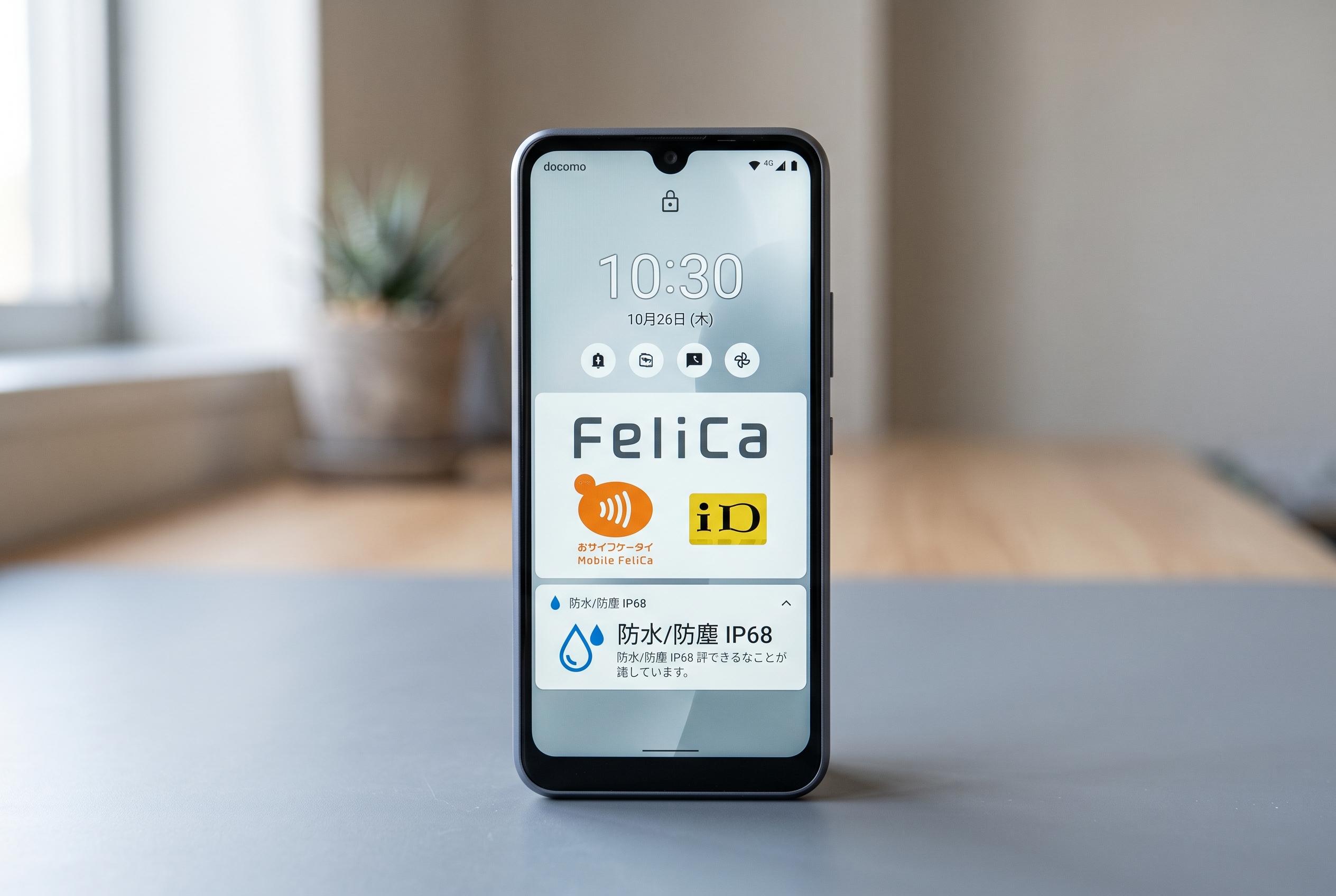
For buyers who want an inexpensive Android phone that still covers the basics of daily life, the real challenge is not finding a cheap handset, but finding one that does not cut corners on Japanese essentials such as FeliCa and water resistance. As prices across the smartphone market have risen, there are still sub-¥40,000 devices that fit the bill, but the best value depends on more than a checklist of features. According to ASCII.jp, the most practical approach is to look past the headline price and judge how well a phone balances durability, memory and camera quality.
Water resistance is one area where buyers need to read the fine print. In practice, “all-in-one” Android phones usually mean models that support both FeliCa and water and dust protection, but the protection standard varies widely from device to device. Higher ratings such as IP67 and IP68 indicate resistance to immersion, while lower ratings offer only splash or jet resistance. That may still be adequate for light rain or brief use with wet hands, but it is not the same as full submersion protection. The difference matters for anyone buying a phone to use outdoors or in unpredictable weather.
Memory is the next point that separates a merely cheap phone from a genuinely usable one. The article argues that 8GB of RAM is comfortable, 6GB sits in the middle, and 4GB can feel tight once several apps are open. That reflects the broader rule for modern budget phones: even when the basic user experience is no longer poor, limited memory still affects multitasking and how quickly apps return to the screen after being paused. For buyers who use messaging, social media and navigation at the same time, this is more important than small differences in processor branding.
Camera performance is less of a deal-breaker than it once was, at least for ordinary social media use. Most low-cost Android phones now produce acceptable daytime photos, especially when the user is not demanding advanced shooting features. But stabilisation remains a weak point in this price range, so low-light scenes and hurried shots are still where cheaper devices tend to falter. That is why, as ASCII.jp notes, users who care about selfies or photography should consider moving up a tier. Models such as Sharp’s AQUOS sense4 plus, with 8GB of RAM, FeliCa and IPX5/IPX8 water resistance, and Motorola’s edge 40, with IP68 protection, 8GB of RAM and faster charging, show that stronger specifications are available, though usually at a higher price. Sharp’s AQUOS sense8 sits in a similar value-oriented middle ground, combining an optical image-stabilised main camera with an IGZO OLED display and variable refresh rate, while the arrows We2 is positioned as a durable, long-lasting option for students.
Disclaimer: This content is intended for informational purposes only. Readers are advised to exercise their own judgement, conduct due diligence, or consult a qualified expert before acting on any information provided.