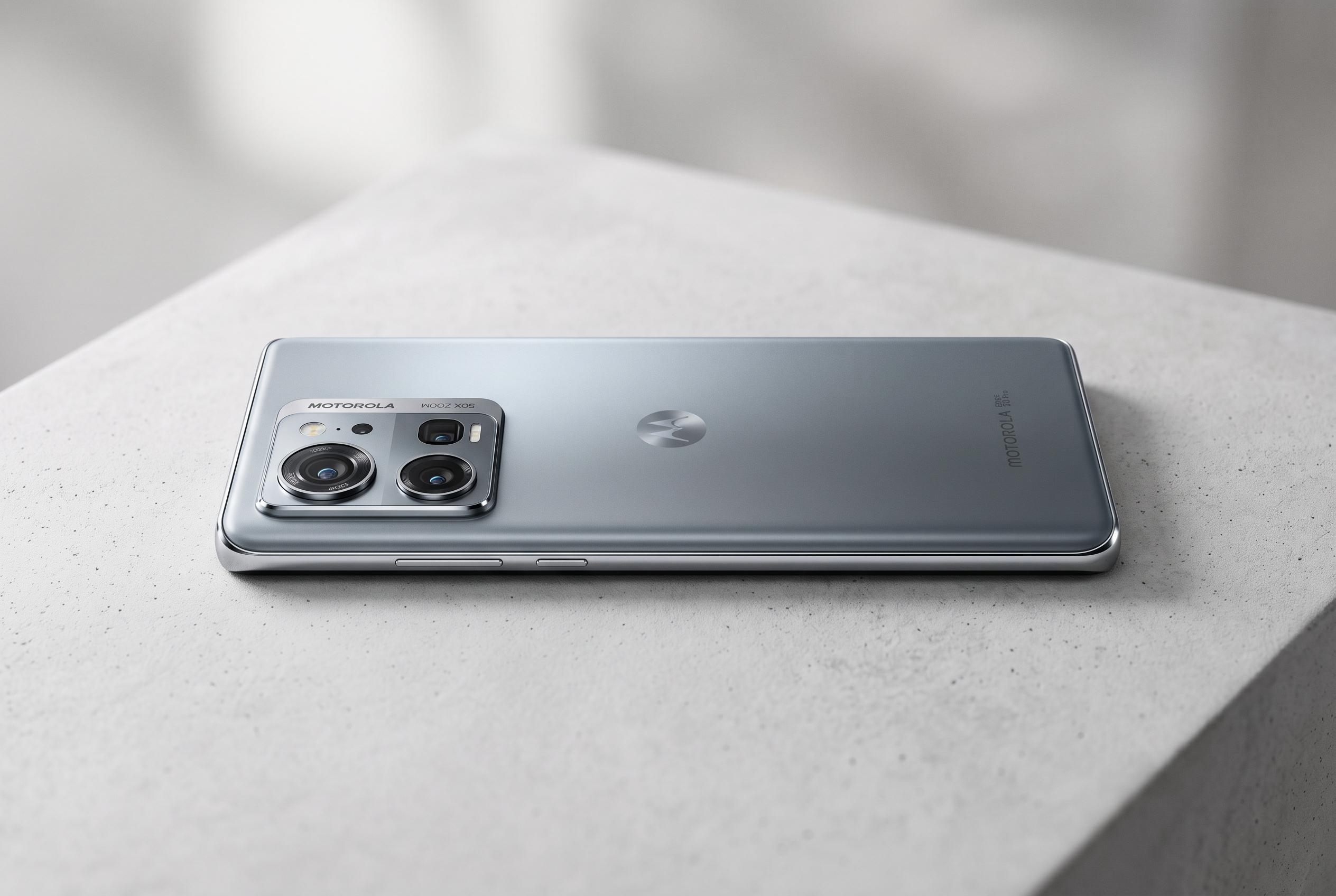

The under-₹40,000 smartphone segment sees a shift towards advanced photography capabilities, with models like Motorola Edge 70 Pro offering flagship-level camera features in a budget-friendly package, challenging traditional notions of quality in this price range.
The under-₹40,000 smartphone market has shifted sharply in favour of buyers who care about photography. According to Gadgets 360, several models now combine stabilised main sensors, more capable ultrawide cameras and stronger video tools, bringing features once reserved for premium devices into a far lower price band.
On balance, the Motorola Edge 70 Pro stands out as the most complete camera phone in the segment. Gadgets 360 says it pairs a 50MP Sony LYTIA 710 main sensor with optical image stabilisation and a 50MP ultrawide camera that also doubles as a macro lens. The same 50MP level of detail extends to the front camera, which adds autofocus and 4K recording. That hardware, together with Pantone-validated colour tuning, gives the phone a consistency that many rivals lack.
The clearest challenge comes from the Realme 16 Pro 5G, which counters with a 200MP main camera but a far weaker 8MP ultrawide unit. In practical use, that means daylight shots can look crisp, yet wide-angle images and low-light scenes depend more heavily on processing than on optical strength. The Nothing Phone 3a Pro takes a different route, using a periscope telephoto lens for 3x optical zoom, but its 8MP ultrawide again leaves the system less balanced overall. Beebom and Smartprix both show that this class is increasingly crowded, but also that most phones still make trade-offs in at least one camera area.
For selfies and portraits, the Vivo V50 remains one of the better choices because of its 50MP Zeiss-tuned front camera. That makes it attractive to users who shoot themselves more often than scenes. Samsung’s Galaxy A37 5G is described as a steadier, more conventional option, with Nightography processing and a six-year software update promise, but it is less versatile than the stronger camera-first rivals. In video, the Motorola again has the edge because it can record 4K at 60 fps from all cameras, while the Realme tops out at 4K at 30 fps and the Vivo focuses more on front-camera quality than rear-camera flexibility.
Taken together, the rankings suggest a simple rule: megapixels alone do not decide the best camera phone. Sensor size, optical image stabilisation, lens quality and software processing matter more. That is why the Motorola Edge 70 Pro comes out ahead as the most rounded option, especially for buyers who want dependable results across daylight, night scenes, portraits, selfies and video without moving into flagship pricing. The Realme model suits users who value detail in bright light, the Nothing phone serves zoom-focused buyers and the Vivo is the stronger pick for front-facing photography.
Disclaimer: This content is intended for informational purposes only. Readers are advised to exercise their own judgement, conduct due diligence, or consult a qualified expert before acting on any information provided.