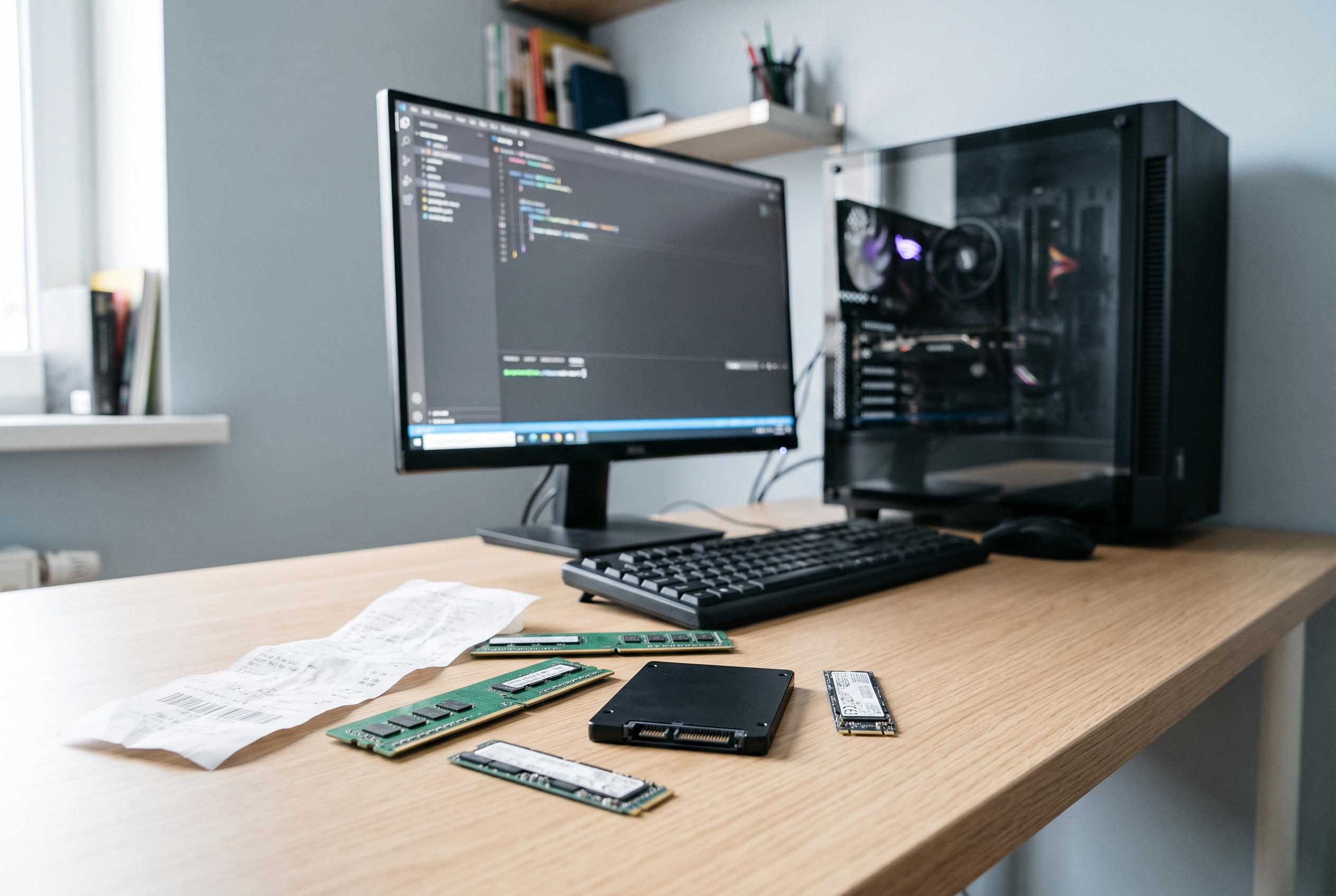

Surging DRAM and NAND costs are eroding the traditional savings of building a desktop component by component, with branded systems and subsidies making some prebuilts unexpectedly competitive.
The long-held assumption that building a PC yourself is always cheaper has weakened sharply this year, with a Zhihu post arguing that the usual DIY price advantage has been eroded by a surge in memory and storage costs. The post says that, by October 2026, retail prices for RAM and solid-state drives had climbed so far that a build assembled part by part could no longer be assumed to beat a ready-made machine on cost alone. That view is echoed by recent hardware commentary, which says the 2026 memory squeeze has overturned the traditional buying logic for new desktops.
The reason is straightforward: the market for DRAM and NAND has tightened at the same time as demand from the AI sector has expanded. PC Gamer reported that the shortage has pushed up retail pricing across consumer memory and storage, with analysts warning that the pressure could last until 2027 or even 2028. In practical terms, the Zhihu article says a 16GB-by-2 DDR5 kit can now cost around 3,300 to 4,000 yuan, while a 1TB SSD has risen to roughly 1,000 yuan in some retail channels. When those parts alone absorb so much of the budget, the old rule that each component can be bought a little more cheaply simply stops working.
That does not mean every prebuilt system is good value. The Zhihu piece draws a sharp distinction between branded desktop PCs from companies such as Lenovo, HP, Dell and Asus, and low-cost “modified” systems sold by smaller resellers. It says a comparison of 64 desktop listings showed that 11 had a mismatch between the sticker price and the real cost once necessary upgrades were added. One example given was a cheaper machine with a single 12GB memory stick, a 500GB SSD and a 650W bronze-rated power supply. To bring that system up to the level of a more expensive rival, the buyer would need to replace the memory in pairs and add a larger SSD, which would push the true cost above the apparently pricier option.
The article also highlights a structural advantage for branded prebuilts in China: national subsidies and promotional discounts are said to apply to finished branded desktops, but not to self-built machines or heavily altered third-party configurations. That can make a factory-built system unexpectedly competitive, especially for buyers who want a simple, warrantied purchase and do not want to calculate component compatibility or future upgrade costs. By contrast, the post warns that the lowest-priced reseller systems still deserve scepticism, citing complaints about under-specced power supplies, vague component descriptions and hardware that does not match the advert. PC Gamer’s reporting on memory inflation and separate hardware guides from 2026 suggest the same broad conclusion: the entry and mid-range market has been the most distorted by rising parts prices, while the calculus changes again further up the performance ladder.
Disclaimer: This content is intended for informational purposes only. Readers are advised to exercise their own judgement, conduct due diligence, or consult a qualified expert before acting on any information provided.