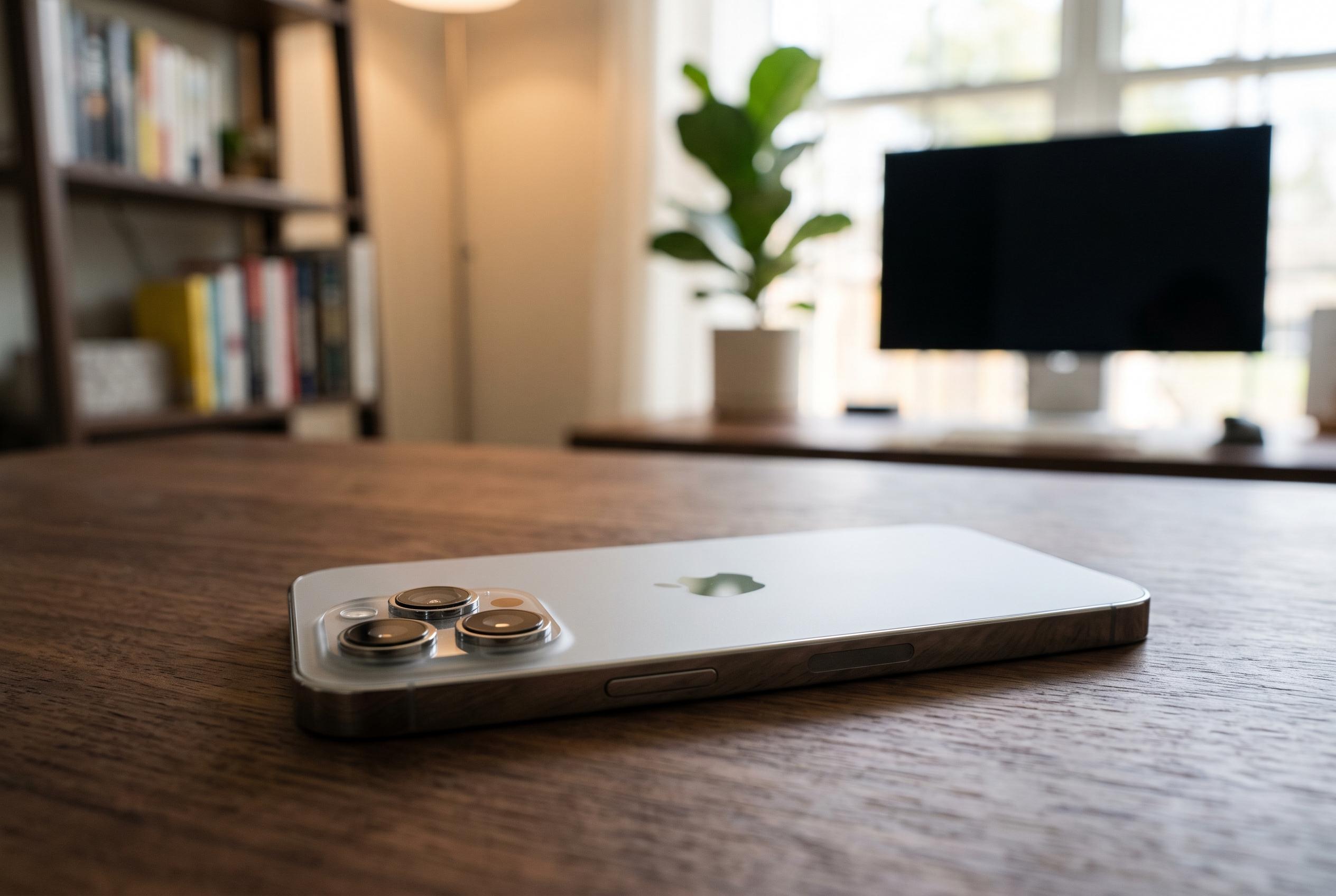

The latest iPhone 18 Pro models feature a pioneering variable-aperture main camera, marking the most significant upgrade this year, though its practical benefits may be less dramatic than the technical feat suggests.
Apple’s latest Pro phones are being judged primarily on one feature: a variable-aperture main camera. Early reviews of the iPhone 18 Pro and iPhone 18 Pro Max suggest this is the year’s most meaningful change, even if the wider upgrade package is relatively modest and prices have risen. Reviewers cited by iPhones.ru and The Verge say the new camera is the headline improvement, with the rest of the hardware changes feeling more incremental.
The main sensor can now switch between f/1.48, f/1.8, f/2.8 and f/4.0, a level of optical control that remains rare in smartphones. Digital Camera World notes that Apple uses a six-blade mechanism to physically alter the opening, while MacRumors says the company has paired the system with new Pro camera controls in the Camera app. In practice, the phone tends to choose settings automatically, using the widest opening in low light, a mid setting for portrait-like work and the narrowest aperture for group shots or scenes where more of the frame needs to stay sharp.
Even so, reviewers caution against expecting a dramatic leap in everyday photography. The Verge, as cited by iPhones.ru, says the difference between the widest and slightly narrower apertures is most visible at night, where the brighter setting can shorten exposure times and reduce noise. But because smartphone sensors are already small, the gain in depth of field control is limited in many situations. In other words, the feature is technically impressive, yet its practical effect will be subtle for most users.
Apple has also added proper manual controls to the standard Camera app. According to MacRumors and The Mac Observer, photographers can now adjust aperture, shutter speed, white balance and focus without turning to a third-party app. Apple representative Stephanie Ng said the manual mode captures a single frame rather than the usual multi-frame computational stack, which can slightly reduce dynamic range but produce a more natural look. The company has also introduced a Reference Image mode that embeds sensor data to help prove a picture was actually taken on an iPhone, although The Verge says the feature is awkward to use and doubles file size.
Beyond the camera, the iPhone 18 Pro line brings a new A20 Pro chip built on a 2nm process, a larger vapour chamber and redesigned internal layout, with memory placed beside the chip rather than on top of it. Tom’s Guide testing reported stronger performance and lower heat than the previous generation and Samsung’s Galaxy S26 Ultra, while battery life improved only modestly. The phones also support 60W charging, and the Dynamic Island is smaller, though the overall design is otherwise unchanged enough that some older cases still fit. Reviewers quoted by iPhones.ru broadly agree that owners of an iPhone 16 Pro or older will notice the upgrade most, while many others may see it as a refinement rather than a genuine overhaul.
Disclaimer: This content is intended for informational purposes only. Readers are advised to exercise their own judgement, conduct due diligence, or consult a qualified expert before acting on any information provided.